Industry: Decisioning

IDC

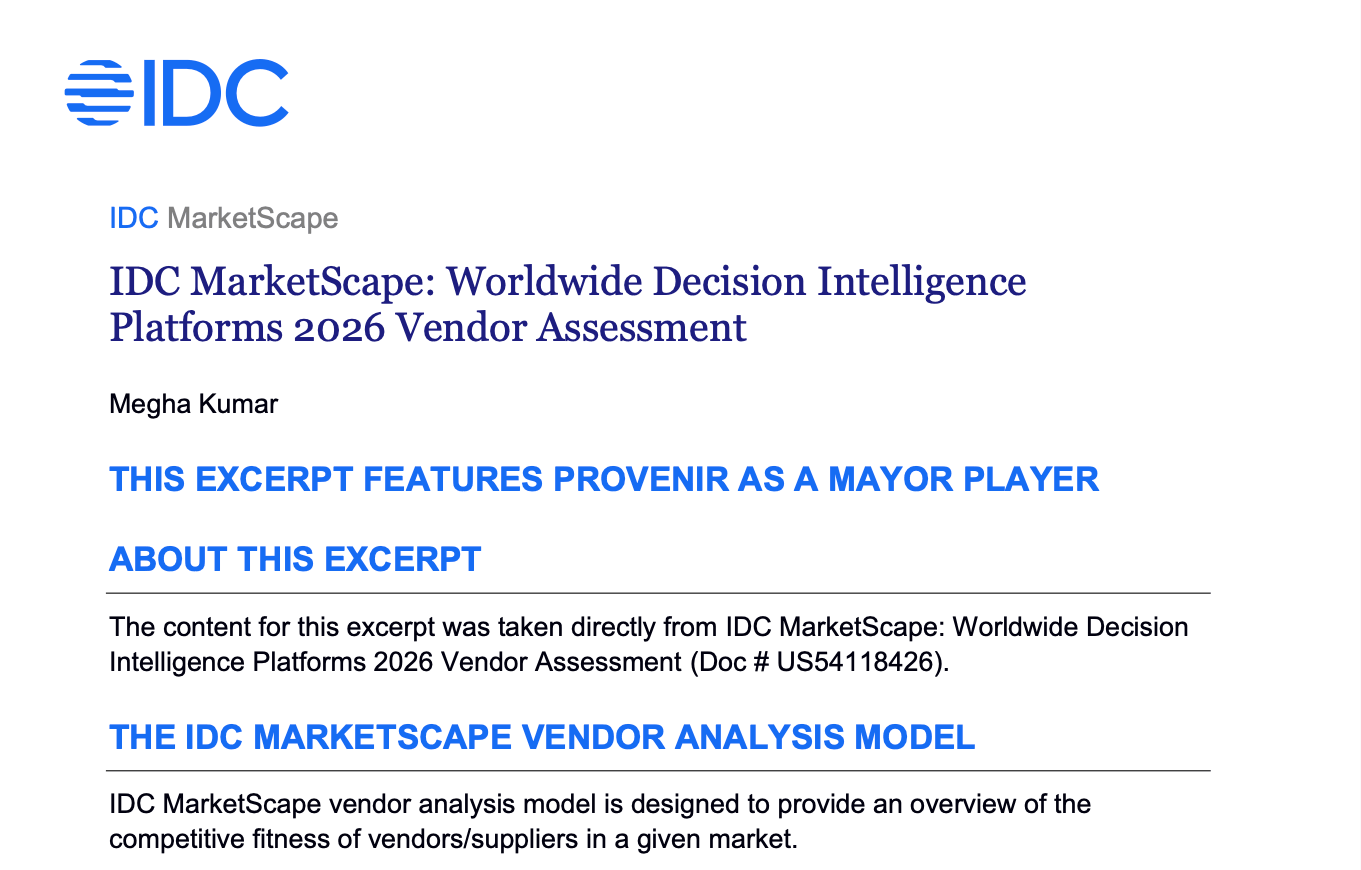
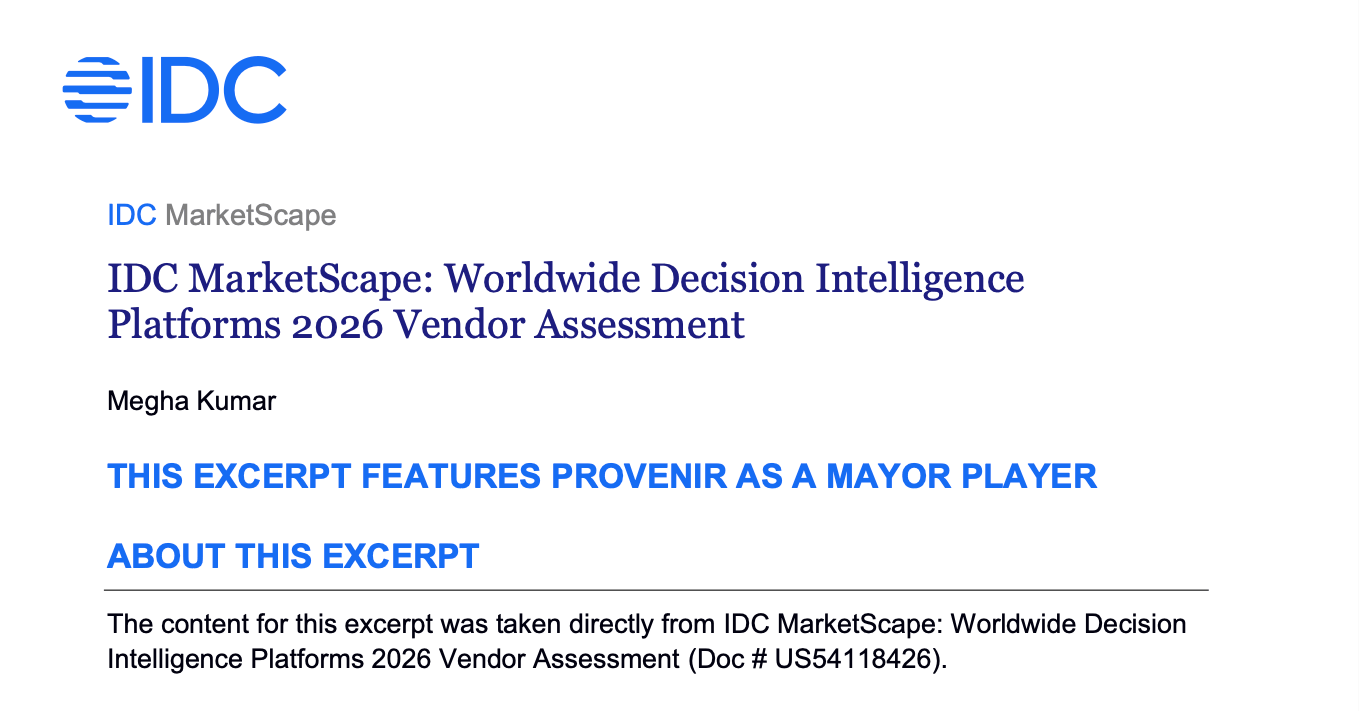
IDC MarketScape Names Provenir a Major Player

IDC MarketScape Names Provenir a Major Player

PARSIPPANY, N.J., [DATE], 2026 – Provenir, the Decision Intelligence Platform for financial services providers, today announced it has been positioned in the Major Players Ccategory in the IDC MarketScape: Worldwide Decision Intelligence Platforms 2026 Vendor Assessment (Doc #US54118426, September 2026). Provenir was also named a Major Player in the 2024 edition of this IDC MarketScape.

The recognition follows two years of continued investment in Provenir’s Decision Intelligence Platform, including production-accurate simulation, advances in AI models and assistants, and expanded capabilities designed to help customers design, test and deploy decision strategies faster.

The IDC MarketScape evaluated vendors supporting decision design, decision engineering and decision orchestration. The assessment covered vendors serving industries from financial services and insurance to government, manufacturing, and retail; we believe Provenir was recognized as a Major Player while maintaining a deliberate focus on financial services and adjacent sectors. The 2026 assessment also reflects the growing role of generative and agentic AI in how decision logic is authored, tested and explained, alongside continued human oversight.

The IDC MarketScape notes Provenir’s unified low-code platform, stating “Provenir brings together decisioning, data orchestration, model orchestration, simulation, and case management in a single cloud-native environment, reducing reliance on separate point solutions for related decisioning functions.”

The IDC MarketScape notes three areas of strength:

  • Unified low-code platform

    Provenir brings together decisioning, data orchestration, model orchestration, simulation, and case management in a single cloud-native environment, reducing reliance on separate point solutions for related decisioning functions.
  • Breadth of the data marketplace

    The vendor’s marketplace includes more than 150 prebuilt integrations with third-party data and analytics providers, and new integrations are typically turned around in about two weeks, shortening timelines that can otherwise stretch to several months.
  • Platformwide AI assistant

    A generative AI assistant operates across dashboards, model building, and documentation functions platformwide, providing conversational access to insights, recommendations, and translated documentation regardless of which page a user is working from.

The IDC MarketScape also notes Provenir’s “same engine” simulation approach: “where changes are tested using the identical processing rails and up to 12 months of live production data that power the operational platform, which may appeal to organizations that want confidence in projected outcomes before rules or scorecards go live.” In our view, this gives organizations greater confidence in projected outcomes before changes go live.

“I believe being named a Major Player for the second assessment in this market reflects the progress we’ve made in building a true decision intelligence platform,”

said Lawrence Smith, CEO of Provenir.

“Financial services providers need to change strategy quickly without losing control of how decisions are made. By bringing data, AI, simulation and governance together, we help customers test, understand and improve decisions before changes go live.”

Provenir’s generative AI assistant and MCP connectivity are in production today, supporting documentation retrieval, insight generation and guided model building. The IDC MarketScape also notes that Provenir’s near-term road map priorities include “natural language–driven flow generation, expanded automated recommendations, and human-in-the-loop monitoring for agents, reflecting a broader shift from assisted decision design toward continuous, machine learning–informed strategy optimization across the decisioning life cycle.”

To read the IDC MarketScape excerpt featuring Provenir, visit

Download the Excerpt

About Provenir:

Provenir is the governed Decision Intelligence Platform for enterprises and institutions. One decisioning environment consolidating data, AI models, intelligence, agents and governance. Business-configured. Enterprise-grade reliability. Trusted by 120+ institutions processing 4+ billion decisions annually across 60+ countries.

About IDC MarketScape:

IDC MarketScape vendor assessment model is designed to provide an overview of the competitive fitness of technology and suppliers in a given market. The research methodology utilizes a rigorous scoring methodology based on both qualitative and quantitative criteria that results in a single graphical illustration of each supplier’s position within a given market. IDC MarketScape provides a clear framework in which the product and service offerings, capabilities and strategies, and current and future market success factors of technology suppliers can be meaningfully compared. The framework also provides technology buyers with a 360-degree assessment of the strengths and weaknesses of current and prospective suppliers.
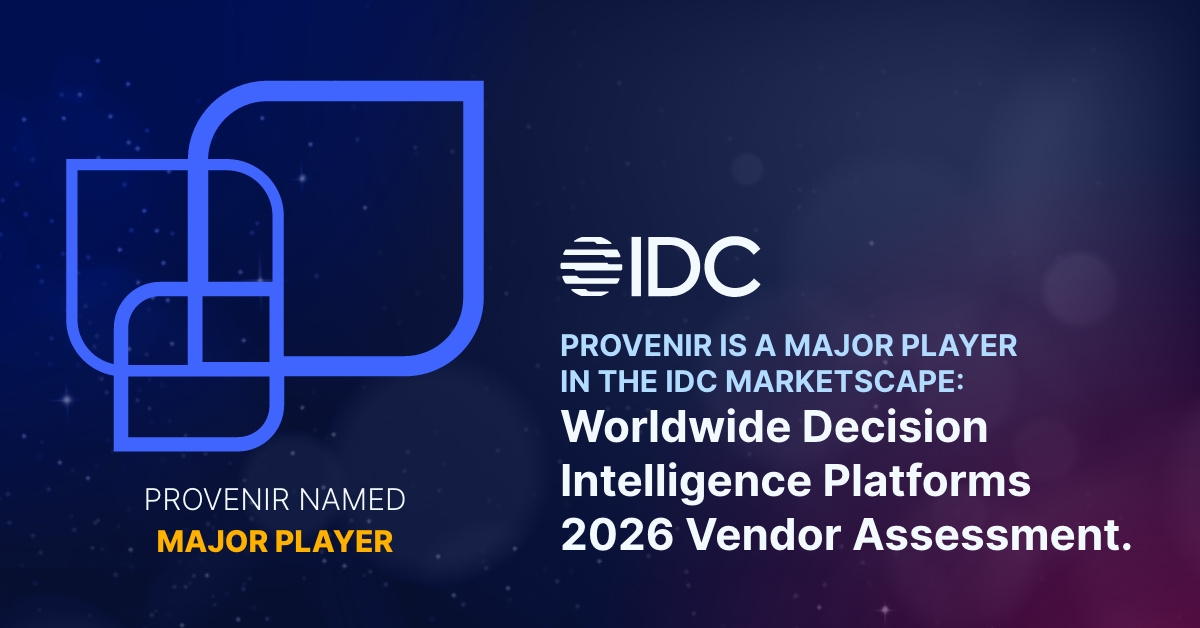
IDC MarketScape excerpt featuring Provenir

Download the Excerpt

LATEST NEWS

Continue reading

IDC-Report

IDC Report 2026

Report

Provenir has been positioned in the Major Players Category in the IDC MarketScape

Worldwide Decision Intelligence Platforms 2026 Vendor Assessment (Doc #US54118426, September 2026). This is the second assessment in which IDC MarketScape has named Provenir a Major Player in this market, following the 2024 edition.

IDC MarketScape evaluated vendors supporting decision design, decision engineering, and decision orchestration across industries including financial services, insurance, government, manufacturing, and retail. We believe the 2026 assessment also reflects the growing role of generative and agentic AI in how decision logic is authored, tested and explained, alongside continued human oversight.

For financial services providers, that raises the standard for decisioning infrastructure. Strategy needs to change quickly, and teams need confidence in how a change will perform before it reaches customers. Decision logic scattered across legacy engines, AI models risk teams cannot fully see into, and governance handled after the fact all slow that work down.

The excerpt shows why Provenir was named a Major Player. The IDC MarketScape identified the following strengths:

  • Unified low-code platform: Provenir brings together decisioning, data orchestration, model orchestration, simulation, and case management in a single cloud-native environment, reducing reliance on separate point solutions for related decisioning functions.
  • Breadth of the data marketplace: The vendor’s marketplace includes more than 150 prebuilt integrations with third-party data and analytics providers, and new integrations are typically turned around in about two weeks, shortening timelines that can otherwise stretch to several months.
  • Platformwide AI assistant: A generative AI assistant operates across dashboards, model building, and documentation functions platformwide, providing conversational access to insights, recommendations, and translated documentation regardless of which page a user is working from.

We believe the IDC MarketScape recognition reflects what Provenir’s platform is built to do: give teams one environment to design, test, deploy and improve decision strategies, with data, AI, simulation and governance working together.

Provenir maintains a deliberate focus on financial services and adjacent sectors, including banking, fintech, embedded finance, automotive finance, telecommunications, retail and ecommerce, and insurance. See how the platform supports each of these industries.

Download the excerpt below for the IDC MarketScape evaluation of Provenir, including its guidance for technology buyers evaluating decision intelligence platforms.

IDC-Report

Please Fill Out the Form to Download the Report

LATEST EBOOKS

IDC-Report

IDC Report 2026

Report Provenir has been positioned in the Major Players ...
EBOOK Telco - FeatureIMG

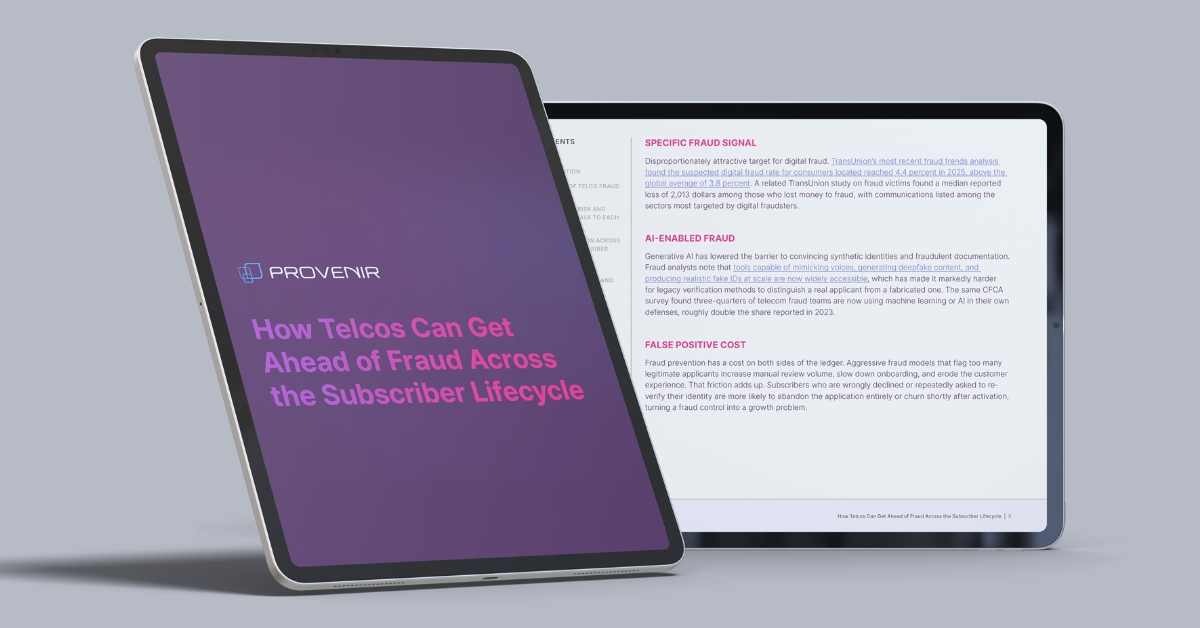
How Telcos Can Get Ahead of Fraud Across the Subscriber Lifecycle

Ebook How Telcos Can Get Ahead of Fraud Across ...
Data Providers Blog

Practical Guide to Reviewing Your Data Providers

Ebook What’s Missing from Your Decision Stack? Smarter decisions ...
EBOOK KShape

One Portfolio, Two Economies

One Portfolio, Two Economies: Model Drift, Consumer Divergence, and ...
EBOOK Survey2026

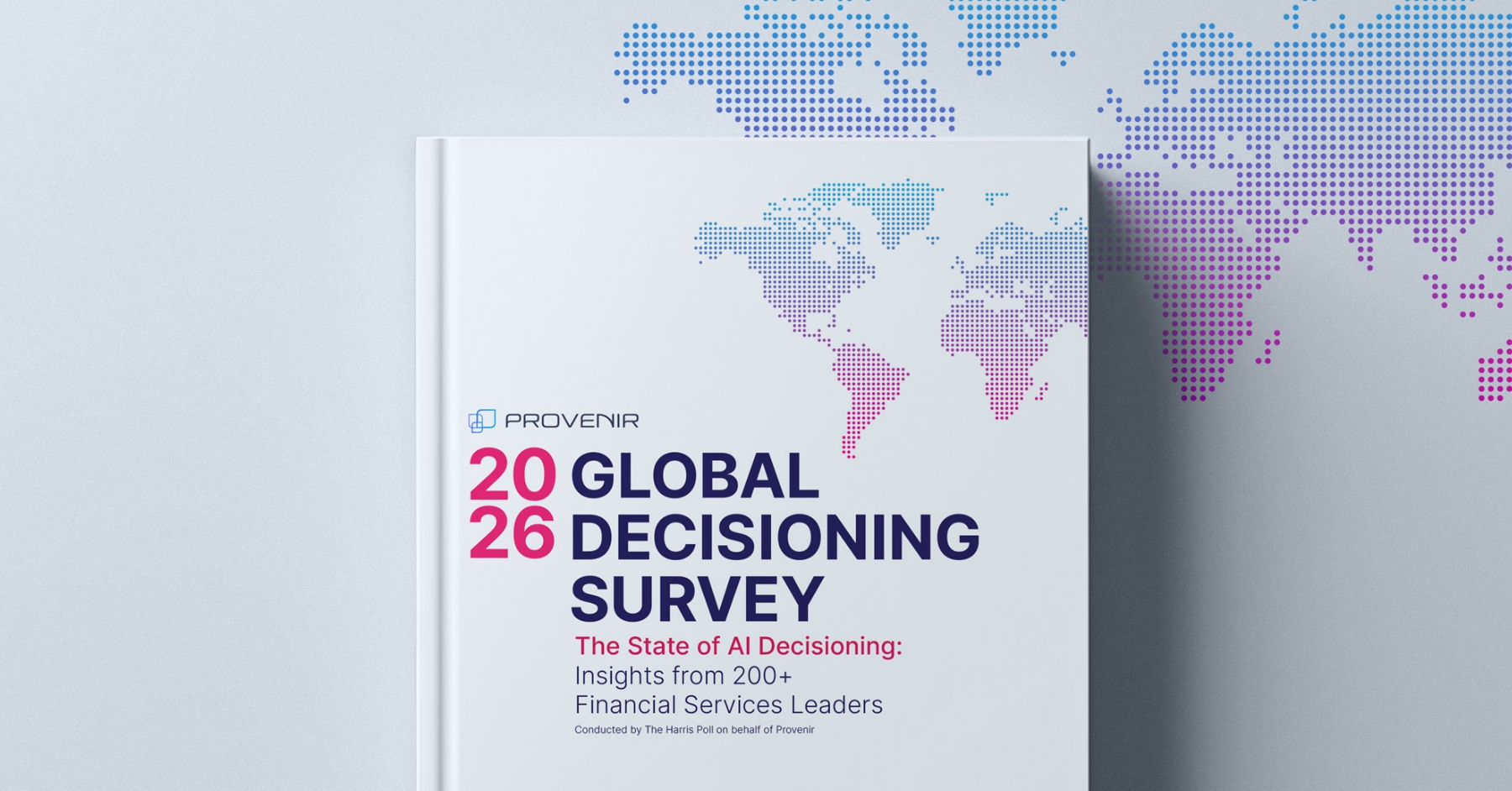
Survey: 2026 Global Decisioning Survey

What are the key challenges and priorities for financial ...
Survey: 2025 Global Risk Decisioning Survey

Survey: 2025 Global Risk Decisioning Survey

Survey: 2025 Global Risk Decisioning Survey What are the ...
EBOOK: How Telcos Can Boost Revenue Without the Risk

EBOOK: How Telcos Can Boost Revenue Without the Risk

Dial Into Profit: How Telcos Can Boost Revenue Without ...

Continue reading

BLOG Bharati Fernando

How to Change a Decisioning Model Without Raising a Ticket

How to Change a Decisioning Model Without Raising a Ticket

Reframing the Question

“Change a decisioning model without raising a ticket” reads at first as a request to bypass governance. A more productive reading treats it as a question of design: why does the ticket exist, and must the controls it represents continue to be administered through a change-management process that sits outside the decisioning environment?

In enterprise decisioning, governance serves a defined set of objectives. Changes must be attributable to an identifiable author, reviewable before they take effect, and testable against expected outcomes. Organisations must control who may make them, understand their downstream impact, and preserve a path to intervene when behaviour diverges from intent. These requirements are most acute where decisioning determines credit eligibility, pricing, fraud intervention and customer treatment, and where a poorly governed change can affect large populations before it is noticed. Traditionally, those objectives have been pursued through volume: sequential sign-offs and a uniform review applied to every change regardless of its risk. Yet rigour derives from what is actually examined, not from how many people approve it. An optimised model keeps the same requirements, namely documentation, testing, traceability and accountability, but applies them in risk-based tiers, so that the safeguards remain while the friction falls and speed ceases to be traded against safety. The ticket, on this view, is only an administrative instrument, separate from the control objectives it was introduced to satisfy.

Why This Matters More as Decision Intelligence Matures

That distinction grows more consequential as decision intelligence matures. The 2024 Gartner CDAO Agenda Survey found that a third of organisations have implemented decision intelligence, the practice of combining data, analytics and AI into decision flows that support or automate complex judgements. Gartner has since predicted that by 2027, half of business decisions will be augmented or automated by AI agents for decision intelligence. As greater intelligence enters the decision itself, the mechanisms governing changes to decisioning logic deserve comparable scrutiny.

Moving Control Inside the Platform

Provenir illustrates how much of that control can reside inside the decisioning environment rather than around it. Business teams configure, test and deploy decision logic directly, while the workflow remains auditable and version-controlled. Champion/challenger capabilities allow competing strategies to be evaluated, including against live data, before broader release. Configurable rules determine when a change must halt for manual review. Each capability reconstitutes something the ticket was there to guarantee: a record of what changed, a means of comparing outcomes, and a defined point at which human judgement is required.

From Operational Fix to Strategic Advantage

Framed strategically, removing the ticket is less an operational tidy-up than a shift in business model and in where competitive advantage sits. A decisioning model is rarely a durable advantage in itself, since techniques are published and comparable capabilities can be bought; what resists imitation is the organisational capacity to change decisioning logic rapidly and safely at scale, a dynamic capability through which a firm continually reconfigures its decision rules as conditions shift. Because that capacity emerges from many interacting elements, among them platform configuration, version-control discipline, champion/challenger routines and calibrated permissions, rivals cannot easily identify what produces the superior rate of safe change. That causal ambiguity is itself a barrier to imitation, and it turns a faster, safer change process from a passing operational gain into a defensible position: the decisioning function moves from issuing individual decisions to compounding many governed, evidence-tested changes into a lead that later entrants struggle to catch.

Oversight Is Shifting Too

This reframes oversight itself. Interpretability and explainability have increasingly shifted governance from after-the-fact audit toward continuous, built-in accountability. Where oversight once rested on testing outcomes and trusting that a model worked, it now tends to require evidence of why it works: documented feature importance, decision logic and traceable reasoning behind each score or flag. Governance frameworks increasingly expect explainability artefacts alongside performance metrics, among them model cards, decision logs and plain-language justifications that legal, compliance and audit functions can read, not only statisticians. That widens the table, drawing risk, compliance and legal teams into model changes earlier because they can understand what is being altered, and it makes each update something the organisation can defend rather than merely deploy. The economics point the same way: McKinsey’s March 2025 State of AI survey found CEO oversight of AI governance among the factors most correlated with higher self-reported bottom-line impact from generative AI, positioning governance less as a constraint on value than as a condition of it.

Where Governance Belongs

For decisioning, the implication is that governance belongs in the design and operation of the platform itself, with auditability, version control, testing, permissions, monitoring and defined points of human intervention embedded within the decisioning lifecycle rather than administered beside it. Removing a ticket is legitimate only once the control it represented has demonstrably been accounted for elsewhere. Where that condition is met, the firm has not simply deleted a step; it has relocated a source of advantage into a capability that rivals find difficult to observe, and harder still to replicate.

The maturity of a decisioning capability should therefore be assessed on more than the speed and accuracy of individual decisions. An equally telling measure is whether decisioning logic can be modified efficiently while the standards that govern those modifications hold, and whether that combination is distinctive enough to constitute strategic advantage rather than mere operational convenience.

Bharati Mohan

Bharati Mohan

Written By

Vice President, Global Applied Intelligence, Provenir

Fernando

Fernando Moreno Fernandez

Written By

Vice President, Global Applied Intelligence, Provenir

Latest Blogs

Brendan Deakin, Executive Vice President at Provenir

Confidence at Speed:...

Confidence at Speed:What Risk Leaders Are Actually Missing Most
BLOG Bharati Fernando

How to Change a Deci...

How to Change a Decisioning Model Without Raising a
Verifying the Invisible Subscriber

Verifying the Invisi...

Verifying the Invisible Subscriber How Accessing 1datapipe on the
FAQ

Decision Management ...

Decision Management Implementation FAQs for Enterprise Banks Implementing a
260817 - BLOG Closing Fraud Gap - FeatureIMG - EN 61409

Beyond Detection: Cl...

Beyond Detection:Closing the Fraud Prevention Gap Financial services providers
260726 - BLOG eyeDP - FeatureIMG - 61058

Beyond Data: Why Dec...

Beyond Data:Why Decisioning Needs Document Intelligence Financial services providers
Fraud in Telco: Provenir Experts Answer Frequently Asked Questions

Fraud in Telco: Prov...

Fraud in Telco:Provenir Experts Answer Frequently Asked Questions 1.
260722 - ARTICLE Mike - FeatureIMG - 60958

AI governance in fin...

AI governance in financial services:What "governed" means in practice

Continue reading

Compliance and Decisioning in North America - Claire Hartley

From Regulatory Complexity to Competitive Confidence: How Provenir Supports Responsible Decisioning Across North America

FFrom Regulatory Complexity to Competitive Confidence:
How Provenir Supports Responsible Decisioning Across North America

Across North America, financial services providers must make faster, more accurate decisions while meeting increasingly complex regulatory expectations. In the United States, federal obligations sit alongside a growing patchwork of state privacy, cybersecurity and artificial intelligence laws. In Canada, organizations must address PIPEDA, provincial privacy requirements and guidance from the Office of the Superintendent of Financial Institutions.

For organizations using data and AI in credit, fraud and identity decisions, compliance cannot be a final check. It must be built into the way technology is governed, operated and monitored.

Governed and Explainable Decisioning

Provenir brings data, AI models, analytics and automated decisioning together within a single, governed environment. Customers retain control over their decision strategies, rules and compliance guardrails, with the ability to test, approve, monitor and adjust them through controlled processes.

This matters most in US credit decisioning. The Equal Credit Opportunity Act requires lenders to provide specific and accurate reasons for adverse decisions, even when AI or complex models are used. Provenir supports transparent decision logic, configurable reason codes and accessible decision information, helping customers explain outcomes and maintain an effective audit trail.

The customer remains responsible for its lending decisions and legal obligations. Provenir provides the governed technology and control capabilities that help it meet them.

Strong Privacy, Security and Assurance

Provenir operates a mature privacy and data protection framework covering data-processing agreements, controller and processor responsibilities, international transfers, retention, data subject rights, subprocessor oversight and privacy risk assessments. These controls help customers understand how and where personal information is processed, and provide evidence of the safeguards applied throughout the processing chain.

Independent assurance carries equal weight. Provenir maintains ISO/IEC 27001 certification for its Information Security Management System and has completed a SOC 2 Type II assessment covering security, availability and confidentiality. Enterprise customers can also access appropriate assurance evidence, subject to scope and confidentiality requirements, including security and privacy information, penetration-testing summaries, business continuity information and AI governance documentation.

This evidence supports vendor due diligence and helps customers demonstrate effective third-party oversight. It is particularly relevant to the US Gramm-Leach-Bliley Act Safeguards Rule and to Canadian expectations under OSFI Guidelines B-10 and B-13 concerning third-party, technology, cybersecurity and operational resilience risk.

Responsible AI With Practical Controls

Responsible AI requires more than a policy. It needs defined accountability, risk assessment, testing, documentation, human oversight, performance monitoring and controlled change management. Provenir is developing its AI governance framework in alignment with ISO/IEC 42001 and emerging regulatory requirements, building on its established compliance, privacy, risk and information security controls.

Compliance as a Customer Advantage

Provenir does not claim to make customers automatically compliant. It gives financial services providers across North America a controlled and transparent decisioning environment, backed by mature governance and independent assurance.

This helps customers manage regulatory scrutiny, complete enterprise due diligence more efficiently and innovate without losing control. In a market where trust increasingly determines which technology providers can support critical financial processes, Provenir’s Compliance, Regulatory and Data Protection capabilities do more than support the business. They turn assurance into advantage, and that is a genuine competitive differentiator.

Claire Hartley, Chief Compliance Officer Group DPO, Provenir

Claire Hartley

Written By

Chief Compliance Officer & Group DPO, Provenir

Latest Resources

Brendan Deakin, Executive Vice President at Provenir

Confidence at Speed:...

Confidence at Speed:What Risk Leaders Are Actually Missing Most
BLOG Bharati Fernando

How to Change a Deci...

How to Change a Decisioning Model Without Raising a
Verifying the Invisible Subscriber

Verifying the Invisi...

Verifying the Invisible Subscriber How Accessing 1datapipe on the
FAQ

Decision Management ...

Decision Management Implementation FAQs for Enterprise Banks Implementing a
260817 - BLOG Closing Fraud Gap - FeatureIMG - EN 61409

Beyond Detection: Cl...

Beyond Detection:Closing the Fraud Prevention Gap Financial services providers
260726 - BLOG eyeDP - FeatureIMG - 61058

Beyond Data: Why Dec...

Beyond Data:Why Decisioning Needs Document Intelligence Financial services providers
Fraud in Telco: Provenir Experts Answer Frequently Asked Questions

Fraud in Telco: Prov...

Fraud in Telco:Provenir Experts Answer Frequently Asked Questions 1.
260722 - ARTICLE Mike - FeatureIMG - 60958

AI governance in fin...

AI governance in financial services:What "governed" means in practice

Continue reading

260814 - Data Parter Marginalen - social tile 1200x628 - GL_EN 61430

Marginalen Bank Modernises Decisioning Platform with Provenir Cloud2

Marginalen Bank Modernises Decisioning Platform with Provenir’s Cloud Native Decision Intelligence Platform

Stockholm, Sweden – [25/08/2026] – Provenir, a global leader in Decision Intelligence software, today announced that Marginalen Bank is modernizing its decisioning capabilities through the migration to Provenir Cloud2, the latest generation of Provenir’s cloud-native decisioning platform.

Marginalen Bank has been a Provenir customer since 2017 and is leveraging the platform across multiple lending products, including consumer lending, mortgages, credit cards, and corporate lending.

The move to Cloud2 enables Marginalen Bank to modernize and simplify decisioning operations, increase agility, and create a stronger foundation for future innovation and automation.

“We are continuously focused on improving efficiency, agility, and the customer experience across our lending operations,” said Ludmilla Åttingsberg, Head of Digital Operations. “The migration to Provenir Cloud2 supports our ambition to modernize our decisioning capabilities and gives us greater flexibility moving forward.”

With Cloud2, Marginalen Bank gains access to a modernized user experience, enhanced workflow capabilities, and improved flexibility to support faster business changes and more data-driven decisioning.

“Marginalen Bank has taken an important step in modernizing its decisioning infrastructure,” said Fredrik Flodberg, Senior Sales Executive, Nordics. “We are proud to continue supporting the bank as they build a more agile and future-ready decisioning environment.”

The modernization initiative forms part of Marginalen Bank’s broader focus on operational efficiency, digital transformation, and scalable banking services.

About Marginalen Bank:

Marginalen Bank is a Swedish digital bank offering consumer loans, mortgages, corporate lending, savings products, and payment solutions to individuals and businesses across Sweden.

About Provenir:

Provenir is the unified Decision Intelligence Platform for enterprises and institutions. One decisioning environment consolidating data, AI models, intelligence, agents and governance. Business-configured. Enterprise-grade reliability. Trusted by 120+ institutions processing 4+ billion decisions annually across 60+ countries.

Optimize Your Risk Decision Strategy

Discover intelligent risk decisioning across the customer journey, with dynamic data orchestration, flexible analytics deployment, and real-time approvals.

Contact Us

LATEST NEWS

Continue reading

260817 - BLOG Closing Fraud Gap - FeatureIMG - EN 61409

Beyond Detection: Closing the Fraud Prevention Gap

Beyond Detection:
Closing the Fraud Prevention Gap

Financial services providers have more data, more models, and more fraud technology than at any point in the industry’s history. Fraud losses are still climbing. In 2024, consumers reported losing $12.5 billion to fraud, a 25% jump from the year before, according to the FTC’s Consumer Sentinel Network Data Book. Imposter scams alone accounted for over 847,000 reports.

It’s worth asking why more technology alone hasn’t closed the gap.

Fragmentation, not detection, is the real problem

Most fraud programs aren’t short on tools. They’re running point solutions for identity verification, device risk, watchlist screening, and behavioral analytics, each bolted onto the last, each with its own data feed and its own blind spots. Teams end up reacting to threats one system at a time instead of seeing the full picture in real time, while fraudsters move across channels and products, testing whatever gap opens first. A fragmented defense is always a step behind an adaptive attacker.

The biggest red flag: data that isn’t fit for purpose

The teams making real progress on fraud have a narrower data footprint, not a bigger one. What they have is matched precisely to the decisioning problem in front of them, and it plugs in without a six-month integration project.

The pattern shows up constantly: companies without a strong data foundation try to stitch one together after the fact, pulling in sources that weren’t built to work together and weren’t vetted for the decision at hand. The result creates the appearance of coverage while functioning as noise.

Fraud prevention runs on the same principle as any other decision: the data matters more than the volume of data collected. Access to the right source, at the right moment, beats access to more sources.

What a governed decision layer changes

Provenir’s Application Fraud solution brings identity signals, device intelligence, behavioral data, and watchlists into a single, governed decisioning environment instead of a stack of disconnected tools.

  • Behavioral and identity AI detects synthetic identity, first-party fraud, and emerging patterns through intelligent profiling instead of static rules alone.
  • Real-time threat blocking scores and stops threats as they happen, not after a batch review.
  • Smarter case management prioritizes queues so investigators spend time on the cases that matter, not chasing false positives.
  • A governed data marketplace gives fraud teams on-demand access to 120+ data partners across identity, device, and credit signals, with pre-built integrations instead of a new project every time a new source is needed.

The result is a single, governed view of risk that gets sharper with every decision it processes.

Proof in practice

MTN put this to work and stopped 135% more high-risk transactions, while increasing pre-approvals by 130%. Fraud control and growth moved together because the data and the decisioning were finally working from the same source of truth.

Own the decision layer

Fraud won’t stop evolving, and the providers who win will be the ones whose decisioning is governed, connected, and built to adapt as fast as the threats do.

Book a meeting to see Provenir’s fraud decisioning in action

Amy

Amy Sariego

Written By

Senior Content Manager, Provenir

Latest Resources

Provenir Statement: COVID-19
News, Provenir /

Provenir Statement: COVID-19

NEWS Provenir Statement:COVID-19 During this turbulent and challenging time, Provenir would like ... Read More →
Meridian Credit Union: Selects Provenir to Power Risk Decisioning Innovation
News, Customers /

Meridian Credit Union: Selects Proven...

NEWS Meridian Credit Union:Selects Provenir to Power Risk Decisioning Innovation Industry leaders, ... Read More →
Provenir Announces its First Client in Colombia: Creci
News, Customers /

Provenir Announces its First Client i...

NEWS Provenir Announces its First Client in Colombia:Creci Provenir and Creci partner ... Read More →

A Microservices Architecture in Finan...

WHITEPAPER A Microservices Architecturein Financial Services Is your financial institution making the ... Read More →

CRO’s Guide to Machine Learning

WHITEPAPER CRO's Guide to Machine Learning Speak 'Machine Learning' As Chief Risk ... Read More →
Provenir Builds on Global Presence with Expansion into Canada
News, Provenir /

Provenir Builds on Global Presence wi...

NEWS Provenir Builds on Global Presencewith Expansion into Canada Provenir Builds on ... Read More →
Provenir Announces Expansion to Global Footprint with New Miami Location
News, Provenir /

Provenir Announces Expansion to Globa...

NEWS Provenir Announces Expansion to Global Footprint with New Miami Location Provenir’s ... Read More →
Who Will Rise to Claim Payments in Southeast Asia?
Blog, Payments /

Who Will Rise to Claim Payments in So...

BLOG Who Will Rise to Claim Payments in Southeast Asia? The Southeast ... Read More →
Creditsafe Announces New Partnership with Provenir
News, Provenir /

Creditsafe Announces New Partnership ...

NEWS Creditsafe Announces New Partnership with Provenir “This new approach to data ... Read More →
Lost in translation—are risk model deployment challenges slowing you down?
Blog, Credit Risk Mgmt /

Lost in translation—are risk model de...

BLOG Lost in Translation—are risk model deployment challenges slowing you down? If ... Read More →
Beam Me Up, Scotty: A Day At Work With A Digital Native
Blog, Banking /

Beam Me Up, Scotty: A Day At Work Wit...

BLOG Beam Me Up, Scotty:A Day At Work With A Digital Native ... Read More →
The 2018 Dzone Guide to Microservices
News, Financial Services /

The 2018 Dzone Guide to Microservices

NEWS The 2018 Dzone Guide to Microservices With the continued evolution of ... Read More →
The Data Disconnect: Why Even FinTechs Struggle
News, Data /

The Data Disconnect: Why Even FinTech...

NEWS The Data Disconnect:Why Even FinTechs Struggle Redefining the relationship with data, ... Read More →
Saying Yes More: How GM Financial, Yapstone, and Insikt use Risk Analytics and Decisioning to Drive Business Growth
News, Loans /

Saying Yes More: How GM Financial, Ya...

NEWS Saying Yes More:How GM Financial, Yapstone, and Insikt use Risk Analytics ... Read More →
Veejay Jadhaw Named Chief Technology Officer
News, Provenir /

Veejay Jadhaw Named Chief Technology ...

NEWS Veejay JadhawNamed Chief Technology Officer We are pleased to announce that ... Read More →

Continue reading

BLOG Andy

The Real Cost of Vendor Dependency in Credit Decisioning

The Real Cost of Vendor Dependency in Credit Decisioning

One pattern comes up repeatedly when talking to lenders about their decisioning infrastructure: the gap between what they thought they were buying and what they’re actually able to do.

A platform that promises end-to-end capability across scoring, orchestration, and decisioning often comes with constraints that only become visible when you try to move quickly. Adding a new data provider requires a professional services engagement. Updating business logic means opening a ticket and waiting for the next release window. These aren’t edge cases. They’re the standard experience for a significant portion of the market.

Understanding what that dependency actually costs, in concrete terms, is a useful starting point for evaluating your current setup.

What best-in-class decisioning infrastructure looks like

The lenders getting the most out of their decisioning programs tend to share a few operational characteristics.

Their teams own their data strategy. Credit and fraud analysts can onboard a new data provider, alternative data signal, or open banking feed without routing through vendor product roadmaps or waiting on integration queues. This matters especially when your platform provider also competes in the data space, where incentives around what gets prioritized can become complicated.

Their strategy teams control their decisioning logic. Changes to business object flows, score cutoffs, and segmentation are made by the people closest to the problem, on the timelines the business requires. When analysts need to route every change through engineering or external professional services, the speed of iteration suffers. In credit risk and fraud, iteration speed is a meaningful competitive variable.

Their platform covers the full customer lifecycle. Acquisition, account management, and collections are often managed as separate problems with separate tools. The downstream cost is fragmented data, inconsistent decisioning, and margin leakage that’s difficult to attribute. A single platform architecture means insights from origination can inform account management strategy, which can inform early intervention in collections. That continuity has real value.


Quantifying the cost of a delayed integration

These constraints are easier to evaluate when you put numbers to them.

Consider a mid-size lender processing one million applications per year, with a 60% approval rate, a 1.5% fraud rate on approved accounts, and an average balance of $5,000. That’s roughly $45 million in annual fraud exposure.

Now suppose the fraud team has identified a new detection vendor with demonstrably better signals. The business case is solid. But the current platform requires a vendor engagement to onboard a new data provider, putting the integration six months out.

A 2% improvement in fraud detection on a $45 million exposure base is worth $900,000 in recoverable losses annually. A six-month delay means $450,000 of that goes unrealized, before anyone has touched a strategy rule. Across multiple use cases and multiple cycles, the cumulative figure grows quickly.

This is why vendor dependency tends to function as a hidden operational cost. It doesn’t appear as a line item, but it shows up in fraud rates that didn’t move, approval rates that didn’t improve, and strategy cycles that ran a quarter behind.

The financial inclusion opportunity

The same dynamic applies on the revenue side, particularly for lenders looking to expand access to credit responsibly.

Using the same lender profile: 400,000 applicants are declined annually. A meaningful share of them are creditworthy but invisible to a bureau-only model. Alternative credit data such as cash flow signals, income volatility, and rent and utility payment history can surface thin-file and credit-invisible consumers that conventional scoring misses.

A conservative 1% incremental approval rate translates to 10,000 additional approved accounts, $50 million in incremental balances, and approximately $6 million in gross revenue at a 12% net yield. Accounting for the incremental risk at a 4% loss rate on the near-prime book versus a 1.5% core rate, the net revenue figure comes to around $4 million annually.

If integrating that data source takes six months because the platform requires a vendor engagement, $2 million in net revenue is deferred before the strategy team has made a single decision. That’s the cost of one integration delay, on one data source, in one cycle.

A framework for thinking about platform flexibility

The lenders closing the financial inclusion gap, or improving fraud performance at scale, aren’t necessarily working with better data than everyone else. They’ve built or selected infrastructure that lets them act on good data when they find it.

Platform flexibility is worth evaluating on a few specific dimensions: how quickly can your team onboard a new data source independently? How much of your decisioning logic can analysts update without engineering involvement? How consistent is your data and decisioning architecture across acquisition, account management, and collections?

These aren’t abstract architectural questions. The answers have direct financial implications, measured in fraud losses, incremental revenue, and the compounding effect of faster iteration over time.

mike

Andrew Beddoes

Written By

Principal Consultant
PreSales & Solutions, Provenir

Latest Resources

Brendan Deakin, Executive Vice President at Provenir

Confidence at Speed:...

Confidence at Speed:What Risk Leaders Are Actually Missing Most
BLOG Bharati Fernando

How to Change a Deci...

How to Change a Decisioning Model Without Raising a
Verifying the Invisible Subscriber

Verifying the Invisi...

Verifying the Invisible Subscriber How Accessing 1datapipe on the
FAQ

Decision Management ...

Decision Management Implementation FAQs for Enterprise Banks Implementing a
260817 - BLOG Closing Fraud Gap - FeatureIMG - EN 61409

Beyond Detection: Cl...

Beyond Detection:Closing the Fraud Prevention Gap Financial services providers
260726 - BLOG eyeDP - FeatureIMG - 61058

Beyond Data: Why Dec...

Beyond Data:Why Decisioning Needs Document Intelligence Financial services providers
Fraud in Telco: Provenir Experts Answer Frequently Asked Questions

Fraud in Telco: Prov...

Fraud in Telco:Provenir Experts Answer Frequently Asked Questions 1.
260722 - ARTICLE Mike - FeatureIMG - 60958

AI governance in fin...

AI governance in financial services:What "governed" means in practice

Continue reading

AML & CFT Readiness Report for Canadian Credit Unions (2026)

AML & CFT Readiness Report for Canadian Credit Unions (2026): Preparing for Risk-Based, Effectiveness-Driven Regulation

Introduction

Canadian credit unions are facing the most significant AML/CFT regulatory shift in decades, forcing a move from traditional compliance to demonstrable, risk-based effectiveness.

New 2026 legislation and FINTRAC guidance require institutions to continuously assess risk across the member lifecycle, justify decisions, and prove program impact—or face penalties up to $4 million. Yet many credit unions remain constrained by siloed data, manual processes, and static risk models that make meeting these expectations difficult.

This report outlines exactly where current AML programs fall short, and what regulators now expect. It provides a practical readiness framework to help Canadian credit unions evaluate their capabilities across risk assessment, data integration, decisioning, and auditability.

Provenir helps credit unions close this readiness gap by transforming AML from a reactive compliance function into an intelligent, risk‑based decisioning capability. By unifying data, analytics, and decision orchestration on a single platform, credit unions can continuously assess risk, align resources dynamically, and respond to regulatory change with confidence.

ADDITIONAL RESOURCES

Provenir Statement: COVID-19
News, Provenir /

Provenir Statement: COVID-19

NEWS Provenir Statement:COVID-19 During this turbulent and challenging time, Provenir would like ... Read More →
Meridian Credit Union: Selects Provenir to Power Risk Decisioning Innovation
News, Customers /

Meridian Credit Union: Selects Proven...

NEWS Meridian Credit Union:Selects Provenir to Power Risk Decisioning Innovation Industry leaders, ... Read More →
Provenir Announces its First Client in Colombia: Creci
News, Customers /

Provenir Announces its First Client i...

NEWS Provenir Announces its First Client in Colombia:Creci Provenir and Creci partner ... Read More →

A Microservices Architecture in Finan...

WHITEPAPER A Microservices Architecturein Financial Services Is your financial institution making the ... Read More →

CRO’s Guide to Machine Learning

WHITEPAPER CRO's Guide to Machine Learning Speak 'Machine Learning' As Chief Risk ... Read More →
Provenir Builds on Global Presence with Expansion into Canada
News, Provenir /

Provenir Builds on Global Presence wi...

NEWS Provenir Builds on Global Presencewith Expansion into Canada Provenir Builds on ... Read More →
Provenir Announces Expansion to Global Footprint with New Miami Location
News, Provenir /

Provenir Announces Expansion to Globa...

NEWS Provenir Announces Expansion to Global Footprint with New Miami Location Provenir’s ... Read More →
Who Will Rise to Claim Payments in Southeast Asia?
Blog, Payments /

Who Will Rise to Claim Payments in So...

BLOG Who Will Rise to Claim Payments in Southeast Asia? The Southeast ... Read More →
Creditsafe Announces New Partnership with Provenir
News, Provenir /

Creditsafe Announces New Partnership ...

NEWS Creditsafe Announces New Partnership with Provenir “This new approach to data ... Read More →
Lost in translation—are risk model deployment challenges slowing you down?
Blog, Credit Risk Mgmt /

Lost in translation—are risk model de...

BLOG Lost in Translation—are risk model deployment challenges slowing you down? If ... Read More →
Beam Me Up, Scotty: A Day At Work With A Digital Native
Blog, Banking /

Beam Me Up, Scotty: A Day At Work Wit...

BLOG Beam Me Up, Scotty:A Day At Work With A Digital Native ... Read More →
The 2018 Dzone Guide to Microservices
News, Financial Services /

The 2018 Dzone Guide to Microservices

NEWS The 2018 Dzone Guide to Microservices With the continued evolution of ... Read More →
The Data Disconnect: Why Even FinTechs Struggle
News, Data /

The Data Disconnect: Why Even FinTech...

NEWS The Data Disconnect:Why Even FinTechs Struggle Redefining the relationship with data, ... Read More →
Saying Yes More: How GM Financial, Yapstone, and Insikt use Risk Analytics and Decisioning to Drive Business Growth
News, Loans /

Saying Yes More: How GM Financial, Ya...

NEWS Saying Yes More:How GM Financial, Yapstone, and Insikt use Risk Analytics ... Read More →
Veejay Jadhaw Named Chief Technology Officer
News, Provenir /

Veejay Jadhaw Named Chief Technology ...

NEWS Veejay JadhawNamed Chief Technology Officer We are pleased to announce that ... Read More →

Continue reading

provenir_norlys

Provenir Partners with Norlys to Power Next-Generation Credit Decisioning Across Energy and Telecom

Provenir Partners with Norlys to Power Next-Generation Credit Decisioning Across Energy and Telecom

[Parsippany, 06/17/2026] – Provenir, a global leader in Decision Intelligence solutions, today announced a new partnership with Norlys, Denmark’s largest integrated energy and telecommunications group, to modernize and unify credit risk decisioning across its business.

Through this collaboration, Norlys will leverage Provenir’s low-code, AI-powered decisioning platform to streamline customer onboarding, enhance fraud prevention, and enable more intelligent credit decisions across multiple lines of business.

Norlys serves more than 3.5 million households and businesses across Denmark, delivering energy, internet, TV, and mobile services. Following its recent acquisition of Telia Denmark, Norlys is undertaking a major transformation to integrate systems, data, and customer journeys across its expanded organization.

Provenir’s platform will play a key role in this transformation by providing a centralized decisioning layer that enables Norlys to orchestrate data from multiple internal and external sources, automate decision processes, and improve customer experience.

Anders B. Christensen, Credit Manager at Norlys, said:

“As we bring together multiple systems and customer bases following the Telia acquisition, having a flexible and scalable decisioning platform is critical. Provenir enables us to unify our credit processes, increase automation, and make more informed decisions across our business while improving the customer journey.”

With Provenir, Norlys will be able to:

  • Increase automation and reduce manual processing in credit decisioning
  • Strengthen fraud and risk controls across onboarding journeys
  • Enable more consistent and transparent decision-making across business units
  • Build a scalable foundation for future innovation and growth

Fredrik Flodberg, Senior Sales Executive at Provenir, said:

“Norlys is a highly strategic customer and a clear leader in the Nordic market. We are proud to support their transformation journey by delivering a decisioning platform that enables faster, smarter, and more consistent decisions across their organization. Together, we are laying the foundation for long-term value creation and innovation.”

The partnership will initially focus on onboarding and underwriting use cases, with a roadmap to expand decisioning capabilities across the full customer lifecycle.

About Norlys:

Norlys is Denmark’s largest integrated energy and telecommunications group, owned by more than 805,000 cooperative members. The company delivers energy, charging solutions, internet, TV, and mobile services to more than 3.5 million households and businesses.

Norlys owns Denmark’s largest electricity grid and fiber network, half of the country’s largest mobile network, and the second-largest public charging network. The group also holds a majority stake in Norlys Energy Trading, is co-owner of the green industrial park Greenlab, and owns half of Eurowind Energy, a leading developer of solar and wind parks.

With 4,650 employees across Denmark, Norlys is committed to driving a sustainable and digital future.

About Provenir:

Provenir is the unified Decision Intelligence Platform that gives enterprises full control over end-to-end customer decisioning — to manage risk, drive growth, and transform business outcomes. By consolidating data, AI models, intelligence, agents and governance into a single decisioning environment, Provenir empowers business teams to configure and evolve strategy directly, while maintaining enterprise-grade reliability and regulatory compliance. Trusted by 120+ institutions in 60+ countries, Provenir processes over 4 billion decisions annually — turning architectural coherence into sustained risk performance and measurable value.

Optimize Your Risk Decision Strategy

Discover intelligent risk decisioning across the customer journey, with dynamic data orchestration, flexible analytics deployment, and real-time approvals.

Contact Us

LATEST NEWS

Continue reading

BLOG CXO

What It Really Takes to Build AI Decisioning Platforms Banks Can Trust

What It Really Takes to Build AI Decisioning Platforms Banks Can Trust

Building a Decision Intelligence platform for financial services sounds straightforward until you’re actually doing it. Provenir CPO David Mirfield joined Helen Yu on CxO Spice (Episode 133) to get into the specifics: the architectural decisions, the roadmap trade-offs, and the hard-won lessons from two decades of working with banks, fintechs, and everyone in between.

Here are the key insights from their conversation.

One platform, built for the full lifecycle

Financial services organizations have spent years assembling point solutions for credit risk, fraud, onboarding, and customer management. The result is fragmented data, duplicated logic, and decisions made in silos that don’t reflect how risk actually moves across the customer journey.

David’s take on why that’s such a persistent problem:

David-Mirfield-CC

– David Mirfield | CPO, Provenir

“Everyone needs to have that trust that the business they’re partnering with can solve the problem. The marketing team is drawn to a marketing solution. The technology team is drawn to a technology solution. They need that subject matter expertise.”

That’s the real challenge of building a unified platform: it’s organizational as much as it’s technical. Customers can run separate teams on one platform for legitimate regulatory or logistic reasons and still get the benefit of shared data and shared logic.

And that logic overlaps more than most people realize. Credit and fraud share roughly 90% of the same data and strategic considerations. Building separate capabilities for each means solving the same problem twice and introducing blind spots at the seams.

The platform also serves many different users simultaneously:

  • The senior credit risk manager setting strategy
  • The deeply technical analyst deploying code and managing workflows
  • The data scientist running R and Python models
  • The business user who needs to adjust a decision flow without writing a line of code

Provenir’s approach is to maintain genuine technical depth while progressively building toward low-code and no-code interfaces, working up from a strong foundation rather than stripping the platform down.

Use case agnostic, model agnostic

This was one of the most quotable moments in the conversation, and Helen said she was stealing it:

David-Mirfield-CC

– Helen Yu | CEO, Tigon Advisory Corp

“It sounds strange to say as a niche platform, but you have to be use case agnostic.”

Provenir hasn’t built a dedicated fraud product or a dedicated credit product. It’s built an engine flexible enough to serve both, and everything in between, without constraining how customers configure it. The platform’s breadth is a feature, not a lack of focus.

The same thinking applies to AI. The pace at which foundation model providers are moving makes it strategically unwise to commit to any single LLM or agentic framework.

“I don’t think anyone would pretend to be able to keep up with the aggressive pace that Anthropic, OpenAI, and all of the others are moving at. They don’t seem to have a clear moat — people are switching from one to another as soon as the best version is available.”

Provenir’s response is to be the orchestration layer, not the AI itself. That means staying agnostic across LLMs, agentic capabilities, and frameworks, and adding support natively as they mature. The most recent example: MCP support, already integrated into the platform.

In regulated markets, there’s an additional reason to stay independent from any specific AI provider. Explainability and transparency aren’t optional. Being able to show a regulator exactly why a decision was made, and how the data supported it, matters as much as the decision itself.

Data orchestration is the moat

If there’s one area where Provenir has built a durable competitive advantage, David pointed squarely at data. And he made the point with some feeling:

“I remember working in other organizations — it took ten weeks to do some data integrations. It’s not because people aren’t technically capable. It’s because it needs an established, clean way of doing it.”

Provenir built that clean way of doing it long before David joined the business, and the flexible adapter infrastructure that came from it remains one of its clearest differentiators. The 225+ pre-integrated data sources in the marketplace are part of the story. The more important capability is that customers can build their own integrations directly within the platform, to internal databases, RESTful APIs, LLMs, and agentic services, through a low-code UI, without needing an engineering sprint.

The product decision David flagged as one of the hardest: choosing to stop building new marketplace integrations at scale, because there are higher-priority areas on the roadmap. Knowing when to stop adding and start deepening is genuinely hard, and it doesn’t happen without a clear point of view on what the platform is for.

Real time and batch aren’t in conflict

Most institutions know that real-time decisioning is where they’re headed. Most are still running monthly or weekly batch processes because that’s what their core systems support. Provenir’s position is to bridge that transition rather than force it.

The same decisioning engine handles batch and real-time processing, with a single UI and a single configuration layer. A customer can go live on batch and switch to real time when they’re ready, without rebuilding anything. David illustrated why that matters in practice:

“Imagine you’ve got 10 data calls, and each one takes a second. Running them in series, that’s 10 seconds. Because we’re a mature platform, you can parallelize those processes and make all those data calls at the same time. So you’re making 10 data calls, but they’re all coming back within one second.”

For use cases that don’t require external data calls at all, the engine handles 10,000 transactions per second at enterprise scale. The underlying principle across all of it: improvements to the core engine benefit every use case built on top of it, simultaneously.

Where investment is going

Two areas are getting the most product development attention through H1 and into H2 this year.

The first is Decision Intelligence. Provenir recently launched a simulation module that lets users compare production data against historical performance before making a change. Coming next are proactive recommendations, where the platform surfaces areas within a customer’s decisioning flow that could be improved, using data and models the customer already has.

“Not just having an end user make a change and ask ‘what was the output?’ — but proactively saying, ‘There are three or four areas within your decisioning flow where you’ve already got the data to improve that decision.'”

That moves the platform from answering questions to generating insight before anyone thinks to ask. Agentic interfaces make those recommendations easy to explore interactively; automated machine learning provides the statistical rigour underneath.

The second area is continued enterprise depth: regulatory controls, security, data protection, and the governance infrastructure that large tier-one banks require before trusting a platform with their most sensitive decisioning workflows. The goal, as David put it, is to be the safe pair of hands that is also the most innovative engine in the room.

Watch the full episode on YouTube or find it on Helen’s LinkedIn newsletter, CxO Spice with Helen Yu.

Amy

Amy Sariego

Written By

Senior Content Manager, Provenir

Latest Resources

Brendan Deakin, Executive Vice President at Provenir

Confidence at Speed:...

Confidence at Speed:What Risk Leaders Are Actually Missing Most
BLOG Bharati Fernando

How to Change a Deci...

How to Change a Decisioning Model Without Raising a
Verifying the Invisible Subscriber

Verifying the Invisi...

Verifying the Invisible Subscriber How Accessing 1datapipe on the
FAQ

Decision Management ...

Decision Management Implementation FAQs for Enterprise Banks Implementing a
260817 - BLOG Closing Fraud Gap - FeatureIMG - EN 61409

Beyond Detection: Cl...

Beyond Detection:Closing the Fraud Prevention Gap Financial services providers
260726 - BLOG eyeDP - FeatureIMG - 61058

Beyond Data: Why Dec...

Beyond Data:Why Decisioning Needs Document Intelligence Financial services providers
Fraud in Telco: Provenir Experts Answer Frequently Asked Questions

Fraud in Telco: Prov...

Fraud in Telco:Provenir Experts Answer Frequently Asked Questions 1.
260722 - ARTICLE Mike - FeatureIMG - 60958

AI governance in fin...

AI governance in financial services:What "governed" means in practice

Continue reading