Podcast: The Fintech Diaries Podcast
podcast
The Fintech Diaries Podcast:
Fighting Fraud with Provenir
LATEST PODCASTS

TDS Mini: Can Financ...

TDS Mini: Reducing B...

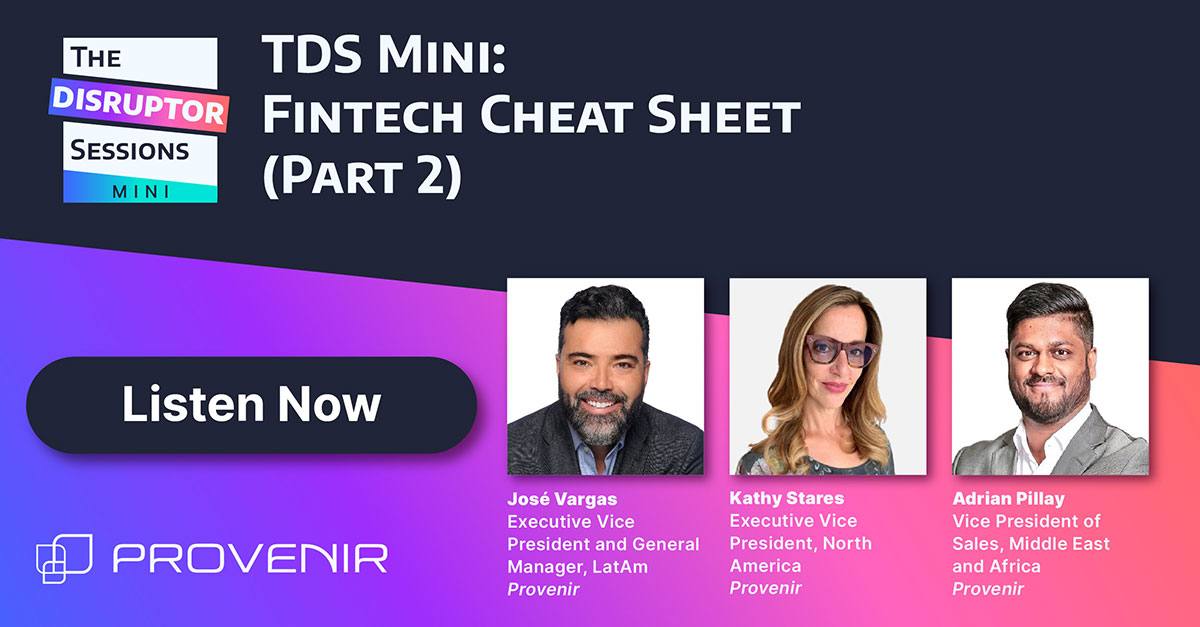
TDS Mini: Fintech Ch...


Telecommunications (telco) operators lose an estimated $40 billion to fraudsters each year, and it’s getting worse.
Last year, telco fraud increased 12%, worth an additional $38.95 billion lost and with the rising cost of handsets, fraudsters are getting away with higher value products and services. It’s becoming harder than ever to identify fraudulent behavior as it becomes more complex – there are more than 200 types of fraud within the telco industry alone. The problem clearly isn’t going away any time soon.
Where attackers manipulate providers’ security protocols to hijack users’ phone numbers, allowing unauthorized access to sensitive personal data and financial accounts.
The first step to fighting fraud is Access – accessing data, including alternative data, provides more thorough information for fraud and KYC checks during the activation processes.
A common kind of fraud at this stage of the customer lifecycle is subscription fraud, which can be very costly. Fraudsters use stolen IDs and credit card information to create accounts, buy expensive handsets, and either pocket the free merchandise or resell it. If the criminal is purchasing a state-of-the-art smartphone, that’s potentially thousands in lost revenue from a single scheme.
Access to a deep well of traditional and alternative data sources empowers you to identify even the most subtle abnormalities during fraud and KYC checks at onboarding. For example, synthetic IDs are commonly used by fraudsters to open accounts, which can be difficult to catch, since synthetic IDs use some legitimate elements to fly under the radar. Alternative data can give you the clues you need to spot fraud, even in cases like this. Check the email to see if there are any minor changes or see if the geolocation matches social media activity.
Step two is Analyze: accurately analyze all the data you’ve accessed. And don’t just analyze it the old fashioned way – integrate embedded intelligence like machine learning and AI into your analytics.
Say a phishing victim has had their phone breached and the criminal has text forwarding activated so they can receive a security code. AI/ML analysis of mobile data could alert a risk team that texts are being forwarded, and suggest further checks be performed.
Tactics like account takeover can cause damage even after onboarding. Imagine having to catch tiny inconsistencies for hundreds of thousands of subscribers throughout the entire lifecycle all on your own. It can be a challenge for legacy decisioning solutions to identify complex fraud indicators.
Having smart, automated technology that can pick out unusual data and analyze it quickly and accurately will make the difference for both new and active subscribers. Machine learning and AI gets smarter as it analyzes data and behavior, getting better at recognizing fraudulent patterns that would have otherwise been overlooked.
Optimize your fraud process with machine learning and AI technology that can analyze any kind of data and improves its accuracy with each analysis.
The final step to help you stop fraud is Action: when you have accessed all the traditional and alternative data you need and AI/ML has analyzed it, you are ready to decision.
If the first layer of checks don’t yet paint a clear picture of the legitimacy of a subscriber, your decisioning solution can look deeper into the data for further analysis. Depending on your model, you might instead offer them a plan for high-risk subscribers, or reject them outright. If everything checks out, on the other hand, your decisioning engine would then approve and onboard.
Advanced decisioning uses all of the data you’ve gathered to make the most accurate decisions- that protect you against fraud. It improves efficiency and saves you money by performing only necessary checks – you never have to take a one-size-fits-all approach.
Once decisions are made, the outcomes are fed back into the platform, adding even more valuable data and analysis to help the AI/ML technology guide your decisioning to more accurate decisions in the future.
It’s not data that wears eyeliner and plays guitar – it’s a powerful tool for financial inclusion.
Simply put, alternative data is all the information not maintained by credit bureaus that can paint a more holistic picture of a person’s financial health and overall risk. It can include financial information like rent, utility, or even telco payments, but also analyzes other information like social media activity, geolocation, and property records.
Alternative data can tell a more complete story than traditional data alone. There are nearly 30 million “credit invisibles” in the US and close to another 10 million in Canada, joined by 70% of Latin America’s population, 70% of Southeast Asia’s, and almost one quarter of the entire world – there are nearly 1.4 billion people without banking or credit history. That’s an awful lot of people who wouldn’t be qualified to open a telco account via traditional methods alone.
And while credit scores have proven to be strong indicators of whether someone will pay their bills on time, doesn’t it make sense to actually take into consideration utility and other recurring payment patterns to predict the same behavior for telco? Over 90% of Americans make payments on financed mobile phones, but only 2.5% of consumer credit bureau files contain telco payment information. While you might have the payment records for your own subscribers, being able to access that information for those looking to switch operators would be a reliable way to determine risk. Layering in utility data on top of credit scores gives you highly relevant insights to provide even stronger indicators of risk.
Telco, utility, and lease/property information is often highly indicative of credit trustworthiness but just isn’t considered by credit bureaus. That’s why alternative data is so powerful.
Telcos can access alternative data through public records, along with any data partners you might have integrated into your decisioning solution. These data partners could share social media activity, employment information, and more – what you can access all dependent on your region’s compliance rules and regulations around credit decisioning.
While this information may not have as direct a correlation with credit trustworthiness, it can give you a fuller picture of someone’s lifestyle. Social media, for instance, can be a very enlightening source of alternative data, giving you insight into activities and habits that may be relevant. As more social media companies begin to offer embedded payment options on their platforms, someone’s Instagram profile could provide you with a look into their transactional behavior. Understanding how often a person shops on Instagram, how expensive the items they buy are, and if these purchases relate to the timeliness of their bill payments could be helpful ways to analyze this behavior.
Make sure you have access to data integrations and partners that will offer you the widest lens within the required parameters to look at subscribers in order to get the best results from alternative data. Choosing technology that can accelerate partner integration and alternative data access will guarantee rapid ROI, connecting you with more subscribers, faster.
Yes! Credit scores may not necessarily reflect a person’s current financial health, as the score heavily weighs past credit behavior in addition to current behavior. Even if someone is very responsible in the present, bad decisions from their past could still negatively affect their credit. If you ran that person’s profile through your traditional decisioning process, they might get flagged as high risk, leading to an inaccurate assessment. The same would be true of someone who never had access to credit due to past financial status or discriminatory lending practices. Alternative data solves that problem.
And there’s evidence to support it: 64% of lenders/credit providers that use alternative data see improved risk assessment, 48% have an increase in offer acceptance, and 64% see tangible benefits within one year of implementation. Other benefits include improved decisioning accuracy, better fraud protection, greater financial inclusion, faster speed-to-market, rapid onboarding, and overall maximized value.
We’re living in an era where information is as accessible as it’s ever been – it’s time to use it. The telco industry is at the forefront of innovation, so why keep assessing creditworthiness the same way we did decades ago? When you integrate alternative data into your decisioning, you’re making the world even bigger for millions of people who need telco services and inviting in low-risk subscribers that will accelerate your growth.
Intelligent, holistic risk decisioning solutions can play a pivotal role in empowering telco providers to combat fraud effectively. By leveraging real-time data integration (ahem, the three As already covered) and machine learning, these advanced fraud solutions can analyze vast amounts of data from multiple sources at every stage of the customer journey. This enables you to ensure that fraudulent activities are detected and prevented before they escalate, enhancing speed, accuracy in decision-making, and improving the subscriber experience. Provenir customer MTN was able to stop an additional 135% of high-risk transactions via fraud mitigation solutions, without adding friction to the application process. Implementing intelligent risk decisioning not only mitigates fraud but also improves operational efficiency and enhances the overall customer experience. Ready to fight back?
As fraud continues to increase in the automotive industry, the impact it has on financial services providers and vehicle buyers is significant. Thanks to the high-value transaction of car buying, and a growing shift towards digital loan applications, fraudsters are finding increasingly sophisticated ways to exploit vulnerabilities in the system. And it’s working for them – automotive fraud is up by more than 50% this year versus last year. Auto lenders are caught in a high-stakes environment, forced to balance the need for instant loan approvals and seamless customer experiences with robust risk management and fraud prevention measures.
This need-for-speed in application processing, driven by consumer expectations and mounting competitive pressure, can create gaps that fraudsters are ready to exploit – putting your financial stability, profitability, and industry reputation at risk. So we’re looking at common fraud schemes, the impact fraud has on the auto industry, and actionable insights for technology-driven solutions that can help you combat fraud in an increasingly digital, high-risk world.
Why is fraud so prevalent in auto lending? There are several factors that make auto financing an appealing target for fraudsters:
Auto loans tend to be high-volume and high-value, meaning successful scams can yield substantial financial rewards.
Investment in the right technology is key to a successful, proactive approach to fraud and risk management. The foundation of future-proofing lies in adopting scalable, cloud-based solutions that are capable of adapting to changing fraud threats. Cloud-based platforms offer you flexibility and real-time updates, while AI-driven tech enhances fraud detection by rapidly and accurately analyzing large datasets to identify subtle, complex patterns that can otherwise slip through the cracks. And advanced AI tools will continuously learn from your fraud decisions, allowing you to refine fraud detection processes and stay ahead of fraudsters.
Provenir’s AI-powered fraud solutions offer you:

Bring your own data or connect to one of our market leading partners using Marketplace integrations

Technology is an enabler of growth, but it can also be a hindrance to efficiency. When you’ve accumulated outdated, redundant, or overly complex tech systems, you may feel the pressures of ‘tech bloat.’ Check out the recent article with FinTec Buzz, where Brendan Deakin, Provenir’s General Manager of the U.S. shares his thoughts on how to reduce tech bloat in order to improve efficiency, security, and innovation.

The African market, characterized by rapid digital growth and increasing financial inclusion, is facing a surge in application fraud. Traditional fraud prevention methods are struggling to keep pace with the evolving tactics of fraudsters. This webinar will explore how a holistic onboarding decision platform can revolutionize fraud prevention in Africa.
We will discuss the key challenges of application fraud in the African context, including identity theft, synthetic fraud, and social engineering attacks. We will then delve into how a decision platform can address these challenges by:
By adopting a holistic approach with a decision platform, organizations can enhance their fraud prevention capabilities, protect their businesses, and ensure a positive customer experience in the dynamic African market.

Provenir
Alliance for Innovative Regulation (AIR)

Provenir
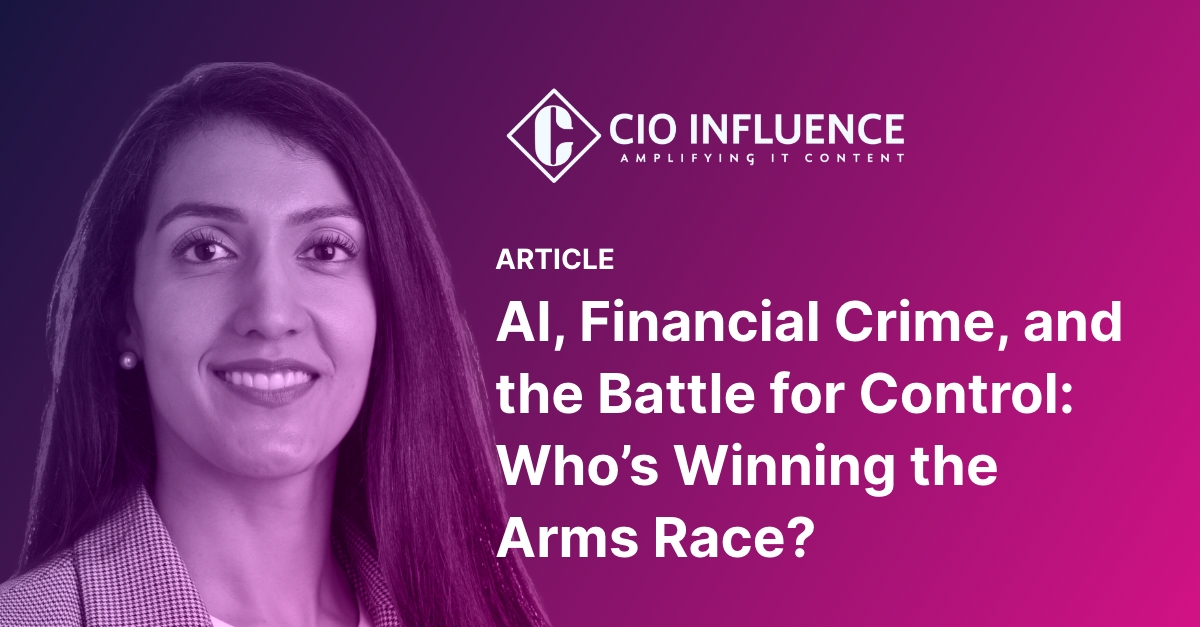
As always, the battle between financial services providers and fraudsters wages on. But increasingly, the weapon of choice on both sides is Artificial Intelligence (AI). As both financial leaders and fraudsters face rapid technological advancement, the arms race is heating up – and the stakes have never been higher. Check out the article from Sophia Qureshi, Provenir’s VP of Product Management, Fraud Solutions in CIO Influence, where she shares key insights on the AI revolution in finance – and how financial institutions can win the war against fraud.

Preventing fraud and building trust with customers has evolved over the years. The global market recognizes this and views customer trust and security strategically, with 65% of businesses indicating that identity verification and fraud protection activities are differentiators that can drive revenue.
GBG IDology has an extensive history of tracking fraud data, which gives us a unique perspective on trends not seen elsewhere in the market. Our latest Global Fraud Report: 9th Edition explores customer experience and fraud prevention in the age of artificial intelligence The report’s insights are significant for businesses trying to stop new types of fraud while making things easier for their customers.
These insights show that companies must instill trust along the customer journey. Achieving this means using an identity verification platform powered by onboarding intelligence, cross-industry expertise and enhanced data sources to quickly and responsibly verify identities.
So, how can businesses do more with less data and deliver seamless digital experiences that exceed customer expectations without increasing the risks of fraud?
The solution lies in rethinking digital identity verification (IDV). Meeting modern demands requires digital identity verification that can:
Look across multiple data sources. Over 50% of companies reported an overall increase in fraud across mobile, online, contact centers, and in-person channels. As fraudsters continue to exploit an interconnected system of online and offline channels, a holistic, layered approach to IDV is essential.
A solution utilizing diverse sets of enhanced data sources can quickly verify consumer identities without excessive data collection. By analyzing less invasive information like IP addresses, phone numbers, and email addresses, companies can conduct ‘soft’ KYC checks to evaluate risk.
When these solutions are a part of a greater verification strategy, businesses also gain detailed feedback on identity checks. Incorporating additional solutions such as biometrics-based verification and documentation authentication ensures businesses have more inclusive ways to deliver the right verification experience at the right time. This layered approach provides transparency into onboarding decisions needed to meet compliance checks and regulatory needs, without adding unnecessary friction.
A recent success story illustrates the power these solutions can have. A business came to GBG IDology looking to overcome increasing customer acquisition costs. After effectively implementing the right solutions for their needs, the client was able to conduct thorough risk assessments and customize journeys for new clients. This resulted in a 5:1 return on investment and allowed the client to convert more leads, accelerating loan approvals without increasing friction or fraud, which also resulted in increased cost savings.
Offer visibility into cross-industry intelligence. Fraud moves between industries and across borders indiscriminately, specifically synthetic identity fraud (SIF). Moreover, our recent fraud report found that 74% are concerned about the potential for SIF to increase.
An extensive cross-industry network enables different institutions to benefit from fraud data and learnings elsewhere in the ecosystem, securing the whole network more effectively.
Utilizing cross-industry intelligence amplifies real-time fraud intelligence between companies in the network anonymously, giving companies insight into fraud threats trending in other industries.
Firms can then build a complete fraud intelligence ecosystem, empowering them to make smarter decisions faster about identities. With deeper, cross-industry onboarding intelligence, companies can identify trusted borrowers while adding step-up authentication to those needing an extra touch.
Combine AI with human fraud expertise. With its ability to scrutinize vast volumes of digital data quickly, AI can automate the discovery of threats for faster, enhanced decision-making, but it’s not foolproof. Business leaders reported generative AI to be the biggest trend in identity verification over the next 3-5 years. When asked why, leaders cited the tech’s potential to create more accurate synthetic identities, increase the volume of phishing/smishing and generate more convincing fake IDs.
Additionally, AI alone can’t provide the transparency companies need to explain to regulators why a decision was made, produce an auditable trail showing policies were followed during onboarding and better train the machine learning models that power it.
The combination of AI and human fraud expertise eliminates these issues. Fraud analysts provide oversight and closed-loop transparency for continuous improvement and optimization. Fraud analysts are also invaluable in providing first-hand, expert insight into the fraud they’re seeing in the marketplace and best practices for preventing it in the future.
This balance of security and convenience remains the ultimate challenge, beginning during onboarding. Layered identity verification solutions are a critical technology that can empower firms to evaluate consumer risk while staying competitive. With the right solution in place, companies can deliver a seamless and secure borrowing experience that builds trust and leads to loyalty for long-term growth.
Check out IDology’s Global Fraud Report: 9th Edition to gain more insights into building trustworthy customer journeys that keep fraud out.
NEWS
PARSIPPANY, N.J. — (BUSINESS WIRE) — As the financial services world becomes increasingly digitized and consumer demands evolve, fraudsters and their methods are becoming more sophisticated. Provenir, a global leader in AI-powered risk decisioning software, is helping organizations fight back by detecting these emerging threats via sophisticated decisioning tools and advanced analytics to increase fraud detection while minimizing friction in the customer journey.
Identity theft and synthetic identities continue to be major concerns and will account for roughly half of all financial services fraud cases by 2025. Also, in a global survey of financial services executives, 43 percent said identifying fraud is a top challenge, yet only 7 percent report their anti-fraud measures are completely effective. This emphasizes the need for powerful fraud solutions that offer flexibility, putting control in the business user’s hands.
Provenir is on a mission to help businesses navigate this increasingly complex landscape and has collaborated with best-of-breed third-party providers to bring a fraud onboarding solution to market. Provenir’s AI-Powered Decisioning Platform enables organizations to stay ahead of fraud threats, with readily available data sources that can be easily integrated into decisioning workflows, AI model creation and monitoring, to continuously optimize fraud risk models, with configurable rules to respond quickly when new threats arise.
Selecting, integrating and managing different third-party data sources for effective fraud screening is difficult. The Provenir platform integrates and manages multiple data sources or end point solutions within one platform for fraud decisioning. This extensibility and flexibility enables organizations to create custom strategies integrating the best performing third-party data as fraud risks and behaviors change and new vendors and offerings come to market.
The AI-powered risk decisioning platform connects fraud scores, identity checks and device validation, integrating multiple layers of fraud detection into decisioning workflows to mitigate threats at application screening, including synthetic fraud, impersonation and mule indicators. This also eliminates siloed environments between credit and fraud risk teams, to ensure holistic, end-to-end decisioning with a complete view of customers across the entire lifecycle.
“Fraud prevention is a crucial area of focus for today’s progressive financial institutions,” said Sophia Qureshi, Vice President of Product Management, Fraud Solutions, Provenir. “This requires an intelligent approach that reduces unnecessary (and unwelcome) friction to the customer journey. This underscores the value of having a single integrated, intelligent decisioning platform that can analyze and manage all fraud and credit risk across the customer lifecycle. This helps balance better, more accurate application fraud detection and prevention with reduced friction across the lifecycle while powering sustainable business growth.”
Provenir will host a webinar on June 27 on steps financial institutions can take to achieve accurate application fraud detection and prevention with reduced friction across the lifecycle. The webinar will outline how an integrated, intelligent decisioning platform can manage all risk and include a demonstration of Provenir’s fraud solution. To register for the webinar, please visit: https://provenir.zoom.us/webinar/register/1717187233802/WN_SZVzXT3mTnuxp-V9bsQtzw
ON-DEMAND WEBINAR
Fraud threats continue to rise. Which is why financial services organizations need to continually evolve to say ahead of fraudsters. But stricter controls aren’t the only answer, because you run the risk of shutting out creditworthy customers or adding unnecessary (and unwelcome) friction to the customer journey. So how can you balance better, more accurate application fraud detection and prevention with reduced friction across the lifecycle and sustainable business growth?
A single integrated, intelligent decisioning platform that can analyze and manage all fraud and credit risk across the customer lifecycle. Join us live on June 25th as our Provenir experts share insights and guidance on how to reduce friction, prevent losses, and ensure your fraud prevention strategy can keep up with evolving threats.
Key takeaways:
VP of Product Management, Fraud Solutions, Provenir
Director of Presales, North America, Provenir
ON-DEMAND WEBINAR
Customer experience is incredibly important to today’s discerning consumers, whether they are looking for financial services or any other product. Reducing friction at onboarding and across the entire customer journey is critical for consumer lenders – but how can you do that without compromising your risk strategy or increasing your risk of fraud? Watch on-demand now, and hear from our panel of experts who share insights and best practices for reducing friction, so you can effectively balance risk with opportunity – and grow your business.