Blog

The Fraud-AI Double Bind: New Survey Reveals the Fraud-AI Paradox Facing Financial Institutions

Amy Sariego
February 20, 2026

Financial institutions face a critical tension. They need AI to combat increasingly sophisticated fraud. Yet 77% are concerned about AI-enabled fraud threats.
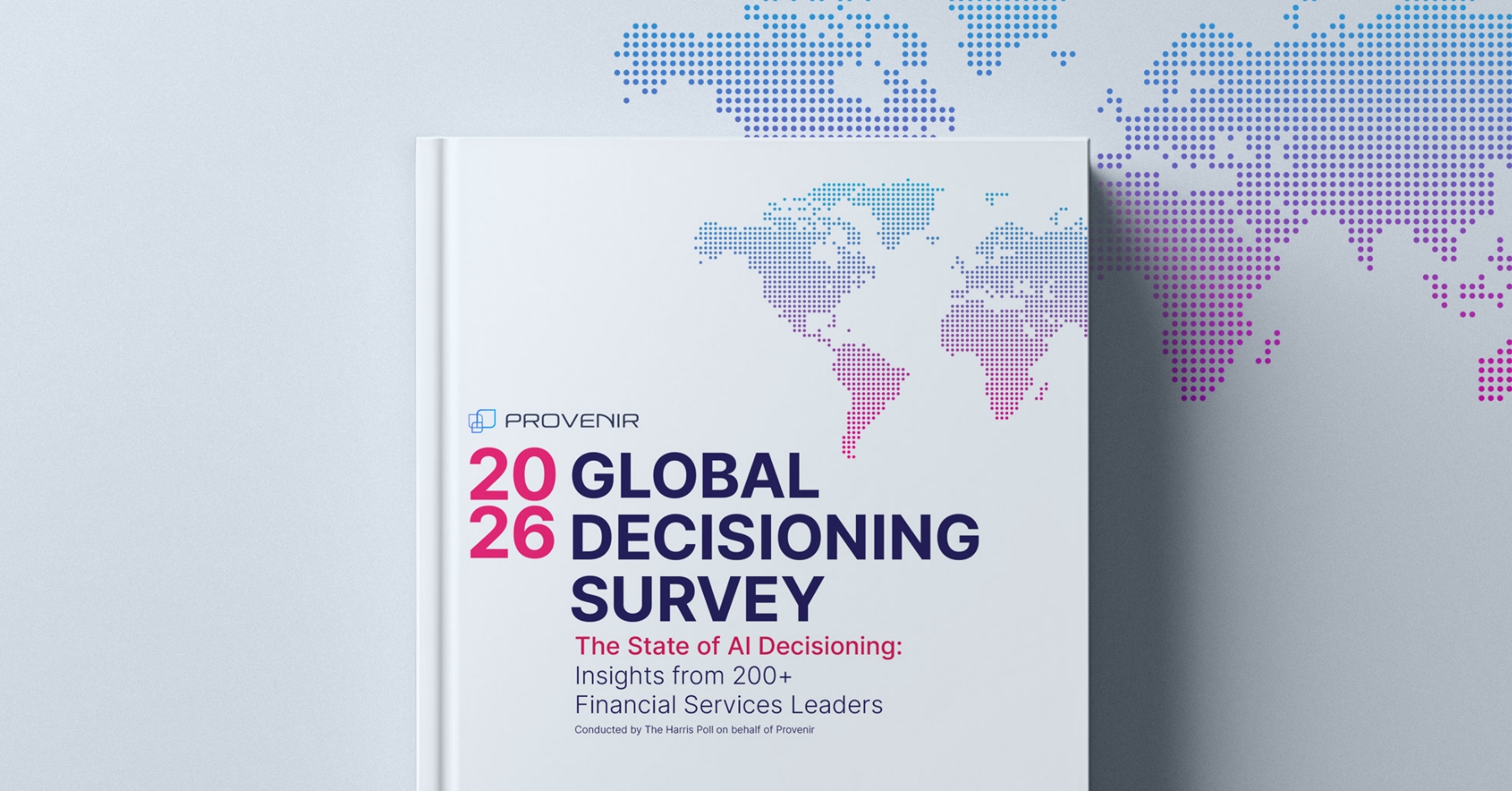
Our 2026 Global Decisioning Survey, conducted by The Harris Poll across 203 senior decision-makers in 22 countries, reveals the scope of this challenge and the strategies organizations are using to address it.

The Numbers

The adoption of AI for fraud prevention is strong:

Yet the concern is equally widespread:

  • 77% worry about AI-enabled fraud threats
  • 50% struggle to detect and react quickly to new fraud trends
One Chief Risk Officer we surveyed described the compliance challenge as “trying to get certified for a standard that hasn’t been written yet.”

The Speed Problem

When we asked about their biggest application fraud challenge, 50% identified detecting and reacting quickly to new fraud trends.

Bad actors use AI to evolve their tactics in real-time, testing thousands of attack vectors simultaneously. Traditional monthly or quarterly model updates can’t keep pace. Organizations need real-time, adaptive AI systems to combat fraud, but deploying those systems runs directly into implementation barriers around governance and explainability.

What Comprehensive Fraud Strategy Requires

When we asked what’s most important for delivering comprehensive fraud prevention, organizations prioritized four capabilities:
    {
    "type": "doughnut",
    "data": {
        "labels": [
            "50-2",
            "50",
            "33",
            "66"
        ],
        "datasets": [
            {
                "barPercentage": 0.9,
                "borderWidth": "0",
                "data": [
                    50,
                    50,
                    33,
                    67
                ],
                "borderColor": "rgba(0, 0, 0, 0)",
                "backgroundColor": [
                    "rgba(0, 0, 0, 0)",
                    "rgba(0, 0, 0, 0)",
                    "#00E3D3",
                    "rgba(51, 62, 92, 0.31)"
                ],
                "label": ""
            }
        ]
    },
    "debug": true,
    "options": {
        "indexAxis": "x",
        "maintainAspectRatio": false,
        "scales": {
            "y": {
                "display": false
            },
            "x": {
                "display": false
            }
        },
        "plugins": {
            "title": {
                "font": {
                    "family": "'Helvetica Neue', 'Helvetica', 'Arial', sans-serif",
                    "size": 12
                }
            },
            "subtitle": {
                "font": {
                    "family": "'Helvetica Neue', 'Helvetica', 'Arial', sans-serif",
                    "size": 12
                }
            },
            "legend": {
                "display": false
            },
            "tooltip": {
                "enabled": false
            },
            "deferred": {
                "yOffset": "30%",
                "delay": 500
            }
        },
        "animation": {
            "enabled": true
        }
    }
}

33%

rank as most important

Comprehensive fraud risk review of customer data:
Organizations need complete visibility across customer interactions and behavior patterns. Siloed views by channel or product line leave blind spots.
    {
    "type": "doughnut",
    "data": {
        "labels": [
            "50-2",
            "50",
            "23",
            "87"
        ],
        "datasets": [
            {
                "barPercentage": 0.9,
                "borderWidth": "0",
                "data": [
                    50,
                    50,
                    23,
                    77
                ],
                "borderColor": "rgba(0, 0, 0, 0)",
                "backgroundColor": [
                    "rgba(0, 0, 0, 0)",
                    "rgba(0, 0, 0, 0)",
                    "#00E3D3",
                    "rgba(51, 62, 92, 0.31)"
                ],
                "label": ""
            }
        ]
    },
    "debug": true,
    "options": {
        "indexAxis": "x",
        "maintainAspectRatio": false,
        "scales": {
            "y": {
                "display": false
            },
            "x": {
                "display": false
            }
        },
        "plugins": {
            "title": {
                "font": {
                    "family": "'Helvetica Neue', 'Helvetica', 'Arial', sans-serif",
                    "size": 12
                }
            },
            "subtitle": {
                "font": {
                    "family": "'Helvetica Neue', 'Helvetica', 'Arial', sans-serif",
                    "size": 12
                }
            },
            "legend": {
                "display": false
            },
            "tooltip": {
                "enabled": false
            },
            "deferred": {
                "yOffset": "30%",
                "delay": 500
            }
        },
        "animation": {
            "enabled": true
        }
    }
}

23%

Reducing friction in customer experience

Security cannot come at the cost of customer experience. Organizations that create too much friction lose legitimate customers to competitors.
    {
    "type": "doughnut",
    "data": {
        "labels": [
            "50-2",
            "50",
            "22",
            "78"
        ],
        "datasets": [
            {
                "barPercentage": 0.9,
                "borderWidth": "0",
                "data": [
                    50,
                    50,
                    22,
                    78
                ],
                "borderColor": "rgba(0, 0, 0, 0)",
                "backgroundColor": [
                    "rgba(0, 0, 0, 0)",
                    "rgba(0, 0, 0, 0)",
                    "#00E3D3",
                    "rgba(51, 62, 92, 0.31)"
                ],
                "label": ""
            }
        ]
    },
    "debug": true,
    "options": {
        "indexAxis": "x",
        "maintainAspectRatio": false,
        "scales": {
            "y": {
                "display": false
            },
            "x": {
                "display": false
            }
        },
        "plugins": {
            "title": {
                "font": {
                    "family": "'Helvetica Neue', 'Helvetica', 'Arial', sans-serif",
                    "size": 12
                }
            },
            "subtitle": {
                "font": {
                    "family": "'Helvetica Neue', 'Helvetica', 'Arial', sans-serif",
                    "size": 12
                }
            },
            "legend": {
                "display": false
            },
            "tooltip": {
                "enabled": false
            },
            "deferred": {
                "yOffset": "30%",
                "delay": 500
            }
        },
        "animation": {
            "enabled": true
        }
    }
}

22%

Aligning data at customer level vs. by channel

Breaking down silos to create unified customer views enables better fraud detection without false positives that frustrate good customers.
    {
    "type": "doughnut",
    "data": {
        "labels": [
            "50-2",
            "50",
            "19",
            "81"
        ],
        "datasets": [
            {
                "barPercentage": 0.9,
                "borderWidth": "0",
                "data": [
                    50,
                    50,
                    19,
                    81
                ],
                "borderColor": "rgba(0, 0, 0, 0)",
                "backgroundColor": [
                    "rgba(0, 0, 0, 0)",
                    "rgba(0, 0, 0, 0)",
                    "#00E3D3",
                    "rgba(51, 62, 92, 0.31)"
                ],
                "label": ""
            }
        ]
    },
    "debug": true,
    "options": {
        "indexAxis": "x",
        "maintainAspectRatio": false,
        "scales": {
            "y": {
                "display": false
            },
            "x": {
                "display": false
            }
        },
        "plugins": {
            "title": {
                "font": {
                    "family": "'Helvetica Neue', 'Helvetica', 'Arial', sans-serif",
                    "size": 12
                }
            },
            "subtitle": {
                "font": {
                    "family": "'Helvetica Neue', 'Helvetica', 'Arial', sans-serif",
                    "size": 12
                }
            },
            "legend": {
                "display": false
            },
            "tooltip": {
                "enabled": false
            },
            "deferred": {
                "yOffset": "30%",
                "delay": 500
            }
        },
        "animation": {
            "enabled": true
        }
    }
}

19%

Breaking down data silos between fraud and credit teams

Traditional organizational separation between fraud and credit creates blind spots. Integrated views improve both fraud prevention and credit decisioning.

How Organizations Measure Success

The variety in primary metrics reflects different organizational priorities:

54%

track enhancing operational efficiency and automation (16% say this is their primary metric)

54%

track improving accuracy of AI and ML models (25% say this is their primary metric)

52%

track reducing fraud loss (15% say this is their primary metric)
Operational efficiency and model accuracy rank equally with fraud loss reduction. Organizations recognize that sustainable fraud prevention requires systematic operational excellence beyond just loss minimization.
  • Breaking Free from the Double Bind:
    Organizations successfully navigating this tension balance aggressive AI adoption with comprehensive risk management.
  • Deploy explainable AI architectures from the start:
    They don’t sacrifice interpretability for performance. Modern approaches enable both.
  • Maintain human-in-the-loop oversight for high-risk decisions:
    AI handles volume and speed, but humans make final calls on edge cases and high-stakes scenarios.
  • Implement continuous monitoring for model drift and bias:
    They don’t deploy and forget. Models require ongoing governance.
  • Build governance as an ongoing product, not a one-time project:
    Governance evolves alongside AI capabilities and regulatory requirements.

The Implementation Reality

You can’t sacrifice governance for speed. But you also can’t sacrifice speed for governance. The most successful organizations find ways to achieve both.

They leverage platforms designed to orchestrate decisions across existing systems rather than requiring wholesale system replacement. This approach accelerates time-to-value and reduces technical risk.

Rather than ripping out decades of infrastructure, they deploy decisioning layers that orchestrate data from multiple sources and deliver decisions back to existing platforms in milliseconds.

Looking Ahead

The fraud landscape will continue to evolve faster than most organizations can currently respond. Organizations that successfully deploy explainable, governed AI at speed will protect revenue, preserve customer experience, and build sustainable advantages.
EBOOK Survey2026

Download the full 2026 Global Decisioning Survey:

LATEST BLOGS
Buy the Engine. Build the Advantage

Buy the Engine. Buil...

Blog Industry Date Buy the Engine.Build the Advantage. Christian
The Growing Threat of Fraud in UK Auto Lending

The Growing Threat o...

The Growing Threat of Fraud in UK Auto Lending
BLOG Christian Ball

Smarter Acquisition ...

Smarter Acquisition and Customer Management:How Provenir Drives Growth and
carol blog

The Generational Shi...

The Generational Shift:Why Banks Are Replacing Their Decisioning Infrastructure
Frederic blog

Why AI Requires Ente...

Why AI Requires Enterprise Platforms to Deliver Business Value
HyperPersonalization

From Risk Manager to...

From Risk Manager to Revenue Generator:How CROs Are Becoming
Hyper-personalization Myth2

The Hyper-personaliz...

The Hyper-personalization Myth Series #2:The Scorecard Trap: How Traditional
Hyper-personalization Myth1

The Hyper-personaliz...

The Hyper-personalization Myth Series #1:Why Banks Think They're Doing