BLOG Fraud

Why Nordic Banks Must Balance Fraud Control and Frictionless Onboarding to Protect Trust and Growth 

  • Blog

  • Industry

  • Date

Why Nordic Banks Must Balance Fraud Control and Frictionless Onboarding to Protect Trust and Growth

jason abbott headshot

Jason Abbott

Director, Fraud Solutions

In the digital banking era, customer expectations are measured in milliseconds, not days. Even small amounts of friction during onboarding can push potential customers to abandon the process entirely. For Nordic banks operating in some of the world’s most digitally advanced economies, protecting against increasingly sophisticated application fraud while delivering seamless experiences has become a defining challenge.

Risk decisions are no longer back-office functions. They’re part of the customer experience itself. The most successful banks are unifying fraud detection and onboarding through Decision Intelligence that reveals what’s working and what needs to change.

Application Fraud: Beyond Individual Bad Actors

Application fraud in the Nordic region has evolved significantly. While fraud losses across Nordic banks reached $2.8 billion in 2023, with Sweden and Norway among the larger contributors, the nature of these losses reveals something more concerning than the numbers alone suggest.

Today’s application fraud exploits legitimate-looking structures. Criminal networks orchestrate synthetic identity schemes, mule account networks, and first-party fraud that traditional point-in-time checks struggle to detect. A single application might appear completely clean when viewed in isolation, yet be part of a coordinated network submitting hundreds of variations with slight modifications to evade detection rules.

These organized networks use social engineering, identity theft, and increasingly AI-powered tactics to create applications that pass surface-level verification. Prevention requires more than isolated controls checking identity documents or credit scores at a single moment. Banks need continuous monitoring, behavioral profiling, and modern analytics capable of detecting patterns that didn’t exist six months ago.

The Trust Equation Has Changed

Trust has always been the foundation of banking, yet it’s no longer assumed. According to the 2024 Telesign Trust Index Report, nearly two-thirds of consumers say fraud damages brand trust and loyalty. Perhaps more concerning: 38% will completely sever ties with a brand after a security breach, and 92% believe companies are responsible for protecting their digital privacy.

In the Nordic context, where banks have historically enjoyed high levels of public confidence, this erosion of trust represents more than lost customers. It threatens the stability of the entire financial ecosystem. When a bank fails to protect customers from application fraud or creates friction that suggests insecurity, the damage extends beyond individual relationships to the institution’s reputation in the market.

The Hidden Cost of False Positives

While application fraud demands stronger controls, customer tolerance for poor experiences is at an all-time low. Research shows that 68% of consumers abandon digital financial applications because the process is too long, too confusing, or too intrusive.

Most banks miss a critical dynamic: formal declines represent only part of the abandonment problem. False positives create unnecessary friction that causes silent abandonment. These customers never complete an application, never receive a formal rejection, and never appear in declined application metrics. They simply disappear.

Studies across European markets indicate that only 15-35% of users complete financial onboarding once started, with frustration and complexity cited as primary reasons. Each abandoned application represents wasted acquisition costs and lost lifetime value. The traditional approach of applying heavy-handed, reactive fraud controls to every customer creates a vicious cycle: fraud controls increase false positives, false positives create friction, friction drives silent abandonment, and abandoned applications become invisible losses.

Unnecessary friction also diminishes trust by signaling that the bank lacks confidence in its own security measures. When legitimate customers face slow identity checks, repeated verification requests, or unexplained delays, they begin to question whether their information is truly secure.

From Point-in-Time Checks to Continuous Decisioning

Leading Nordic banks are recognizing that the old model no longer works. Point-in-time checks (verifying identity documents at submission, pulling a credit score, running basic rules) can’t detect application fraud networks or distinguish between legitimate customers who need fast service and coordinated fraud patterns that require deeper scrutiny.

The shift is toward continuous decisioning: real-time analytics and monitoring that detect suspicious activity without creating manual backlogs or customer-facing delays. According to regional fraud surveys, many Nordic banks are already investing in AI-driven monitoring systems designed to reduce both fraud and false positives.

Continuous decisioning alone, however, falls short. What separates the most sophisticated banks is their approach to Decision Intelligence: the layer that executes decisions, reveals what’s working, and provides insights into what to change.

Decision Intelligence: The Strategic Answer

Decision Intelligence transforms the fraud-versus-friction problem from an unsolvable tradeoff into an integrated optimization challenge. Instead of treating application fraud controls and onboarding experience as separate problems managed by separate teams, Decision Intelligence creates a unified system that connects decisions to outcomes and recommends what to change.

Banks using Decision Intelligence can see beyond approval rates and fraud losses to understand the relationship between specific fraud signals and both true fraud detection and false positive rates. They can identify which verification steps are catching actual fraud networks versus which are simply adding friction that drives legitimate customers away. They can simulate the impact of policy changes before implementation, testing whether adjusting a specific threshold will reduce silent abandonment without increasing fraud exposure.

This approach enables dynamic friction that adapts to risk in real-time. Low-risk customers (those with behavioral patterns, device signals, and identity markers consistent with legitimate applications) enjoy fast onboarding. High-risk applications that match network fraud patterns trigger targeted, justifiable controls. The system continuously learns from outcomes. Every decision feeds a learning loop that improves both fraud detection accuracy and false positive reduction.

The most sophisticated banks are using Decision Intelligence to create streaming data feeds that enable instant identity verification, behavioral risk scoring, and graph intelligence that detects connections between applications that appear unrelated at first glance. They add intelligent friction only where needed and remove unnecessary friction where it’s only slowing down legitimate customers.

Making Application Fraud Detection a Competitive Advantage

Customer-centric risk design, powered by Decision Intelligence, is becoming a differentiator. Dynamic checks ask for additional context only when specific risk signals appear. Identity signals like device behavior, biometrics, and historical patterns help lower friction for trusted customers. Predictive models and network detection deter organized application fraud without blocking legitimate users.

This intelligent approach demonstrates transparency and fairness in risk decisions, which enhances trust rather than eroding it. Customers understand that security measures exist for their protection. What they reject is blanket friction that treats everyone as a potential fraudster.

Building Infrastructure for Tomorrow’s Threats

Investment cases should reflect today’s known application fraud tactics and the capability to adapt to tomorrow’s unknowns. Legacy systems (slow, brittle, and fragmented) cannot support the kind of real-time, intelligent risk management that modern banking requires.

Banks that view fraud detection and onboarding as separate problems will continue to struggle with the false choice between security and speed. Those that recognize them as two sides of the same integrated decision problem will find competitive advantage through Decision Intelligence that reveals performance gaps and enables continuous optimization.

The path forward requires building infrastructure that delivers both protection and experience through adaptive, data-driven decisioning where every decision is executed, measured, learned from, and improved. For Nordic banks, this represents an opportunity to transform application fraud management from a cost center into a strategic differentiator that protects customers, preserves trust, and enables growth in an increasingly digital world.

LATEST BLOGS

The Growing Threat of Fraud in UK Auto Lending

The Growing Threat o...

The Growing Threat of Fraud in UK Auto Lending
BLOG Christian Ball

Smarter Acquisition ...

Smarter Acquisition and Customer Management:How Provenir Drives Growth and
carol blog

The Generational Shi...

The Generational Shift:Why Banks Are Replacing Their Decisioning Infrastructure
Frederic blog

Why AI Requires Ente...

Why AI Requires Enterprise Platforms to Deliver Business Value
HyperPersonalization

From Risk Manager to...

From Risk Manager to Revenue Generator:How CROs Are Becoming
Hyper-personalization Myth2

The Hyper-personaliz...

The Hyper-personalization Myth Series #2:The Scorecard Trap: How Traditional
Hyper-personalization Myth1

The Hyper-personaliz...

The Hyper-personalization Myth Series #1:Why Banks Think They're Doing
Beyond Static Rules

Beyond Static Rules

Beyond Static Rules:How Learning Systems Enhance Decisioning in Financial

Continue reading

BLOG Mark

Why Telcos Can’t Afford to Think Like Banks

  • Blog

  • Industry

  • Date

Why Telcos Can’t Afford to Think Like Banks –
And Why That’s Their Advantage

mark-jackson

Mark Jackson

Senior Sales Executive

Most telcos are barely growing faster than inflation. They’re trapped in saturated markets where customers churn over minor price differences or the promise of a newer handset. The conventional wisdom says they should adopt the same risk-averse, compliance-heavy decision-making frameworks that banks use. 

But banks and telcos operate in completely different contexts. Unlike banks, telcos are technology companies that built the networks powering global communication. Their teams already understand AI, real-time systems, and technical complexity. The operators winning today—Verizon in the US, Deutsche Telekom in Germany, Etisalat in the Middle East—compete on coverage and reliability, not price. They’ve moved from “cheapest unlimited data plan” to “best customer experience,” and that requires intelligent, real-time decisioning about which customers to serve, how to serve them, and what to offer. 

The advantage belongs to telcos willing to think like telcos, not like banks. 

Not All Churn Is Bad (And Treating It That Way Destroys Margins)

Most operators treat customer retention as a binary success metric, measuring every lost customer as failure. This approach ignores a more sophisticated reality: some customers should leave. 

Consider the different types of churn from the operator’s perspective. Voluntary churn happens when customers leave for better deals, which most operators want to prevent. Involuntary churn occurs when operators cut off customers who don’t pay. Decisioning becomes critical here by identifying at-risk customers before they owe money, potentially downsizing their package to keep them profitable rather than losing them entirely. 

Sophisticated operators diverge from the pack with planned churn, deliberately choosing not to intervene to retain low-value or negative-margin accounts. Others embrace constructive churn, letting high-cost customers leave because they complain constantly, demand credits, or pay late. Losing them actually improves portfolio profitability. 

The real opportunity is profit-optimizing your churn: using data and models to selectively target retention offers to customers you genuinely want—high customer lifetime value, low cost to serve—while letting low or negative CLV customers churn without incentives. This is decisioning at its most strategic, preventing the wrong churn rather than all churn. 

A related opportunity exists in serving customers other operators reject. Better creditworthiness assessment enables profitable service to “riskier” customers. Someone might want the latest iPhone, but traditional credit checks suggest they can’t afford it. Instead of rejecting them outright, offer an older model or lower-spec Android device. You’ve still acquired a customer and you’re still generating revenue. 

Alternative data sources for decisioning beyond financial history – that telcos already have – reveal signals traditional scoring misses: device usage patterns, top-up behavior, payment consistency on other services. This opens entirely new market segments competitors may be ignoring. 

The Build Trap: When Time-to-Value Beats “Not Invented Here”

Telcos are technology companies that built their networks. Their teams include engineers and technologists who’ve already experimented with AI and machine learning, creating both opportunity and risk. 

  • The opportunity:Telcos are more AI-literate and risk-tolerant than banks. They understand technical complexity, they are comfortable with rapid iteration, and they want to see under the hood of any technology they are evaluating.
  • The risk: They often believe they can build decisioning solutions themselves, which stretches delivery cycles as internal IT teams advocate for internally built projects. But business strategies in telecom change constantly based on competitor moves. By the time an 18-month internal build is complete, the strategic context has shifted.

The calculation comes down to time-to-value and core competency. Telcos should focus on what they do best: creating reliable networks for calls and data transmission. Decisioning expertise should come from specialists who do nothing else, because the ability to adapt quickly, test new approaches, and optimize in real-time determines who wins. When your competitor launches a new retention offer, you need to respond in days or hours, not quarters. 

When Scale Makes Small Problems Catastrophic

At 50 million customers, a 1% false positive rate means 500,000 angry customers, which means everything must be automated, explainable, and reversible. But even for a 5 million customer telco, 50,000 angry customers is 1,000 issues per week!

The complexity is twofold. First, system complexity. Very few large telcos are new. Most are legacy operators that have existed for 20-30 years with multiple systems in each domain. They might have separate billing systems for mobile, fixed line, and broadband, or multiple systems from merger and acquisition history. Verizon is the result of 30+ company mergers, each bringing different systems, different customer data structures, and different business rules.

Second, product complexity. Those mergers mean customers are on thousands of different plans with different rates for calls and data, different included features. Most telcos won’t force customers to change plans, but they sometimes have to in order to shut down old systems and networks. This triggers churn, which intelligent decisioning can mitigate by identifying the right migration timing and offers for each customer.

Also at scale, governance becomes non-negotiable: Who approved this model? When was it last validated? What are the rollback procedures? Infrastructure costs don’t scale linearly, and instead of 5 stakeholders, you’re managing alignment across 20+ groups.

The Technical Conversation That Banks Never Have

When telcos evaluate platforms, their questions differ fundamentally from banks.

Banks ask about accuracy, compliance frameworks, and regulatory alignment. Telcos ask about integrations to telco-specific systems, particularly billing data, because access to usage patterns enables better real-time personalization of decisions and offers.

The technical depth telcos demand actually works in favor of platforms with solid architecture. When you can demonstrate real-time performance, clean integrations, and robust data handling, it builds credibility faster than any deck.

But that technical literacy creates a trap. Operations teams want to understand how the technology works, while C-suite executives want to know what it delivers. The right approach anchors to business goals first: Which KPIs actually matter? Then quantify the impact and frame everything in terms of ROI and outcomes. Senior leaders need to hear financial impact, implementation timelines, and risk reduction.

What Separates Winners from Survivors

Three years from now, the winning telcos will have moved from connectivity providers to intelligent service platforms. They’ll have embedded AI decisioning across the entire customer lifecycle and made those decisions in real-time with hyper-personalization. 

More importantly, they’ll have focused on doing right by the customer. Their actions will be customer centric, not operator centric. If a customer has an issue, winning operators will focus everything on fixing it before trying to upsell. Once the issue is resolved, they’ve earned the right to offer additional services. This approach extends customer lifetime, increases total revenue across that lifetime, and reduces price-driven churn because customers are treated as individuals with specific needs. 

The telcos still competing on “unlimited data for $X per month” will continue fighting margin-eroding price wars – if they even still exist! The ones delivering seamless, personalized experiences will capture disproportionate value. 

The data is already flowing through telco systems. The decisioning platforms are mature. The technical talent exists. The only variable is speed: how quickly telcos move from evaluation to implementation, from pilot to production, from feature parity to competitive advantage. 

The operators who win will be the ones who recognize that their engineering culture and risk tolerance are assets, not liabilities. They just need to point them in the right direction. 

LATEST BLOGS

The Growing Threat of Fraud in UK Auto Lending

The Growing Threat o...

The Growing Threat of Fraud in UK Auto Lending
BLOG Christian Ball

Smarter Acquisition ...

Smarter Acquisition and Customer Management:How Provenir Drives Growth and
carol blog

The Generational Shi...

The Generational Shift:Why Banks Are Replacing Their Decisioning Infrastructure
Frederic blog

Why AI Requires Ente...

Why AI Requires Enterprise Platforms to Deliver Business Value
HyperPersonalization

From Risk Manager to...

From Risk Manager to Revenue Generator:How CROs Are Becoming
Hyper-personalization Myth2

The Hyper-personaliz...

The Hyper-personalization Myth Series #2:The Scorecard Trap: How Traditional
Hyper-personalization Myth1

The Hyper-personaliz...

The Hyper-personalization Myth Series #1:Why Banks Think They're Doing
Beyond Static Rules

Beyond Static Rules

Beyond Static Rules:How Learning Systems Enhance Decisioning in Financial

Continue reading

EBOOK Survey2026

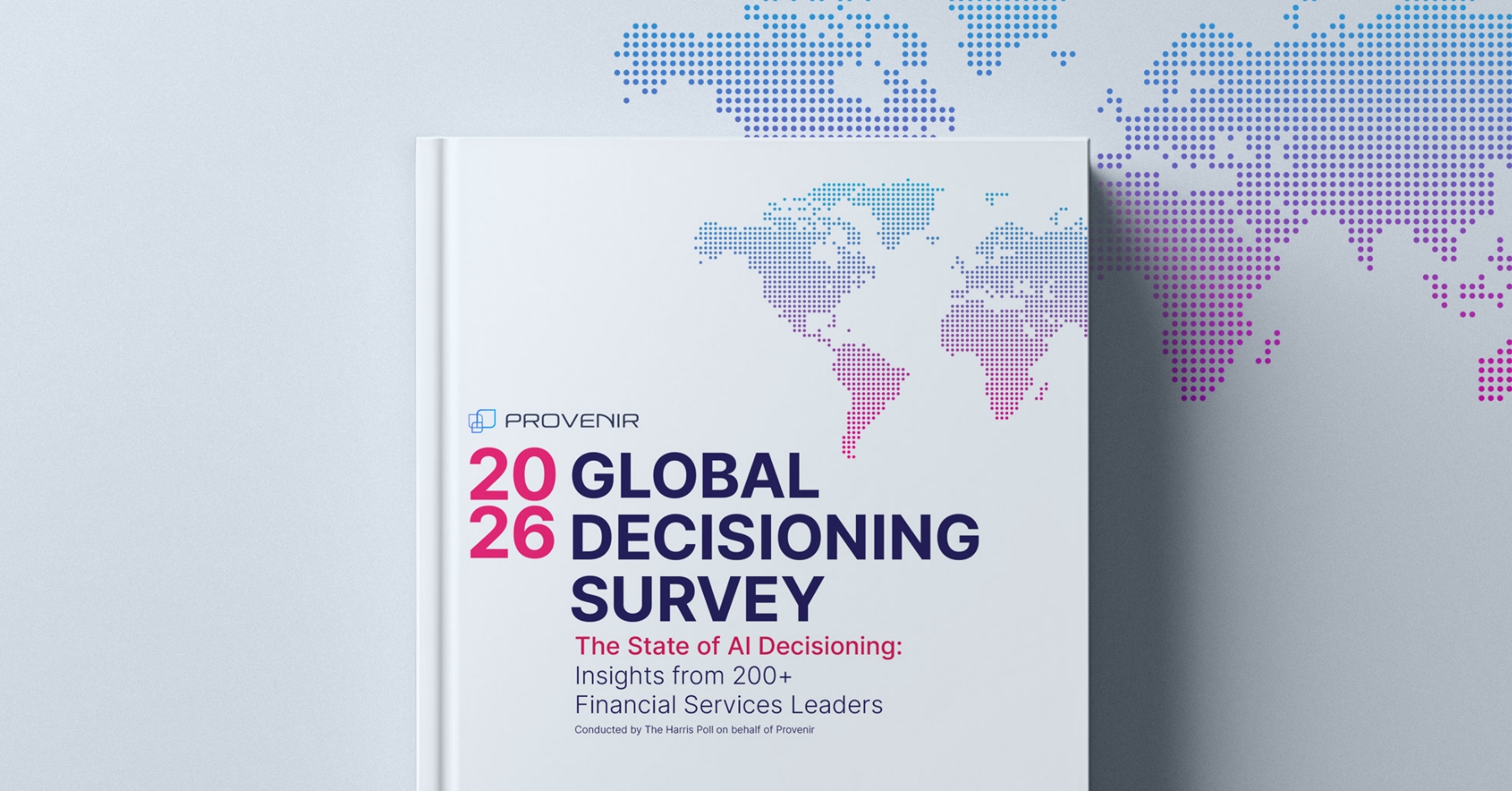
Survey: 2026 Global Decisioning Survey

What are the key challenges and priorities for financial services leaders in 2026 and beyond?

The financial services industry stands at an inflection point in its adoption of artificial intelligence for decisioning. Our 2026 Global Decisioning Survey reveals a sector that recognizes AI’s transformative potential yet struggles with universal implementation challenges.

We surveyed 203 senior decision-makers—including Chief Risk Officers, CEOs, CFOs, and Heads of Risk—across 22 countries spanning banking, fintech, insurance, telecommunications, and other financial services sectors. The findings paint a nuanced picture of an industry in transition.

KEY FINDINGS AT A GLANCE
  • The AI Paradox:

    87% trust AI-driven decisioning outcomes, yet 97% face implementation barriers
  • The Fraud Challenge:

    77% are concerned about AI-enabled fraud threats while needing AI to combat fraud
  • Real-Time Momentum:

    91% have moved beyond static-only models; 52% use hybrid approaches
  • Decision Intelligence:

    77% see it as very valuable for their strategy over the next 2-3 years
  • Investment Priority:

    60% plan to invest in AI or embedded intelligence for decisioning in 2026
  • Governance Gap:

    Only 33% have fully implemented responsible AI frameworks

These findings reveal an industry that knows where it needs to go but faces significant challenges getting there. The organizations that successfully navigate implementation barriers—around compliance, explainability, and integration—will build sustainable competitive advantages through faster, more accurate, and more adaptive decisioning.

ADDITIONAL RESOURCES

BLOG Fraud
Blog ::

Why Nordic Banks Must Balance Fraud C...

Blog Industry Date Why Nordic Banks Must Balance Fraud Control ...
The Growing Threat of Fraud in UK Auto Lending
Blog ::

The Growing Threat of Fraud in UK Aut...

The Growing Threat of Fraud in UK Auto Lending Why ...
BLOG Mark
Blog ::

Why Telcos Can’t Afford to Think Like...

Blog Industry Date Why Telcos Can't Afford to Think Like ...
BLOG Christian Ball
Blog ::

Smarter Acquisition and Customer Mana...

Smarter Acquisition and Customer Management:How Provenir Drives Growth and Reduces ...
Open Banking Expo Toronto
Event ::

Open Banking Expo Toronto

Open Banking Expo Join Provenir at The Open Banking Expo ...
Zero Trust in Digital Banking

Zero Trust in Digital Banking

Zero Trust in Digital Banking: Why Risk Leaders Need a ...
EBOOK Survey2026
eBook, Survey ::

Survey: 2026 Global Decisioning Surve...

What are the key challenges and priorities for financial services ...
LewisGRP
News ::

Leading South African Furniture Retai...

Leading South African Furniture Retailer Lewis Group Partners with Provenir ...

Continue reading

INFOGRAPHIC Hyper-personalization

Hyper-Personalization in Action

Hyper-Personalization in Action: How AI-Driven Decisioning Transforms Every Customer Interaction

Most financial institutions still rely on humans to interpret model predictions and make the final call on offers, terms, and actions. The result? Slower decisions, inconsistent experiences, and missed revenue opportunities.

Hyper-personalization changes this. AI doesn’t just predict outcomes—it prescribes the best action for each individual customer, automatically balancing profitability, risk, and experience in real time.

What You’ll Discover
  • The difference between prediction and prescription in AI decisioning
  • How hyper-personalization delivers individual-level optimization—not segment-based targeting
  • Why prescriptive AI transforms every customer interaction across your lifecycle

Explore hyper-personalization in depth with insights from our experts:

ADDITIONAL RESOURCES

BLOG Fraud
Blog ::

Why Nordic Banks Must Balance Fraud C...

Blog Industry Date Why Nordic Banks Must Balance Fraud Control ...
The Growing Threat of Fraud in UK Auto Lending
Blog ::

The Growing Threat of Fraud in UK Aut...

The Growing Threat of Fraud in UK Auto Lending Why ...
BLOG Mark
Blog ::

Why Telcos Can’t Afford to Think Like...

Blog Industry Date Why Telcos Can't Afford to Think Like ...
BLOG Christian Ball
Blog ::

Smarter Acquisition and Customer Mana...

Smarter Acquisition and Customer Management:How Provenir Drives Growth and Reduces ...
Open Banking Expo Toronto
Event ::

Open Banking Expo Toronto

Open Banking Expo Join Provenir at The Open Banking Expo ...
Zero Trust in Digital Banking

Zero Trust in Digital Banking

Zero Trust in Digital Banking: Why Risk Leaders Need a ...
EBOOK Survey2026
eBook, Survey ::

Survey: 2026 Global Decisioning Surve...

What are the key challenges and priorities for financial services ...
LewisGRP
News ::

Leading South African Furniture Retai...

Leading South African Furniture Retailer Lewis Group Partners with Provenir ...

Continue reading

AI infographic

5 AI Use Cases Digital Banks Must Govern by 2025

5 AI Use Cases Digital Banks Must Govern by 2025

Digital banks across APAC are accelerating their AI adoption—but core use cases like credit scoring, fraud detection, AML/KYC, customer targeting, and compliance automation are now considered “high-risk” under evolving regulatory regimes. This infographic shows how to scale with confidence, balancing growth, compliance, and customer trust.
What You’ll Discover
  • The five critical AI use cases your digital bank must govern by 2025
  • Why regulators are classifying them as high-risk
  • Key governance controls and decisioning capabilities that turn risk into advantage
Want more in-depth info on how Provenir implements AI?

Learn More

ADDITIONAL RESOURCES

BLOG Fraud
Blog ::

Why Nordic Banks Must Balance Fraud C...

Blog Industry Date Why Nordic Banks Must Balance Fraud Control ...
The Growing Threat of Fraud in UK Auto Lending
Blog ::

The Growing Threat of Fraud in UK Aut...

The Growing Threat of Fraud in UK Auto Lending Why ...
BLOG Mark
Blog ::

Why Telcos Can’t Afford to Think Like...

Blog Industry Date Why Telcos Can't Afford to Think Like ...
BLOG Christian Ball
Blog ::

Smarter Acquisition and Customer Mana...

Smarter Acquisition and Customer Management:How Provenir Drives Growth and Reduces ...
Open Banking Expo Toronto
Event ::

Open Banking Expo Toronto

Open Banking Expo Join Provenir at The Open Banking Expo ...
Zero Trust in Digital Banking

Zero Trust in Digital Banking

Zero Trust in Digital Banking: Why Risk Leaders Need a ...
EBOOK Survey2026
eBook, Survey ::

Survey: 2026 Global Decisioning Surve...

What are the key challenges and priorities for financial services ...
LewisGRP
News ::

Leading South African Furniture Retai...

Leading South African Furniture Retailer Lewis Group Partners with Provenir ...

Continue reading

Jason Abbott, Fraud Solution Director at Provenir, explains how to fight First-Party Fraud.

First-Party Fraud: The Hidden Cost

BLOG

First-Party Fraud:
The Hidden Cost of “Good” Customers

Unmasking Risk with a Unified Approach

  • jason abbott headshot

    Jason Abbott 

In the relentless battle against fraud, our industry has traditionally focused heavily on third-party attacks – the obvious criminals attempting to steal identities or hijack accounts. While crucial, this focus can obscure a far more insidious and often underestimated threat: first-party fraud (FPF).
First-party fraud occurs when a seemingly legitimate customer manipulates products or services for financial gain. Unlike external fraudsters, these individuals often use their own genuine identity, making them incredibly difficult to detect with traditional fraud detection methods. The insidious nature of FPF means it frequently slips through the cracks, masquerading as legitimate credit risk or bad debt, and quietly eroding profitability across a number of businesses globally.

The Nuances of First-Party: Beyond Just Bad Debt

FPF manifests in various forms:
  • No Intent to Repay: This is perhaps the most damaging type. Here, the applicant takes out a loan, opens a credit line, or acquires a device with a deliberate intention not to repay from the outset. They may appear creditworthy on paper, but their true aim is to default.
  • Fabricated Income/Employment: Inflating income, creating fake employment, or misrepresenting financial obligations to secure better terms or larger credit limits.
  • Bust-Out Schemes: Initially establishing a good payment history, then maxing out credit lines with no intention of repayment, often followed by disappearing or declaring bankruptcy.
  • Friendly Fraud/Chargeback Abuse: Disputing legitimate charges or feigning non-receipt of goods/services to avoid payment.
  • Early Account Closure/Churn: Using an account for a specific benefit (e.g., promotional offer, cashback) and then closing it immediately, leaving the provider out of pocket.

The core challenge with FPF, particularly “no intent to repay,” is that it blurs the lines between credit risk and outright fraud. A customer might appear to simply be a “bad credit risk” when, in fact, they are a fraudster. Traditional fraud prevention systems, often siloed from credit risk assessments, are not designed to detect this deliberate deception.

Why FPF Goes Undetected: The Blurry Line of Intent

The struggle to detect FPF stems from several factors:

  • Authentic Identity: The applicant uses their real name, address, and genuine identity documents. This makes it difficult for standard ID&V checks to flag them as fraudulent.
  • Intent is Hard to Prove: Proving intent to defraud is complex. Unlike stolen identities, where the illicit nature is clear, FPF relies on understanding behavioral anomalies and subtle red flags that indicate malicious pre-meditation.
  • Siloed Operations: Credit risk, fraud, and collections teams often operate independently, using separate data sets and disparate systems. This prevents a holistic view of the customer journey and makes it challenging to connect early application behaviors with later default patterns.
  • Data Gaps: Traditional credit models primarily focus on past payment behavior. They often lack the dynamic, real-time insights into application inconsistencies, behavioral biometrics, or device intelligence that could expose FPF.

Unifying Risk to Unmask First-Party Fraud Through Behavioral Intelligence

Effectively combating first-party fraud – especially the “no intent to repay” variant – requires a unified, data-driven approach that breaks down the traditional silos between fraud, credit risk, and even collections. This necessitates adding a crucial layer of behavioral intelligence to risk assessments.

  • Orchestrating a 360-Degree View of the Applicant: The key to unmasking intent lies in connecting seemingly disparate data points. This involves integrating vast and diverse data sources – not just credit bureau data, but alternative data, device intelligence, telecom data, and internal application history. By orchestrating this rich tapestry of information, a comprehensive profile can be built that reveals subtle inconsistencies and red flags indicative of FPF.
  • Early Detection of Fraudulent Intent through Behavioral Signals: This goes beyond traditional checks. Actively capturing and analyzing behavioral signals during the application process and beyond can provide critical insights. These include:

    • Application Behavior: How an applicant interacts with the application form (e.g., speed of completion, excessive copy/pasting, rapid changes to information, unusual navigation patterns).
    • Device Fingerprinting: Identifying suspicious device usage patterns (e.g., multiple applications from the same device but different identities, use of emulators or VPNs).
    • User Interface Anomalies: Detecting unusual interactions that deviate from typical, legitimate user behavior. These early behavioral indicators, often invisible to conventional systems, provide invaluable insights into a potential “no intent to repay” scenario, allowing for intervention before a loss occurs.
  • Advanced Machine Learning Models for Deeper Intent Detection: Leveraging this enriched dataset, including behavioral signals, powerful machine learning models can be employed. These models should be continuously learning and adapting to:

    • Identify Anomalies in Application Data: Pinpointing unusual patterns that might bypass basic checks.
    • Correlate Behavioral Flags with Risk: Understanding how specific behavioral patterns, when combined with other data, indicate a higher propensity for FPF.
    • Predict “No Intent to Repay”: By analyzing a combination of application data, behavioral signals, past repayment behaviors (across an ecosystem of lenders, if applicable), and external fraud indicators, models can generate a predictive score for intent-based fraud. This allows for proactive intervention at the application stage.

  • Real-Time, Adaptive Decisioning: FPF requires rapid response. Real-time decision engines allow organizations to instantly assess the nuanced risk of each applicant. This means legitimate customers experience seamless onboarding, while suspicious applications are flagged for further review or denied, preventing losses before they occur. The flexibility of such systems enables rapid adaptation of strategies as new FPF patterns emerge.

Connecting the Dots Across the Customer Lifecycle: A core strength lies in unifying platforms for credit risk, fraud prevention, and collections. This holistic view is paramount for FPF:

  • Integrated Data for Credit Risk: Data insights gathered during fraud detection, including behavioral signals, can directly feed into and enhance credit risk models, providing a more accurate assessment of true repayment likelihood.
  • Early Warning for Collections: By identifying FPF at the application stage or early in the account lifecycle, businesses can proactively adjust collections strategies, prioritize accounts, or even prevent the onboarding of high-risk individuals from the outset.
  • Feedback Loops for Continuous Improvement: Performance data from credit risk and collections efforts can be fed back into the fraud models, creating a powerful feedback loop that continuously refines detection capabilities.

Beyond the Bad Debt Write-Off: Preventing Fraud at the Source

First-party fraud is not simply bad debt; it’s a deliberate act of deception that demands a dedicated, intelligent solution. By moving beyond siloed operations and embracing a unified risk approach that intelligently combines traditional and behavioral data, leverages advanced machine learning, and enables real-time decisioning, businesses can effectively unmask “no intent to repay” schemes and other forms of FPF. This not only mitigates significant financial losses but also ensures that resources are focused on truly legitimate customers, fostering a more secure and profitable ecosystem for all.


Jason Abbott is a highly experienced fraud prevention leader with 18 years of expertise, currently serving as the Director of Fraud Solutions at Provenir. He specializes in application fraud, identity, and authentication, with a strong background in product management and go-to-market strategies for fraud software. Having held significant roles at major UK banks like JPMorgan Chase & Co., Barclays, and HSBC, Jason has a proven ability to deliver results across retail, corporate, and wealth sectors, actively contributing to the industry by sharing insights on evolving fraud threats. Get in touch on LinkedIn.

Learn More on our fraud solution

Contact Us

LATEST BLOGS

The Growing Threat of Fraud in UK Auto Lending

The Growing Threat o...

The Growing Threat of Fraud in UK Auto Lending
BLOG Christian Ball

Smarter Acquisition ...

Smarter Acquisition and Customer Management:How Provenir Drives Growth and
carol blog

The Generational Shi...

The Generational Shift:Why Banks Are Replacing Their Decisioning Infrastructure
Frederic blog

Why AI Requires Ente...

Why AI Requires Enterprise Platforms to Deliver Business Value
HyperPersonalization

From Risk Manager to...

From Risk Manager to Revenue Generator:How CROs Are Becoming
Hyper-personalization Myth2

The Hyper-personaliz...

The Hyper-personalization Myth Series #2:The Scorecard Trap: How Traditional
Hyper-personalization Myth1

The Hyper-personaliz...

The Hyper-personalization Myth Series #1:Why Banks Think They're Doing
Beyond Static Rules

Beyond Static Rules

Beyond Static Rules:How Learning Systems Enhance Decisioning in Financial

Continue reading

sophia podcast

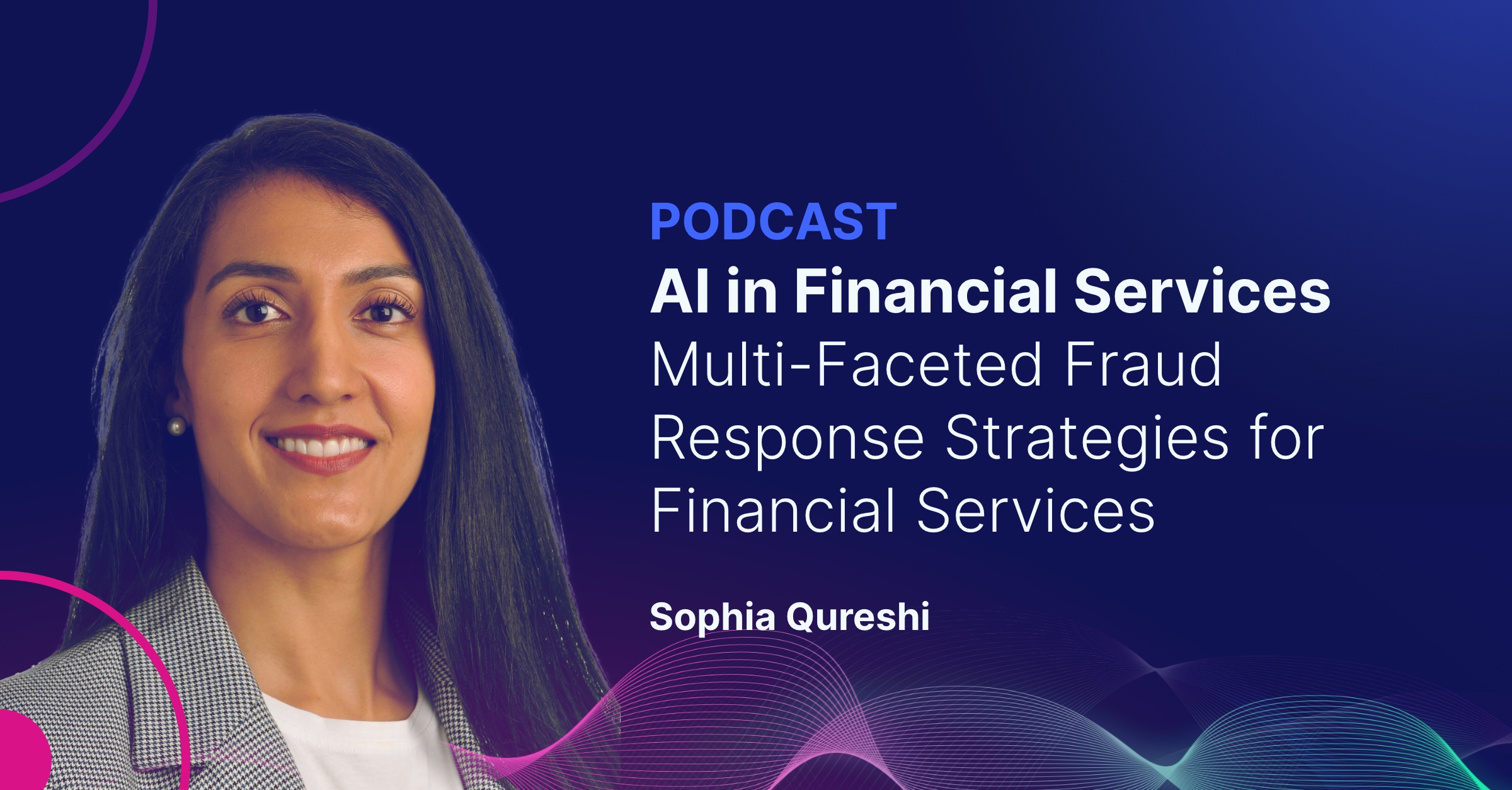
Multi-Faceted Fraud Response Strategies for Financial Services – with Sophia Qureshi of Provenir

Multi-Faceted Fraud Response
Strategies for Financial Services

Our VP of Product Management for Fraud Solutions, Sophia Qureshi,
recently returned to the AI in Financial Services podcast to discuss the
topic of multi-faceted fraud response strategies for financial services.

Today’s guest is Sophia Qureshi, VP of Product Management for Fraud Solutions at Provenir. Provenir is a fintech company whose AI decisioning platform helps clients manage credit risk, prevent fraud, and stay compliant across the customer lifecycle. Sophia joins the podcast to discuss the evolving threat landscape and how AI is changing the balance of power. Later, she explains the ways fraud detection has traditionally relied on deterministic technologies like anomaly detection and how the rise of generative AI has enabled more sophisticated fraud tactics, from deepfake identity forgeries to large-scale phishing campaigns. If you’ve enjoyed or benefited from some of the insights of this episode, consider leaving us a five-star review on Apple Podcasts, and let us know what you learned, found helpful, or liked most about this show!

LATEST PODCASTS

sophia podcast

Multi-Faceted Fraud ...

Multi-Faceted Fraud ResponseStrategies for Financial Services Our VP of Product Management for Fraud Solutions, Sophia
fighting fraud podcast

Podcast: The Fintech...

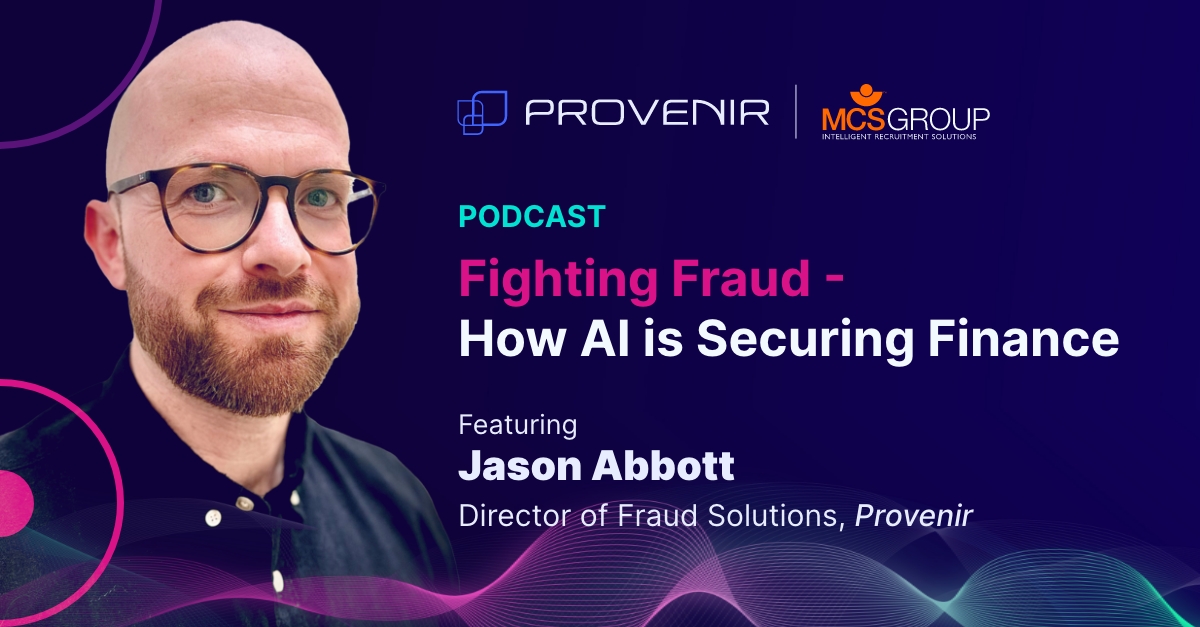
podcast The Fintech Diaries Podcast: Fighting Fraud with Provenir How AI is Securing Finance Check
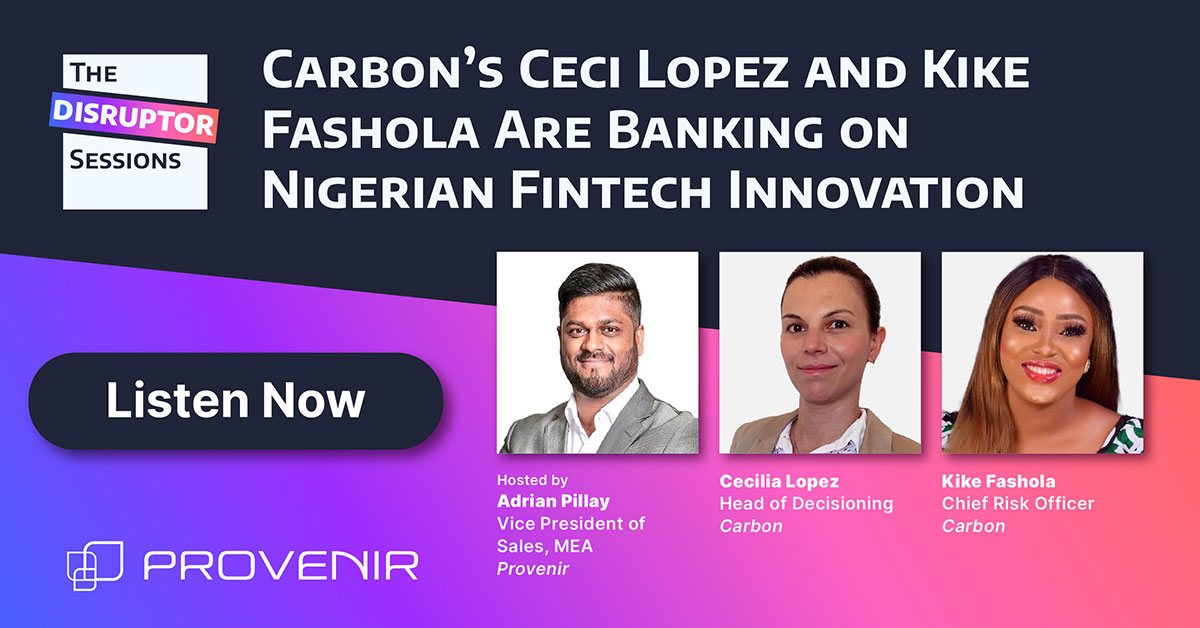
Carbon’s Ceci López and Kike Fashola Are Banking on Nigerian Fintech Innovation

Carbon’s Ceci López ...

PODCAST Carbon’s Ceci López and Kike FasholaAre Banking on Nigerian Fintech Innovation These risk leaders
TDS Mini: EMEA’s Crystal Ball 2024

TDS Mini: EMEA’s Cry...

\nToday, Frode Berg (Managing Director, EMEA) and Adrian Pillay (VP of Sales for Africa, the

Continue reading

Charlotte Street Hotel, London

Intelligent Response to the Changing Face of Fraud

ProvenirNEXT: Roundtable

Intelligent Response to the Changing Face of Fraud

Wednesday 14th May, 2025
11:45 am – 3:00 pm
Charlotte Street Hotel, London

Fraudsters are evolving faster than ever, using AI-driven tools, synthetic identities, and social engineering to bypass traditional controls. As financial institutions and businesses across EMEA adapt to this growing threat, fraud prevention strategies must evolve beyond static rule-based models to embrace real-time decisioning, advanced analytics, and automation. This exclusive roundtable brings together industry leaders to explore how organisations can strengthen fraud defences, leverage AI-driven decisioning, and balance security with seamless customer experiences.

Key Discussion Points:

  • Inside the Fraudster’s Toolkit – A demonstration of AI-powered tools used by criminals to bypass ID&V controls, exposing the latest fraud techniques and their impact on financial institutions.
  • Building a Robust Defence Against Application Fraud – Best practices and cutting-edge technologies for real-time fraud detection and prevention, including how financial institutions can harness data, analytics, and automation to stay ahead of emerging threats.
  • Optimising Customer Experience – How streamlining real-time decisions and leveraging intelligent data orchestration can reduce fraud risk while improving onboarding and customer retention.
Format:
  • 11:45 am – Arrival and welcome drink

  • 12:00 pm – Live ‘fraudster in action demo’ from Jason Abbott – Fraud Specialist, Provenir
  • 12:30 pm – Roundtable discussion and three-course lunch
  • 3:00 pm – Official close and summary

Register your interest here

Jason Abbott

Jason Abbott

Fraud Specialist, Provenir

Jason Abbott is a fraud prevention specialist with extensive experience in AI-driven risk decisioning, fraud analytics, and financial crime strategy. With a background in working with financial institutions to combat application fraud, identity theft, and digital fraud trends, Jason provides practical insights and strategic frameworks to help organisations mitigate fraud while maintaining a seamless customer experience.
The Provenir Thought Leadership Roundtable Series brings together industry visionaries, C-level executives, and thought leaders for insightful discussions on redefining risk decisioning strategies. The series fosters a collaborative environment for sharing forward-thinking perspectives, exploring innovative approaches, and shaping the future of fraud prevention in an era of rapid technological evolution and increasing digital risk.

LATEST WEBINARS

fraud alert

Stop Fraudsters in T...

Stop Fraudsters in Their Tracks – Before They
fraud

Rethinking Fraud Pre...

On-Demand Webinar Rethinking Fraud Prevention in the Middle
webinar collections

Webinar: Optimizing ...

On-Demand Webinar Optimizing Collections with Advanced Decisioning Solutions
AFN webinar

Webinar: Mitigating ...

Mitigating Application Fraud in Africa: A Holistic Approach
the fullerton hotel singapore

Striking the Balance...

Provenir Financial Services Club: Strategies for Excellence in
Embedded Lending is Inevitable: How Banks Can Compete and Win in a New Environment

Embedded Lending is ...

ON-DEMAND WEBINAR Embedded Lending is Inevitable: How Banks
Roundtable: Navigating Regulatory Challenges and Affordability with Foresight in Financial Services

Roundtable: Navigati...

Provenir Financial Executive Club: Strategies for Excellence in

Leveraging Technolog...

In today's fast-paced and competitive financial landscape, both

Continue reading

fraud for telco data sheet

DATA SHEET: Fraud for Telco

Provenir: Application Fraud for Telcos

Holistic Fraud Detection with Comprehensive Subscriber View
Telcos globally are struggling with increasingly sophisticated fraud attempts fuelled in part by rapid digital transformation and exacting subscriber demands. But how can you stay ahead of evolving fraud tactics while ensuring a seamless customer experience for legitimate subscribers? Discover how Provenir’s Application Fraud solution enables you to detect fraud risk more accurately with a holistic, comprehensive view of your subscribers.
Discover how Provenir’s AI Decisioning can transform your telco business.

Learn More

ADDITIONAL RESOURCES

BLOG Fraud
Blog ::

Why Nordic Banks Must Balance Fraud C...

Blog Industry Date Why Nordic Banks Must Balance Fraud Control ...
The Growing Threat of Fraud in UK Auto Lending
Blog ::

The Growing Threat of Fraud in UK Aut...

The Growing Threat of Fraud in UK Auto Lending Why ...
BLOG Mark
Blog ::

Why Telcos Can’t Afford to Think Like...

Blog Industry Date Why Telcos Can't Afford to Think Like ...
BLOG Christian Ball
Blog ::

Smarter Acquisition and Customer Mana...

Smarter Acquisition and Customer Management:How Provenir Drives Growth and Reduces ...
Open Banking Expo Toronto
Event ::

Open Banking Expo Toronto

Open Banking Expo Join Provenir at The Open Banking Expo ...
Zero Trust in Digital Banking

Zero Trust in Digital Banking

Zero Trust in Digital Banking: Why Risk Leaders Need a ...
EBOOK Survey2026
eBook, Survey ::

Survey: 2026 Global Decisioning Surve...

What are the key challenges and priorities for financial services ...
LewisGRP
News ::

Leading South African Furniture Retai...

Leading South African Furniture Retailer Lewis Group Partners with Provenir ...

Continue reading

EBOOK: How Telcos Can Boost Revenue Without the Risk

Dial Into Profit: How Telcos Can Boost Revenue Without the Risk

Harnessing Intelligent Decisioning to Elevate Subscriber Value and Reduce Losses
The challenges in the telco world keep increasing. Are you struggling to:
  • Manage ever-evolving fraud tactics?
  • Streamline credit assessments across diverse subscriber segments?
  • Decrease vulnerability to account defaults?
  • Reduce the risk of subscriber churn?
This is where having the right decisioning technology is key. Get the eBook for more info on how advanced, intelligent decisioning solutions will enable you to:
  • Maximize activations
  • Reduce friction in onboarding
  • Mitigate revenue losses and more effectively combat fraud
  • Personalize subscriber experiences and maximize customer lifetime value
  • Optimize collections treatment strategies to minimize bad debt
Want more info on how Provenir’s AI-Powered Decisioning platform can transform your telco business?

Learn More

Latest Ebooks

EBOOK Survey2026

Survey: 2026 Global Decisioning Survey

What are the key challenges and priorities for financial ...
Survey: 2025 Global Risk Decisioning Survey

Survey: 2025 Global Risk Decisioning Survey

Survey: 2025 Global Risk Decisioning Survey What are the ...
EBOOK: How Telcos Can Boost Revenue Without the Risk

EBOOK: How Telcos Can Boost Revenue Without the Risk

Dial Into Profit: How Telcos Can Boost Revenue Without ...
Vendor Report: Chartis Research Names Provenir a Global Leader

Vendor Report: Chartis Research Names Provenir a Global Leader

Chartis Research Names Provenir a Global Leader Credit and ...
Mind the Gap: The Need for Speedy, Accessible SME Lending in EMEA

Mind the Gap: The Need for Speedy, Accessible SME Lending in EMEA

EBOOK Mind the Gap: The Need for Speedy, Accessible ...
Mind the Gap: The Need for Speedy, Accessible SME Lending in Asia Pacific

Mind the Gap: The Need for Speedy, Accessible SME Lending in Asia Pacific

EBOOK Mind the Gap: The Need for Speedy, Accessible ...

Continue reading