The Fraud-AI Double Bind
The Fraud-AI Double Bind: New Survey Reveals the Fraud-AI Paradox Facing Financial Institutions
Financial institutions face a critical tension. They need AI to combat increasingly sophisticated fraud. Yet 77% are concerned about AI-enabled fraud threats.
Our 2026 Global Decisioning Survey, conducted by The Harris Poll across 203 senior decision-makers in 22 countries, reveals the scope of this challenge and the strategies organizations are using to address it.
The Numbers
The adoption of AI for fraud prevention is strong:
- 75% use AI-driven adaptive fraud prevention
- 74% deploy real-time anomaly detection
- 87% trust AI decisioning outcomes
Yet the concern is equally widespread:
- 77% worry about AI-enabled fraud threats
- 50% struggle to detect and react quickly to new fraud trends
The Speed Problem
When we asked about their biggest application fraud challenge, 50% identified detecting and reacting quickly to new fraud trends.
Bad actors use AI to evolve their tactics in real-time, testing thousands of attack vectors simultaneously. Traditional monthly or quarterly model updates can’t keep pace. Organizations need real-time, adaptive AI systems to combat fraud, but deploying those systems runs directly into implementation barriers around governance and explainability.
What Comprehensive Fraud Strategy Requires
33%
rank as most important
Organizations need complete visibility across customer interactions and behavior patterns. Siloed views by channel or product line leave blind spots.
23%
Reducing friction in customer experience
22%
Aligning data at customer level vs. by channel
19%
Breaking down data silos between fraud and credit teams
How Organizations Measure Success
54%
track enhancing operational efficiency and automation (16% say this is their primary metric)54%
track improving accuracy of AI and ML models (25% say this is their primary metric)52%
track reducing fraud loss (15% say this is their primary metric)
Breaking Free from the Double Bind:
Organizations successfully navigating this tension balance aggressive AI adoption with comprehensive risk management.Deploy explainable AI architectures from the start:
They don’t sacrifice interpretability for performance. Modern approaches enable both.Maintain human-in-the-loop oversight for high-risk decisions:
AI handles volume and speed, but humans make final calls on edge cases and high-stakes scenarios.Implement continuous monitoring for model drift and bias:
They don’t deploy and forget. Models require ongoing governance.Build governance as an ongoing product, not a one-time project:
Governance evolves alongside AI capabilities and regulatory requirements.
The Implementation Reality
You can’t sacrifice governance for speed. But you also can’t sacrifice speed for governance. The most successful organizations find ways to achieve both.
They leverage platforms designed to orchestrate decisions across existing systems rather than requiring wholesale system replacement. This approach accelerates time-to-value and reduces technical risk.
Rather than ripping out decades of infrastructure, they deploy decisioning layers that orchestrate data from multiple sources and deliver decisions back to existing platforms in milliseconds.
Looking Ahead
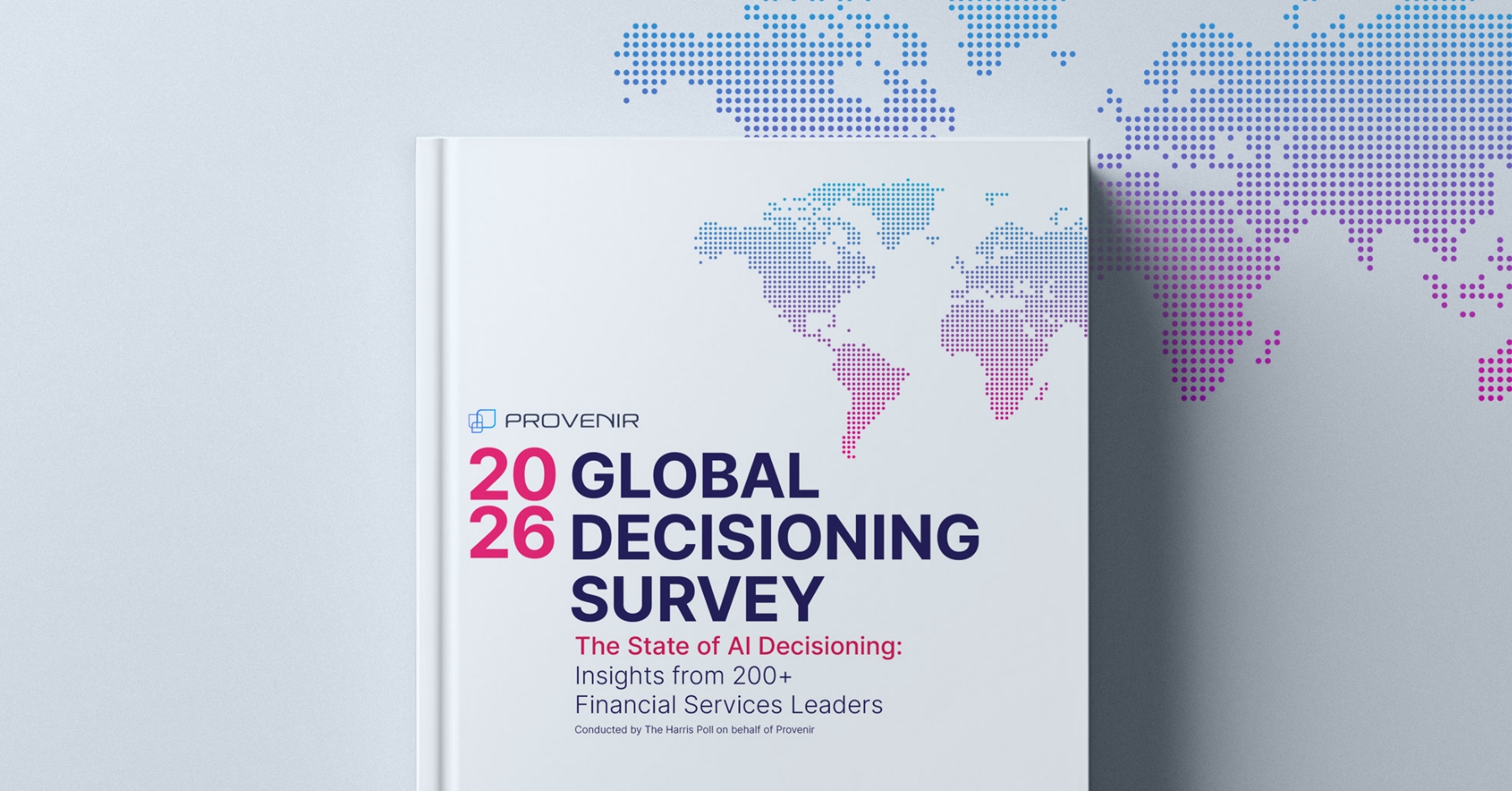
Download the full 2026 Global Decisioning Survey: