Author: Amy Sariego

Shining the Light on Credit Invisibility with Alternative Data

NEWS

Shining the Light on Credit Invisibility
with Alternative Data

Many individuals around the globe lack a traditional credit history. It’s estimated that nearly 80 percent of adults worldwide are either underbanked or unbanked. Without acknowledging this and taking the requisite action, the industry will remain prejudicial and oppressive by default. But a desire to change must be paired with the capacity to push credit decisioning to the edge.

In this Financial IT article, Kathy Stares, Executive Vice President, North America for Provenir, shares her observations on how lenders can overcome bias, ensure equal access to credit – even for those without formal credit histories – without sacrificing their risk strategy.

Read Now

The Ultimate Guide to Decision Engines

What is a decision engine and how does it help your business processes?

Learn More


LATEST NEWS

Continue reading

Provenir Appoints Carol Hamilton as Chief Product Officer

NEWS

Provenir Appoints Carol Hamilton
as Chief Product Officer

The appointment reflects Provenir’s dedication to fostering innovation and delivering exceptional customer care

LONDON, UK June 22, 2023 – Provenir, a global leader in data and AI-powered risk decisioning software, today announced the appointment of Carol Hamilton as its Chief Product Officer.

Based in Provenir’s London office, Hamilton will be responsible for shaping the company’s global product strategy, overseeing product development and management, and identifying new growth opportunities. She will play a pivotal role in driving innovation and expanding Provenir’s product suite, including decisioning, data and artificial intelligence to help lenders make smarter decisions across credit, compliance and fraud.

Since joining Provenir in 2021, Hamilton has served as Senior Vice President, Global Solutions and Chief Commercial Officer of Provenir AI, showcasing her expertise and profound understanding of the company’s operations.

With a wealth of experience in product strategy, innovation, and customer-centric design, Hamilton is uniquely suited to drive Provenir’s product vision and lead the company’s next phase of growth; she brings rich experience in developing fraud, compliance, and security solutions for the financial services industry. Prior to joining Provenir, Hamilton held senior leadership roles at GBG, SAS and BAE Systems, where she led regional teams responsible for creating long-term strategy, driving growth, and seeking new areas for expansion.

In today’s ever-evolving market, organizations’ real-time decisioning software needs to keep pace. Provenir is built to solve industry-specific needs today, while anticipating the ones businesses will face tomorrow. Carol’s recent efforts leading Provenir AI give her an ideal background to assume overall responsibility for Provenir’s full product suite. She’ll be instrumental in the advancement of our strong value proposition and capabilities to organizations worldwide.

Larry Smith, Provenir Founder and CEO

Provenir has long delivered on its promise of increasing customers’ agility and responsiveness to market challenges and client needs, from supporting banks in embracing digital strategies to partnering with fintechs on their growth journey. I’m looking forward to further developing our product suite and helping our customers to maintain their rank as innovative and disruptive financial services players.

Carol Hamilton, Chief Product Officer

The Ultimate Guide to Decision Engines

What is a decision engine and how does it help your business processes?

Learn More


LATEST NEWS

Continue reading

The Reinvention of Banking

BLOG

The Reinvention of Banking

Why banks need to ensure resiliency and innovation to achieve long-term profitability

As economic stability increasingly looks like a thing of the past, what does this mean for traditional banks? With disruption after disruption in the financial services sector, it’s clear that resiliency is a must. According to McKinsey, “banks will need to become more resilient and reinvent their business models to ride out the current volatile period and achieve long-term growth and profitability.” But what does reinvention really mean? And is it possible to reinvent your business models quickly? We’re looking at some of the key challenges the banking industry is facing, and the ways that upgrading credit risk decisioning capabilities can help solve for some of these challenges.

Banking Disruptors:

Banks and the financial industry as a whole face many challenges, not the least of which includes fintechs and challenger banks. But the need to keep up with the competition is not the only obstacle banks are facing.

Evolving Regulations: Complying with various regulatory requirements is always a challenge, but it’s even more difficult when those regulations are constantly evolving. Look at the world of Buy Now, Pay Later as an example – as this non-traditional financial services offering continues to grow and shift worldwide, more and more traditional banks are sitting up and taking notice. But getting into the market can be fraught with compliance issues, which can be costly and time-consuming, and as a result, impedes your ability to innovate and respond quickly to changing customer needs.

Increasing Digitization: If the last few years have taught us anything, it’s that more things than ever thought possible can be done digitally. Customers increasingly want digital channels to meet ALL of their needs, including financial services of all kinds – whether that’s applying for credit or embedded finance enabling banking super-apps. But this requires clear investment in technology from banks to remain competitive.

Growing Competition: Speaking of remaining competitive – more than ever, new players are continually entering the market, vying for a share of the wallets of increasingly discerning consumers. Whether it’s established players with new offerings or innovative fintech startups, the landscape is changing, putting pressure on banks to reduce costs and improve offerings, while still providing frictionless experiences for consumers.

Also, read: What is Banking as a Service?

Turning Disruption into Opportunity:

But it’s not all dire. Banks can be uniquely positioned to effectively deal with these disruptors. As Siobhan Byron writes, “established banks, though still only recently starting to harness the power of digital, have a key advantage over new entrants. Their decades of institutional knowledge is difficult to build up quickly.” Banks are also in a better position to deal with market shifts than they were a decade ago – if they can leverage data analytics and automated workflows to make “better and more informed credit decisions.”

So, if you’re a bank, what can you do? Look for ways to leverage advanced technology like artificial intelligence and machine learning, automated credit risk decisioning, and data integration to improve efficiency, reduce costs, and renew your focus on customer-centric products and services.

Increase Efficiency: Machine learning algorithms can enhance your credit risk models, processing vast amounts of data quickly and reducing the time and person-power needed for risk assessments and credit decisioning.

Reduce Costs: Automating your credit risk decisioning process reduces the manual labor required, allowing you to allocate resources to other strategic initiatives that can help grow your revenue and improve the customer experience.

Enhance the Customer Experience: Focus on frictionless onboarding and customer management, with faster credit decisions, digitized processes, and more personalized product offerings (including everything from interest rates to loan terms, upsell/cross-sell offers, and even optimized collections strategies).

Improve Risk Management: Advanced analytics can enable you to identify key patterns and trends in customer behavior, ensuring more accurate risk assessments and reduced losses due to defaults and improved fraud detection.

Enable Agility: With more flexible, user-friendly decisioning technology, you can make changes to decisioning workflows quickly, respond to market shifts, meet changing consumer demands, and launch new products faster to stay ahead of your competition.

Foster Innovation: Enabling all the above points (with more automated decisioning, advanced analytics, superior data integration, improved efficiency, etc.) means you can foster a true culture of innovation. Allow your teams to focus on strategic initiatives, competitive insights, and innovative product development for customer-centric offerings that can help put you ahead of the competition.

Roadmap for Success:

The larger the bank and the more complex the systems, the more daunting it can feel to implement any changes to your decisioning software or data sources. But fear not, follow some simple steps to incorporate tech upgrades into your credit risk decisioning – and remember, it’s not all or nothing: look at decisioning solutions that can easily work alongside your existing systems and/or partners that have experience replacing legacy systems to ensure a smooth transition.

  1. Assess Current Capabilities: Evaluate your existing credit risk decisioning capabilities and identify areas where you can improve your processes.
  2. Define Your Objectives: What are your goals for upgrading your tech? Prioritize the areas that are most important for you (i.e., reducing costs with improved efficiencies, versus enhancing the customer experience with increased digitization capabilities).
  3. Select Technology Capabilities: Choose what is most critical to upgrade – is it automated risk decisioning, machine learning, data integration?
  4. Choose Your Solution: Outline a plan for integrating the chosen technology into your existing systems and workflows, with a partner that can help with timelines, resource allocations, and important milestones.
  5. Test and Iterate: Be sure your chosen risk decisioning solution offers you the ability to test workflows, refine your credit models, easily integrate new data sources, and iterate your processes – on your timeline, not theirs!

With the right technology in place, not only can you accomplish all the goals set out above, but you can more easily maximize the value of your customers across the entire lifecycle. Because with upgraded credit risk decisioning, you can more efficiently move beyond credit origination and onboarding and bring that customer-centric experience to all the financial services products you offer. As McKinsey points out, “banks that have already embedded high-performance credit-decisioning models into their digital lending have reaped three key benefits,” including increased revenue, reduction in credit losses and gains in efficiency. So, what are you waiting for?

Want more info on how to turn challenges into opportunities?

Contact Us


LATEST BLOGS

Continue reading

Infographic: Transform Credit Risk Decisioning Challenges into Opportunities

INFOGRAPHIC

Transform Credit Risk Decisioning
Challenges into Opportunities

How to Ensure More Accurate, Agile Decisions

Whatever the financial services products you offer, there are common credit risk decisioning challenges – including data integration, model development, fraud prevention, lack of flexibility, and regulatory compliance. So how can you turn these decisioning challenges into opportunities? Discover how upgrading legacy decisioning technology can lead to a 20-40% decrease in credit losses and a 20-40% improvement in efficiency!

See how tbi bank is able to fuel their rapid growth and still ensure a customer-centric strategy

Learn More

RESOURCE LIBRARY

On-Demand: Navigating the Future: Unveiling the Keys to Successful Digital Transformation in Financial Services
Webinar ::

On-Demand: Navigating the Future: Unv...

ON-DEMAND WEBINAR Navigating the Future:Unveiling the Keys to Successful Digital ...
Webinar ::

On-Demand: Decisioning Advanced: Inte...

ON-DEMAND WEBINAR Decisioning Advanced:Integrating Intelligent Credit and Fraud Decisioning to ...
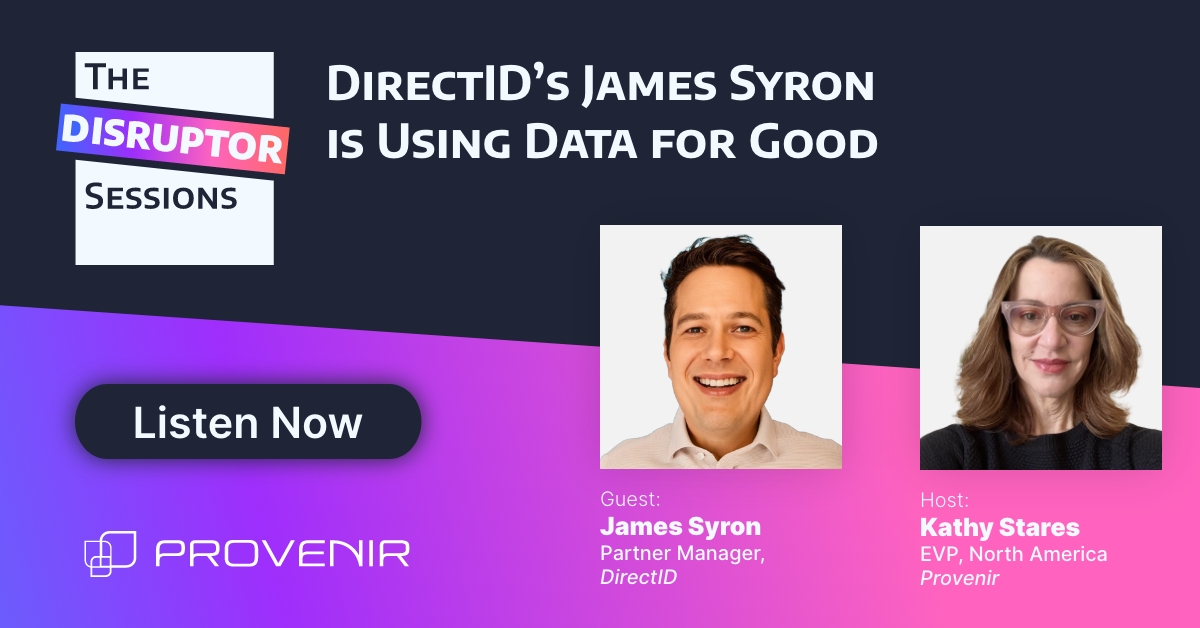
DirectID’s James Syron is Using Data for Good
Podcast ::

DirectID’s James Syron is Using Data ...

PODCAST DirectID’s James Syronis Using Data for Good James Syron ...
Mind the Gap: The Need for Speedy, Accessible SME Lending in EMEA
eBook ::

Mind the Gap: The Need for Speedy, Ac...

EBOOK Mind the Gap: The Need for Speedy, Accessible SME ...
Mind the Gap: The Need for Speedy, Accessible SME Lending in Latin America
eBook ::

Mind the Gap: The Need for Speedy, Ac...

EBOOK Mind the Gap: The Need for Speedy, Accessible SME ...
Mind the Gap: The Need for Speedy, Accessible SME Lending in Asia Pacific
eBook ::

Mind the Gap: The Need for Speedy, Ac...

EBOOK Mind the Gap: The Need for Speedy, Accessible SME ...
Mind the Gap: The Need for Speedy, Accessible SME Lending in North America
eBook ::

Mind the Gap: The Need for Speedy, Ac...

EBOOK Mind the Gap: The Need for Speedy, Accessible SME ...
Infographic ::

Infographic: Frictionless, End-to-End...

INFOGRAPHIC Frictionless, End-to-EndOnboarding with Case Management How to enhance customer ...

Continue reading

Provenir Launches New Podcast Series on the Future of Fintech

NEWS

Provenir Launches New Podcast Series on the Future of Fintech

“The Disruptor Sessions: The Visionary’s Guide to Fintech” features industry experts and explores the key issues shaping the next evolution of fintech

Parsippany, NJ — June 14, 2023 — Provenir, a global leader in data and AI-powered credit risk decisioning software, today announced the launch of its podcast “The Disruptor Sessions: The Visionary’s Guide to Fintech.” 

The podcast series features one-on-one interviews with thought leaders and innovators from the financial services industry. Hosted by regional Provenir leaders, the podcast explores what’s next in fintech, from the technology powering change to the visionaries driving disruption. The series also includes bite-size segments called “TDS Minis,” offering key insights on the hot topics driving the fintech market in 15 minutes or less.

“The fintech industry is rapidly changing; we are committed to bringing engaging conversations and insights from industry leaders to the forefront to help organizations navigate the fast-moving fintech market,” said Kim Minor, Senior Vice President, Global Marketing, Provenir. “’The Disruptor Sessions: The Visionary’s Guide to Fintech’ podcast provides expert views on what is moving the fintech market forward, and steps businesses can take to adapt and better position themselves to take advantage of key industry trends and opportunities.” 

The pilot episode features Aaron Webster, Chief Risk Officer for SoFi, who shares the company’s secret to differentiation in a crowded fintech ecosystem, as well as predictions on the next big disruption for American financial services. 

The following episode highlights financial inclusion and the new-to-credit population, as Nidhi Verma, TransUnion’s Vice President of Research and Consulting, defines the business case for financial inclusion and envisions the future of it on a global scale.

Listeners can access all episodes of “The Disruptor Sessions: The Visionary’s Guide to Fintech” on the podcast home page , as well as Spotify and Apple Podcasts.

The Ultimate Guide to Decision Engines

What is a decision engine and how does it help your business processes?

Learn More


LATEST NEWS

Continue reading

Reality Check: Dispelling Three Key Myths to Upgrading Credit Risk Decisioning Technology

NEWS

Reality Check:
Dispelling Three Key Myths to Upgrading Credit Risk Decisioning Technology

Consumers are resistant to friction in their customer experience journeys, whether they are buying appliances, vacations, vehicles, or applying for credit. Next-gen data and decisioning technology is crucial for financial institutions to focus on growth while meeting consumer needs and expectations, and effectively managing risk. 

Unfortunately, there are a number of myths that persist in this area, eroding financial institutions’ ability to compete and thrive – and keeping consumers from the frictionless, rich and relevant experiences they deserve.  

In this Fintec Buzz exclusive, Kathy Stares, Executive Vice President of North America for Provenir, details these myths and offers practical steps to run a smarter race.

Read Now

The Ultimate Guide to Decision Engines

What is a decision engine and how does it help your business processes?

Learn More


LATEST NEWS

Continue reading

Episode 2: TransUnion’s Nidhi Verma Introduces the New Kids on the (Credit) Block

PODCAST

Episode 2:
TransUnion’s Nidhi Verma Introduces the New Kids on the (Credit) Block

Though they used to be invisible, today they might be the future of the credit market.

On this episode of The Disruptor Sessions, we’re exploring the new-to-credit (NTC) population. Though they used to be invisible, today they might be the future of the credit market.

North America host Kathy Stares (Provenir’s EVP, Americas) and TransUnion’s VP of International Research and Consulting, Nidhi Verma, discuss the immense opportunities in engaging this powerful group. Drawing from TU’s recent report on NTCs, they debunk the myths around risk, define the business case for financial inclusion, and develop a vision of what the future of financial inclusion could look like globally.

Listen Now

Tune into our Podcast on Apple or Spotify by clicking the icons below.

Apple Podcast

Spotify Podcast


The Panelists:

  • Nidhi Verma

    Nidhi Verma leads the customer consulting team within the innovative solutions group at TransUnion. Her team is responsible for diagnosing underlying business issues, and uncovering and imparting strategic insights from credit and alternative data assets. Previously at TransUnion, she led the U.S. financial services research and consulting group, delivering industry insights around the consumer credit marketplace. She’s spent over 14 years developing financial plans, creating strategic initiatives, and driving analytics to identify and solve business problems. 

    Verma held prominent positions at Discover Financial Services, Citigroup, Citi EMEA, and Fifth Third Bank where she served as CFO of the bankcard business. She received her bachelor’s and master’s degrees in commerce from the University of Delhi and an MBA in finance from Loyola University of Chicago.

  • Kathy Stares

    Kathy Stares is the Executive Vice President of North America at Provenir, a global leader in AI-powered risk decisioning software. As a member of Provenir’s executive team, she is introducing creative account management approaches to support the company’s aggressive growth strategy.

    Kathy brings more than 20 years of experience in fintech and has a deep knowledge and curiosity about risk decisioning innovation. She’s passionate about helping organizations leverage data and technology to build world-class experiences for their customers.

    Prior to joining Provenir, Kathy was Chief Customer Officer at enStream, Canada’s provider of mobile verification services. Kathy received a Bachelor of Arts degree from the University of Toronto and attained the Women of Influence certificate. Kathy also volunteers for the Menttium organization.

  • Nidhi Verma

    Nidhi Verma leads the customer consulting team within the innovative solutions group at TransUnion. Her team is responsible for diagnosing underlying business issues, and uncovering and imparting strategic insights from credit and alternative data assets. Previously at TransUnion, she led the U.S. financial services research and consulting group, delivering industry insights around the consumer credit marketplace. She’s spent over 14 years developing financial plans, creating strategic initiatives, and driving analytics to identify and solve business problems. 

    Verma held prominent positions at Discover Financial Services, Citigroup, Citi EMEA, and Fifth Third Bank where she served as CFO of the bankcard business. She received her bachelor’s and master’s degrees in commerce from the University of Delhi and an MBA in finance from Loyola University of Chicago.

  • Kathy Stares

    Kathy Stares is the Executive Vice President of North America at Provenir, a global leader in AI-powered risk decisioning software. As a member of Provenir’s executive team, she is introducing creative account management approaches to support the company’s aggressive growth strategy.

    Kathy brings more than 20 years of experience in fintech and has a deep knowledge and curiosity about risk decisioning innovation. She’s passionate about helping organizations leverage data and technology to build world-class experiences for their customers.

    Prior to joining Provenir, Kathy was Chief Customer Officer at enStream, Canada’s provider of mobile verification services. Kathy received a Bachelor of Arts degree from the University of Toronto and attained the Women of Influence certificate. Kathy also volunteers for the Menttium organization.


LATEST PODCASTS

Continue reading

Provenir Named a Banking Tech Awards USA 2023 Winner for Excellence in Data and Insights

NEWS

Provenir Named a Banking Tech Awards USA 2023 Winner for Excellence in Data and Insights

The company’s AI-Powered Data and Decisioning Platform offers a streamlined single point of access to myriad credit bureaus and data sources for more accurate credit decisioning

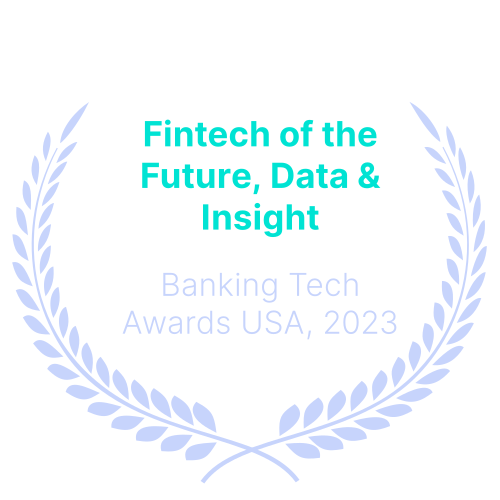
Parsippany, NJ — June 5, 2023 — Provenir, a global leader in data and AI-powered risk decisioning software, today announced its Data and Decisioning Platform has garnered Banking Tech Awards USA 2023 top honors in the FinTech of the Future – Data & Insights category.

The Banking Tech Awards USA recognizes outstanding achievements in the banking and fintech industry across the United States.

“We are excited and proud to be recognized for our market-changing solutions designed to help financial services providers deliver the best customer experience while minimizing risk and fraud,” said Kathy Stares, Provenir’s Executive Vice President for North America. “With Provenir’s AI-Powered Data and Decisioning Platform, financial institutions gain access to an array of third-party data sources and decisioning expertise on-demand to make more accurate credit decisions in real-time, and without the high-dollar overhead of credit decisioning infrastructure.”  

Provenir’s AI-Powered Data and Decisioning Platform brings together a curated range of data and data solutions covering the whole customer lifecycle with data types such as identification, AML, document verification, open banking, PEPs/sanctions, bureau data, mobile data, email data, device verification, facial biometrics, and social media validation. This data enables businesses to make smarter decisions across key areas such as KYC, origination, credit risk, financial inclusion and fraud.

The Ultimate Guide to Decision Engines

What is a decision engine and how does it help your business processes?

Learn More


LATEST NEWS

Continue reading

The Lending Revolution: Building World-Class Digital Lending Experiences in Southeast Asia

BLOG

The Lending Revolution:
Building World-Class Digital Lending Experiences in Southeast Asia

Digital lending has the potential to revolutionize financial inclusion in Asia’s emerging economies. For individuals and small businesses in the region, accessing credit has traditionally been a daunting, time-consuming process, often resulting in high rejection rates and limited options. 

However, with the arrival of digital lending, the process has become faster, more efficient, and more accessible, offering a world of opportunities for those previously excluded from formal financial systems. Digital lending offers faster decision-making, better risk assessment, and more customized product features. By accessing real-time data, lenders can make faster credit decisions, which leads to faster disbursements and better customer experiences. 

Aditya Chintawar is the Chief Product Officer at KoinWorks, an SME-focused neobank that helps customers build credit scores to solve the problem of accessing credit in Indonesia. With a population of over 270 million people that are largely unbanked or underbanked, a report by McKinsey & Company estimates that the economic impact of digitization would be a $150 billion or 10% of GDP growth. By leveraging digital platforms and technologies, lenders can reach a wider customer base, which can help drive economic growth and development. Aditya recently spoke to Provenir’s General Manager for APAC, Bharath Vellore about their experience building world-class digital lending experiences tailored to this market. Check out some of the key takeaways from the discussion. 

Digitization vs. Automation: Understand the Difference and the Path to Follow

Digitization and automation are not the same! Step one to digital lending is effective digitization: the process of transforming analog or manual processes in lending into digital ones. This involves the use of digital technologies such as Optical Character Recognition (OCR), data analytics, machine learning algorithms, and digital platforms to improve operational efficiency, enhance customer experiences, and expand reach to underserved segments of the population. By taking a written statement on a new lender, digitizing it and inserting it into your data lake, you enrich the quality of your models and open the doors for new customers with no previous credit histories. Digitization allows lenders to access data in real time to make faster credit decisions, and provide more customized and personalized products to their customers. Digitization is a key factor in transforming the lending industry and enabling lenders to compete in today’s rapidly evolving market and provide more customized products to their customers.

Once a process has been digitized effectively, it can then be automated. Manual to digital to automation is the path to follow, and it is essential to understand what is being digitized to ensure it is effective. Digitalization unlocks additional data points, making it easier to build better products, perform better risk assessments, and provide better customer experiences. Understanding lending behavior through key data points is critical, and the development of any digital lending product should take this into account. In terms of client experience, the customer response to digitalization has been great, and certain forms of face-to-face interaction can still be maintained, such as voice KYC or video calls.

Balancing Inward and Outward Focus

To digitize effectively and launch new digital products, lenders must balance inward and outward focus. Inward focus requires proper digitalization – adapting operational processes such as underwriting so they can be done by computer systems – in order to reduce friction, make credit underwriting faster, and provide insights into risk assessments. However, properly executed digitization must also happen on the operational level for the availability of services to be possible. A step-by-step approach ensures that each aspect of the process is able to handle the previous load, ultimately ensuring that the availability of service is on-demand, 24×7. Many digital lending products are launched with an outward focus on great front-ends designed for great user experiences. Koinworks operates in a setting where the average smartphone has 4GB of RAM and 64GB of storage. To be relevant to users, the app needs to have a small footprint and be easy to use. The app also offers a dedicated support team to help users with their loan applications and other needs. But if the back-end cannot function up to speed, it will lead to client frustration. Providing ongoing analysis of user behavior can help identify cross-selling opportunities and increase loan limits for existing customers. So, when it comes to inward or outward development focus, it’s an issue of building an agile, end-to-end infrastructure, to strike a balance between the two and launch as quickly as possible. 

The Challenges of Retention in Digital Lending

Retention in digital lending is challenging. Strategies for reducing rejection and anxiety include defining trust and critical parameters with the business to avoid fraud and risk, and maintaining effective communication with the client. Lending is a complicated business, and testing underwriting systems takes time, so running multiple programs on smaller budgets to identify which product works is essential for each type of customer is essential. Additionally, the focus should be on creating a seamless customer experience, reducing friction, and taking into account customers’ digital footprint.

The lack of trust in emerging economies where financial inclusion plays a huge role, has a significant impact on decision-making and strategy. Building trust and infrastructure is essential for the success of digital lending in these markets. Scalability and agility are also important, as they allow lenders to adjust their offerings to meet changing customer needs. Fintechs should focus on agility when building product features to respond to changing market needs quickly. Finally, being open to new ideas and defining trust and infrastructure will help fintechs succeed in a rapidly evolving environment. That’s why digital lending becomes, not just a nice-to-have, but a must-have in order to compete on quality and time-to-market.

“The goal is to create a virtuous cycle. Better data leads to better risk assessment, which leads to better products and experiences. All of which, in turn, lead to better data.”

– Aditya Chintawar, Chief Product Officer at KoinWorks

Digital lending is transforming the lending industry in Southeast Asia and around the world. By leveraging digital technologies and data, lenders can improve their operational efficiency, enhance customer experiences, and expand their reach to underserved segments of the population. However, to succeed in these markets, lenders must balance inward and outward focus, understand the difference between digitalization and automation, address challenges related to retention, and build trust and infrastructure.

Watch the full fireside chat with Bharath and Aditya to learn more.

Discover how better data can help your digitization journey.

See How


LATEST BLOGS

Continue reading

Centrix

Partners

Centrix

Centrix – Credit Bureau of New Zealand

Key Benefits

  • Consumer Credit Reports: Make better lending decisions. Backed by New Zealand’s largest credit database, Centrix credit reports help you reduce risk when lending to consumers. Centrix consumer credit reports include an easy-to-read credit score, repayment history and driver license verification.
  • Business Credit Reports. Centrix credit reports help you reduce risk when lending to businesses with an easy-to-read credit score. Business credit reports help you manage your cashflow and reduce lending and payment risk with customers and suppliers.

“Data from Centrix enables us to maximise the information on a customer’s credit file, through its strong positive credit reporting solutions. That enables us to simplify the application process for our customers. The comprehensiveness of Centrix information helps prevent fraudulent applications, non-disclosure, and gives us greater comfort from a credit risk perspective.”

PEPPER MONEY

Centrix is New Zealand’s local credit bureau, helping Kiwi businesses of all sizes help make more informed business decisions. Centrix credit checking and identity verification services allow decision makers to make quick and confident risk assessments and comply with the latest regulations.

Centrix business reports help you reduce risk when making decisions about who to do business with – customers, suppliers, and even employees. Keep track of those that owe you money and get alerts when their financial position changes.

Centrix holds the most comprehensive consumer credit information database in New Zealand – with credit information for over 4 million Kiwi consumers as well as a commercial bureau with information about NZ Companies and business accounts.

Resources

About Centrix

  • Services

    Business Credit Reports – Manage your cashflow and reduce lending and payment risk.

    Consumer Credit Reports – View a consumer’s credit score, repayment history and driver license verification.

    Comprehensive Credit Reports (CCR) – View defaults, enquiries, any company affiliations an individual has and insolvency records.

    Fraud & Identify Verification – SmartID simplifies AML and ID verifications while reducing fraud. SmartID with biometrics allows you to digitally verify the identiy of your customers.

    Beneficial Ownership Checks – Cut through complex company ownership structures with ease to identify beneficial owners and remain compliant with legislation.

    Vehicle Ownership Checks – View claims, vehicle ownership and registration.

    Tenancy Credit Checks – View Tenancy Tribunal files and an easy-to-read credit score with the click of a button.

    Personal Properties Securities Register – Manage security interests and improve your chances of recovering debt by registering your security interest.

    Credit Data Analytics – Use Centric analytics capability to gain market intelligence on customer risk profiles.

    Portfolio Healthchecks – Determine the health of your accounts and risks, optimise your sales and growth strategies, and be alerted to credit score changes as they happen.

    Alerts Monitoring – Know about changes to your customers’ financial position as they happen and avoid risk to your cash flow with tailored alerts.

    SmartLink Credit Reporting – Backed by information from multiple credit bureaus, SmartLink enables you to make more informed, prompt credit decisions.

  • Regions Supported

    • New Zealand
    • APAC

Continue reading