Industry: Telco

Blog: The Future of Collections for Wireless Carriers/Telcos

The Future of Collections for Wireless Carriers/Telcos

Best practices and recommendations for more efficient, personalized collections strategies

  • Authors:
    Michael Fife VP Sales & Consulting, US, Provenir
    Sam Rohde Director, PreSales, North America, Provenir
    Andy Beddoes Principal Consultant, North America, Provenir

Collections activities enormously impact the financial performance of U.S.-based wireless carriers. There are 1%-5% of all U.S. subscriber accounts in delinquency at any given time. And with over 450 million post-paid wireless accounts active in the U.S. and an average past due balance between $200 and $300, that means there are over $3 billion dollars that are past due and at risk. To combat these startling stats, wireless carriers need to take advantage of new innovations in advanced analytics and holistic, cloud-native risk decisioning solutions to execute best-practice treatments before consumers go past due. Telcos that deploy advanced analytics to get ahead of payment risks see up to a 10% improvement in recovery rates when compared to those who use legacy processes and static scorecard methods.

Adopting these newer innovations and best practices can drastically reduce operating costs within your collections functions and also increase returns on collections activities. The ease with which internal and third-party data sources can be integrated and orchestrated, and the ease with which advanced analytics can be set up, tested and promoted to production, are primary drivers of these returns on investment.

So we’re looking at exactly what these best practices are for pre-collections and collections decisioning, and what has worked for large telco organizations around the globe.

Decisioning Strategies: Best Practices for Pre-Collections and Collections

Looking at best practices from telco companies around the world reveals that a collections risk decisioning strategy for wireless carriers should consist of at least seven key components. And the platform upon which these are configured and executed must allow simple, self-service access for business users to set up, test, and deploy each component without added burden on tech teams or IT.

  • Champion / Challenger: Can you implement independent and in-stream testing of objects that execute further down in a flow? An unlimited random number generator that divides decisioning down two or more flows allows for complex testing strategies to be executed, which is important for fine tuning the impact of strategies on collected balances and is a best-practice first step.
  • Calculation of Attributes: Be sure you can enable the ingestion of internal and external data to calculate attributes such as days past due, debt-to-income, skip trace required, and other variables useful in predicting behavior and best treatments.
  • Reasons for Collections: The third critical component is being able to calculate internal data that is useful for segmentation, including but not limited to billing cycle data, promise-to-pay broken, skip trace required, and other attributes.
  • Portfolio Segmentation: Can you execute portfolio segmentation in real-time, based on the data your decision engine has ingested to determine the appropriate collections stage (early, mid, late, or more divisions) and subsequent actions?
  • Configurable Collections Stages: Ensure the creation of configurable, divided collections stages where distinct actions and treatments can be executed based on the segmentation characteristics that were executed in the previous step.
  • Scoring Models: The ability to test and deploy advanced analytics that drive the treatments are crucial to successfully increasing balances collected. These include everything from behavioral scorecards and roll-rate models, to risk grades and proposed settlement amounts, that inform the best communication channels, timing, tone, offers and other actions.
  • Treatments: Each of these previous steps lead to you being able to automatically push actions through existing communication channels (SMS, email, push notification, phone, etc.), informing the tone, the settlement offer, and other iterative actions that drive collected balances. Because not all channels elicit the best response – for example, 73% of Gen Z consumers say SMS is best for reminding when payments are past due. This is where the use of advanced analytics can help, informing the right options for individual customers.
A Configured Best-Practice Collections Decisioning Workflow

Modern, cloud-native risk decisioning solutions allow business users to administer the creation and testing of individual decisioning objects or nodes. These nodes interact with each other either concurrently or sequentially and range in complexity from simple business rules to advanced analytics, which users can then create and manage through a low-code interface to improve returns on collections activities. Additionally, decisioning software that is user friendly reduce the technical burden and operating costs of the collections function. What does this mean? In short: business users must be able to manage the end-to-end flow in both test and production environments without having to involve IT.

Here’s an example of a best-practice collections decisioning workflow, which comes from dozens of large-scale implementations thanks to the subject matter expertise of risk and collections professionals. They created this end-to-end sequence for wireless carriers to use, and it can be modified as necessary to adapt to different requirements in order to efficiently execute next-best treatments.
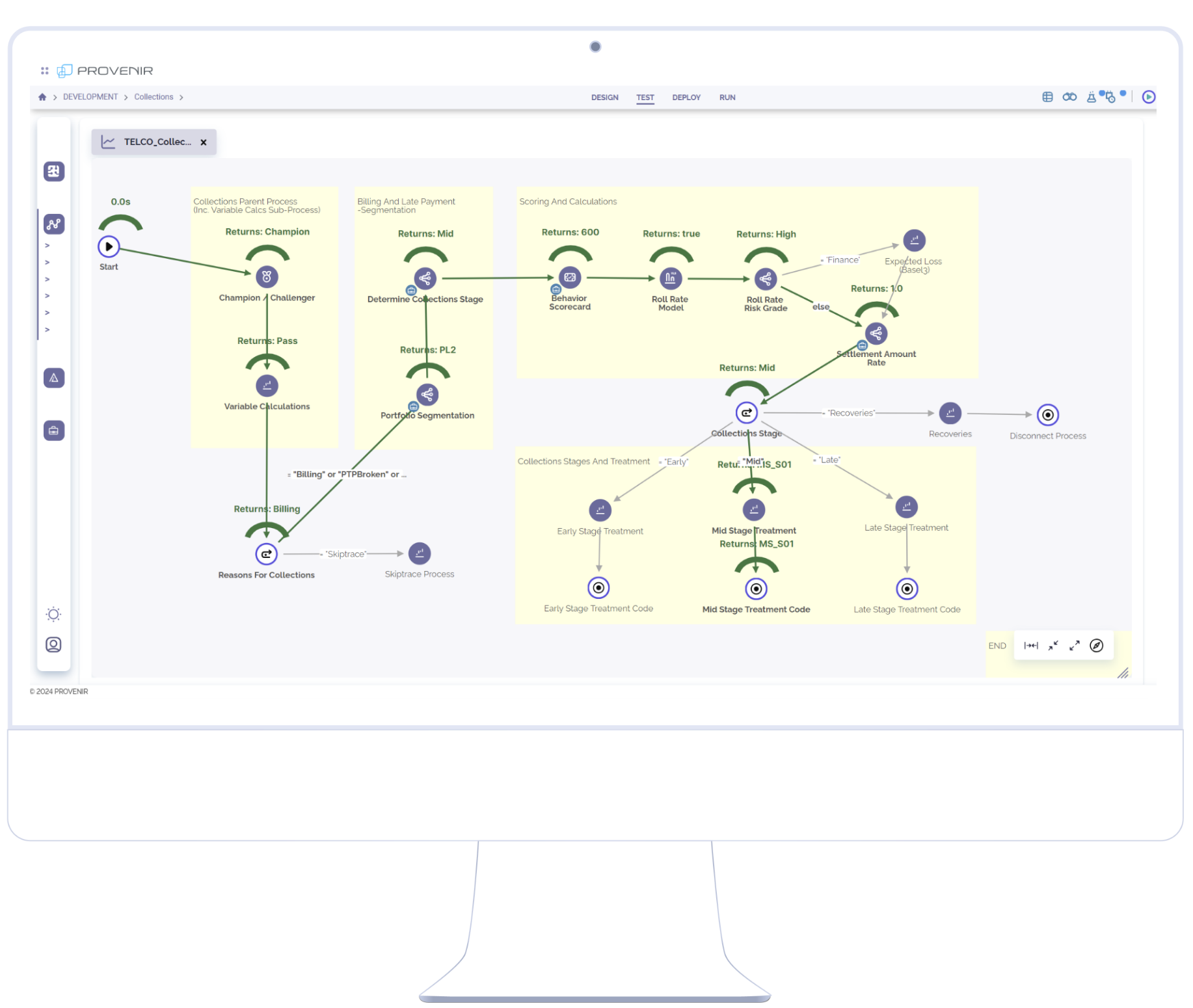
The workflow pictured above uses a combination of on-us behavior data, off-us behavior data from 3rd parties such as credit bureau and speciality telco data, previous contact history data, and socio-demographic data. All of these combine to build a holistic, comprehensive view of a delinquent customer, as outlined in the seven components we described.

  • On-us behavioral data includes the customer’s payment history, delinquency history, and returned checks, among other attributes.
  • Off-us behavioral data involves third-party data sources that provide insights into a customer’s financial obligations and commitments, as well as updates on their behavior based on almost real-time updates.
  • Previous contact history data is critical in learning from previous collection contact attempts and modifying the treatment approach accordingly.
  • Socio-demographic data can be used to build customer profiles to assist in selecting the appropriate channel of communication.

Leveraging these various data sources and applying advanced analytics such as random forest or XGBoost machine learning techniques to predict behavior, propose settlement amounts, and to gauge time and channel preferences allows collection teams to build a more targeted, personalized approach to collections, based on customer preferences and circumstances.

Making a significant departure from more traditional, legacy processes (which often rely on core static classifications such as days past due or single risk scores), this new approach highlights a more modern, individualized way of ensuring efficient, effective collections strategies. By evolving beyond logistic regression and decision trees to next-generation collections models that lean on machine learning (which learns from previous nodes within its model construct), the final customer treatment is much more personalized, focused on outcomes and response propensity.

Looking for an assessment of your own risk decisioning strategies for collections?
Contact Us

LATEST BLOGS

5 Questions Your Decisioning Platform Can't Answer (But Should)

5 Questions Your Dec...

5 Questions Your Decisioning Platform Can't Answer(But Should) Most
Brendan Deakin, Executive Vice President at Provenir

Confidence at Speed:...

Confidence at Speed:What Risk Leaders Are Actually Missing Most
BLOG Bharati Fernando

How to Change a Deci...

How to Change a Decisioning Model Without Raising a
Verifying the Invisible Subscriber

Verifying the Invisi...

Verifying the Invisible Subscriber How Accessing 1datapipe on the
FAQ

Decision Management ...

Decision Management Implementation FAQs for Enterprise Banks Implementing a
260817 - BLOG Closing Fraud Gap - FeatureIMG - EN 61409

Beyond Detection: Cl...

Beyond Detection:Closing the Fraud Prevention Gap Financial services providers
260726 - BLOG eyeDP - FeatureIMG - 61058

Beyond Data: Why Dec...

Beyond Data:Why Decisioning Needs Document Intelligence Financial services providers
Fraud in Telco: Provenir Experts Answer Frequently Asked Questions

Fraud in Telco: Prov...

Fraud in Telco:Provenir Experts Answer Frequently Asked Questions 1.

Continue reading

provenir logo

Provenir for Telco Data Sheet

Provenir for Telco

Finding new, creditworthy subscribers while retaining your current ones can be especially difficult for telcos in a highly competitive landscape.

Activating those subscribers without increasing your risk is even harder. That’s why it’s so important to get the right decisioning technology. With Provenir’s AI-Powered Decisioning platform, telcos have the power to increase activations while minimizing risk across the customer lifecycle. Explore what you can do with a unified decisioning solution that offers more accurate risk assessment, real-time decisions, and flexible, data-driven processes.

Transform Your Telco into a Decisioning Superhero

Get the eBook

ADDITIONAL RESOURCES

datos report

Datos

Report Beyond Point Solutions: Orchestrating the Future of Fraud Prevention Fraud is evolving fast—and financial
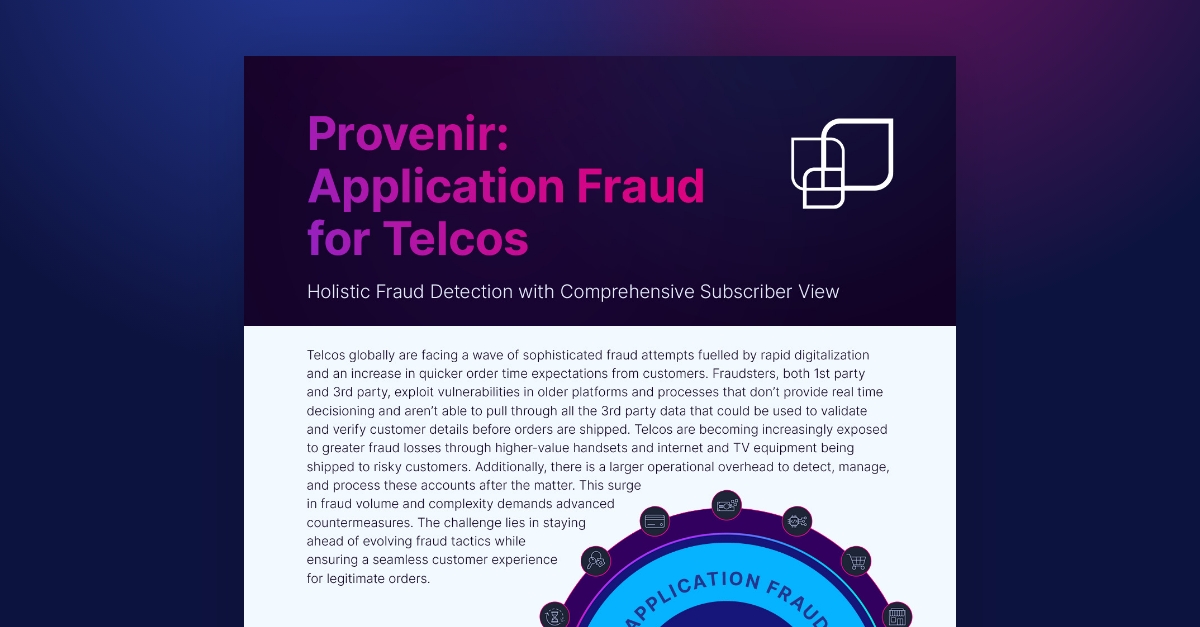
fraud for telco data sheet

DATA SHEET: Fraud fo...

Provenir: Application Fraud for Telcos Holistic Fraud Detection with Comprehensive Subscriber View Telcos globally are
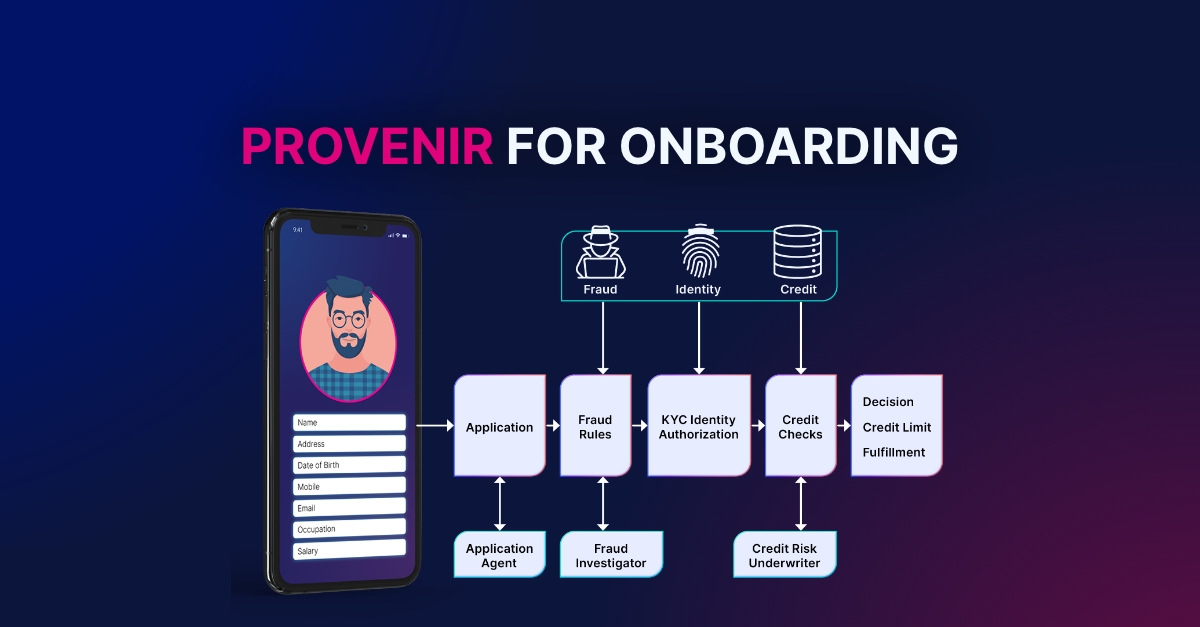
Provenir for Onboarding

Provenir for Onboard...

Provenir for Onboarding Minimize Credit and Fraud Risk, Maximize Opportunity Discover Provenir’s single, scalable software
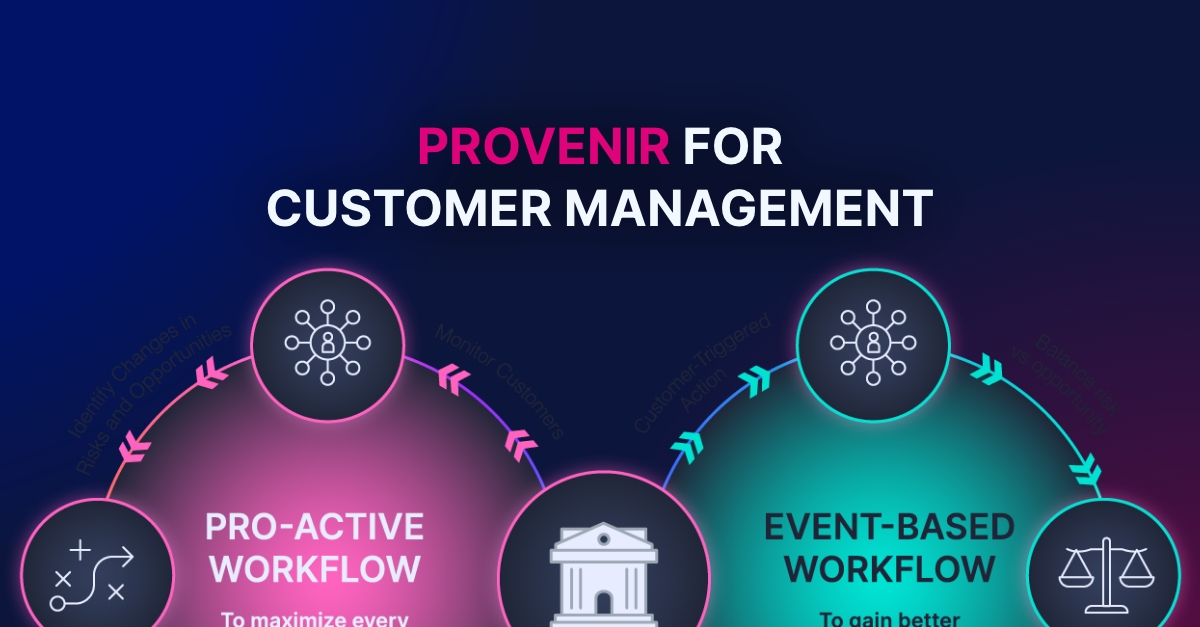
Provenir for Customer Management

Provenir for Custome...

Provenir for Customer Management Maximize Value Across the Entire Customer LIfecycle. Take your customer management
Provenir for Embedded Finance

Provenir for Embedde...

Provenir for Embedded Finance Maximize Value Through Seamless Financial Services Integration Integrating financial services into
provenir logo

Provenir Redefining ...

Provenir Redefining Risk Decisioning for the World's Leading Financial Services Providers Flexible. Smart. Strategic. Instant
Provenir: Intelligent Decisioning for Acquiring Customers and Optimizing Lifetime Value

Provenir: Intelligen...

DATA SHEET Provenir: Intelligent Decisioningfor Acquiring Customers and Optimizing Lifetime Value Flexible. Smart. Strategic. Decisioning
Provenir for Fraud

Provenir for Fraud

DATA SHEET Provenir for Fraud Optimized Data Orchestration. One Holistic Platform for Fraud and Credit

Continue reading

Welcome Home: The Benefits of Unified Access to AI-Powered Decisioning + Data

EBOOK

Welcome Home: The Benefits of Unified Access to AI-Powered Decisioning + Data

What if your decisioning technology came with the same benefits as a smart home system?

Are you working with multiple products, vendors and UIs in order to make decisions? What if you could have a single user interface to manage all of your technology solutions and save you from a disjointed, incomplete view of the credit risk lifecycle?

Check out our latest eBook and discover how one unified solution for data and AI-powered decisioning can change the way you think about your risk strategy. And bring you to the forefront of tech innovation, just like today’s smart homes.

Learn how unified access offers:

  • Built-in controls to manage risk, security and identity
  • Preconfigured data integrations to get you up and running quickly and easily
  • Flexibility to expand as your needs evolve
  • Automation to improve efficiency and power better user experiences

Ready to get smarter?

The Ultimate Guide to Decision Engines

What is a decision engine and how does it help your business processes?

Read the Blog

RESOURCE LIBRARY

IDC-Report

IDC Report 2026

Report Provenir has been positioned in the Major Players ...
EBOOK Telco - FeatureIMG

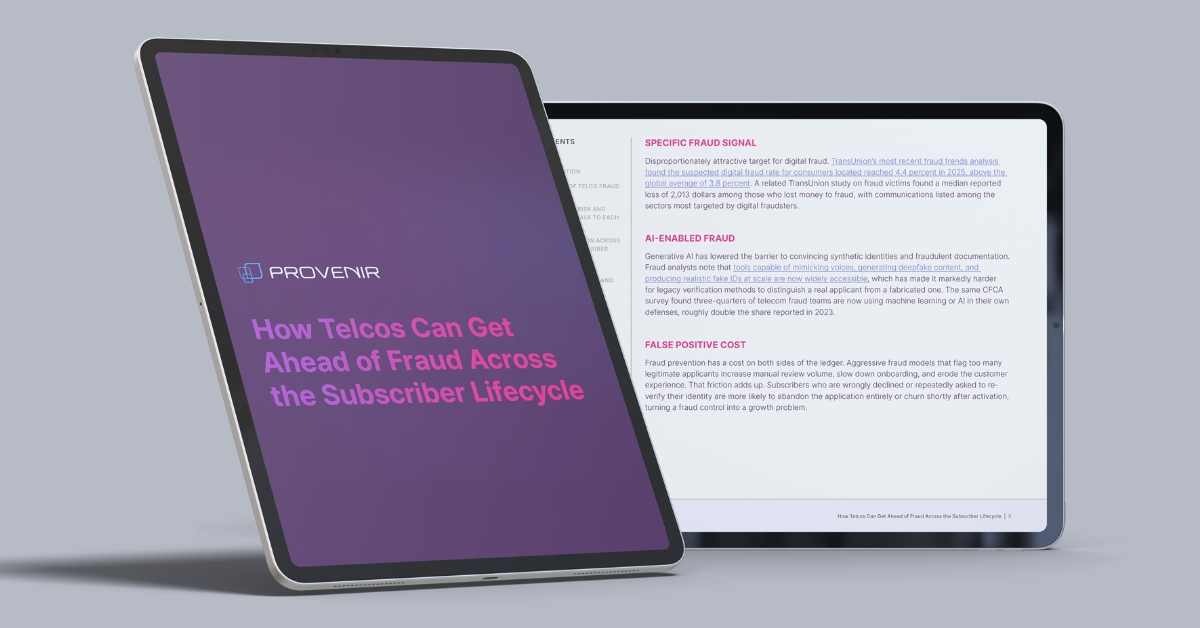
How Telcos Can Get Ahead of Fraud Across the Subscriber Lifecycle

Ebook How Telcos Can Get Ahead of Fraud Across ...
Data Providers Blog

Practical Guide to Reviewing Your Data Providers

Ebook What’s Missing from Your Decision Stack? Smarter decisions ...
EBOOK KShape

One Portfolio, Two Economies

One Portfolio, Two Economies: Model Drift, Consumer Divergence, and ...
EBOOK Survey2026

Survey: 2026 Global Decisioning Survey

What are the key challenges and priorities for financial ...
Survey: 2025 Global Risk Decisioning Survey

Survey: 2025 Global Risk Decisioning Survey

Survey: 2025 Global Risk Decisioning Survey What are the ...
EBOOK: How Telcos Can Boost Revenue Without the Risk

EBOOK: How Telcos Can Boost Revenue Without the Risk

Dial Into Profit: How Telcos Can Boost Revenue Without ...

Continue reading

How Data Drives the Financing Shift in Telco

BLOG

How Data Drives the Financing Shift in Telco

As competition grows fiercer and products become commoditized, customers are placing more demands on their carriers. Forward thinking telco organizations are relying on advanced data and analytics to differentiate and hone their advantage.

This eight-page white paper presents data-driven insights and use cases to help you:

  • Dig into your credit risk data to improve finance offerings
  • Illuminate customer experience trends to reduce churn
  • Leverage alternative data to capture a broader market

“Provenir empowers the Telia Finance team to create and change credit offerings independently, process customer applications in seconds, and easily integrate into multiple data sources for better quality decisioning.”

Fredrik Nilsson, Telia Finance


LATEST BLOGS

5 Questions Your Decisioning Platform Can't Answer (But Should)

5 Questions Your Dec...

5 Questions Your Decisioning Platform Can't Answer(But Should) Most
Brendan Deakin, Executive Vice President at Provenir

Confidence at Speed:...

Confidence at Speed:What Risk Leaders Are Actually Missing Most
BLOG Bharati Fernando

How to Change a Deci...

How to Change a Decisioning Model Without Raising a
Verifying the Invisible Subscriber

Verifying the Invisi...

Verifying the Invisible Subscriber How Accessing 1datapipe on the
FAQ

Decision Management ...

Decision Management Implementation FAQs for Enterprise Banks Implementing a
260817 - BLOG Closing Fraud Gap - FeatureIMG - EN 61409

Beyond Detection: Cl...
Beyond Detection:Closing the Fraud Prevention Gap Financial services providers
260726 - BLOG eyeDP - FeatureIMG - 61058

Beyond Data: Why Dec...

Beyond Data:Why Decisioning Needs Document Intelligence Financial services providers
Fraud in Telco: Provenir Experts Answer Frequently Asked Questions

Fraud in Telco: Prov...

Fraud in Telco:Provenir Experts Answer Frequently Asked Questions 1.

Continue reading

3 Things Telcos Should Know About Alternative Data

BLOG

3 Things Telcos Should Know
About Alternative Data

Business models are changing — and rapidly.

Apologies, because you probably knew that.

But it’s happening much faster than we think, whether it is timed to product design shifts or concepts like the Internet of Things, or changed models like servitization. Some have even estimated that a standard enterprise business model changes every 2.5-3 years. The main revenue source may stay the same, but the plan underlying said revenue source shifts essentially every seven quarters.

Primarily a product-driven industry, we see this shift happening in Telco now. As devices become more expensive for an average consumer, telco caters to a built-in audience by way of financing offers. It’s somewhat of a servitization model in its own right: a product (the phone) bolstered by a service (the financing so that you can afford the phone over a period of time).

Financing makes sense as a new revenue stream for telco companies, but it opens up some new challenges too: namely, if you weren’t a lending institution before, how do you make decisions around financing and credit of different consumers? What if they have a non-existent credit history? What then?

Here arrives “alternative data.”

1. What is alternative data?

Don’t worry: it’s not like “alternative facts.”

The easiest definition: information that is not found in the files maintained by the three major credit reporting agencies. For example, some elements not kept in major CRA files include:

  • Telco
  • Utility information
  • Property record information
  • Social media footprints

Alternative data is actually a much bigger slice than you might think. Yes, 190 million Americans have a FICO score, and that’s by far the majority. But consider this: 28 million Americans are credit retired, new to credit, or lost access to credit — and 25 million have no credit bureau record. There’s more, too: while 92% of Americans have a cell phone, only 2.5% of consumer credit bureau files have telco information. It’s the same with utilities: 60% of U.S. residents pay utilities, but just 2.4% of files have this information.

Telco, utility, and lease/property information is often highly indicative of credit trustworthiness but just isn’t tracked at the conventional levels.

2. How do you pull alternative data?

Largely through public record data sources, although you can also search people’s social media profiles.

While social media is not as direct a correlation with credit trustworthiness, it can give you an idea of the person’s activities and habits, especially around check-ins. However, as more and more companies embed with Facebook, Twitter, Google, Instagram, et al. concerning immediate purchase (think “Buy Now” buttons), there will be more financial information tied to people’s social media accounts.

This concept is still getting to scale in the U.S., but one of the initial growth areas of alternative data was Indonesia, sometimes considered “the Twitter capital of the world.” There are 78 million active Internet users in Indonesia, with north of 50 million on both Facebook and Twitter. You won’t find that profile information in conventional lending approaches, no; but it’s still highly valuable.

Or is it?

3. Does alternative data work?

Yes. To wit: in one study where auto lenders decided to use alternative data in their decisioning processes, 40% of those rejected via “no-file” and 30% of those rejected via “thin-file” were found to have credit trustworthy scores when you considered these alternative data sources.

Is this a case of “not everyone is on the grid?” Yes, that’s part of it. The other part is that human existence is not stagnant. We’ve done things one way for so long when evaluating credit trustworthiness, but the world has changed dramatically, and we have access to much, much more information. Shouldn’t we be using it to make better decisions?

The Secret to Consumer Lending Success

Get the eBook


LATEST BLOGS

5 Questions Your Decisioning Platform Can't Answer (But Should)

5 Questions Your Dec...

5 Questions Your Decisioning Platform Can't Answer(But Should) Most
Brendan Deakin, Executive Vice President at Provenir

Confidence at Speed:...

Confidence at Speed:What Risk Leaders Are Actually Missing Most
BLOG Bharati Fernando

How to Change a Deci...

How to Change a Decisioning Model Without Raising a
Verifying the Invisible Subscriber

Verifying the Invisi...

Verifying the Invisible Subscriber How Accessing 1datapipe on the
FAQ

Decision Management ...

Decision Management Implementation FAQs for Enterprise Banks Implementing a
260817 - BLOG Closing Fraud Gap - FeatureIMG - EN 61409

Beyond Detection: Cl...
Beyond Detection:Closing the Fraud Prevention Gap Financial services providers
260726 - BLOG eyeDP - FeatureIMG - 61058

Beyond Data: Why Dec...

Beyond Data:Why Decisioning Needs Document Intelligence Financial services providers
Fraud in Telco: Provenir Experts Answer Frequently Asked Questions

Fraud in Telco: Prov...

Fraud in Telco:Provenir Experts Answer Frequently Asked Questions 1.

Continue reading