Language: EN

Unlocking Africa’s Credit Potential

NEWS

Unlocking Africa’s Credit Potential

According to KPMG data, there was a record $1.6 billion in fintech investment in 2021. At the same time, consumer spending in Africa is $1.4 trillion yet a significant percentage of the population has poor or no access to financial services.

In this Africa Business article, Adrian Pillay, VP of Middle East & Africa at Provenir, shares his insights on Africa’s financial landscape and how lenders can use fintechs’ innovative solutions to serve individuals with little or no credit history while improving risk assessment and increasing access to credit.

He also outlines the importance of using of alternative data, automation and real-time risk analytics to quickly evaluate SMEs creditworthiness to eliminate lengthy delays in funding approval, which can be the difference between a business flourishing or floundering.

Read Now

The Ultimate Guide to Decision Engines

What is a decision engine and how does it help your business processes?

Learn More


LATEST NEWS

Continue reading

Infrastructure Talents are Some of the Challenges Finance Industry Faces in Adopting AI: Provenir

NEWS

Infrastructure Talents are Some of the Challenges Finance Industry Faces in Adopting AI: Provenir

Bharath Vellore, Provenir’s General Manager of APAC, recently spoke to e27 about the increasing number of case studies for AI in the financial industry such as fraud identification, credit scoring and risk management. He also outlined key considerations organizations should consider to implement AI successfully.

Read Now

The Ultimate Guide to Decision Engines

What is a decision engine and how does it help your business processes?

Learn More


LATEST NEWS

Continue reading

provenir logo

APACs Top Fintech Trends to Watch

BLOG

APAC’s Top Fintech Trends to Watch

Asia Pacific (APAC) is home to diverse markets with different levels of maturation. But whether the market is emerging or mature, fintech innovation is booming across the region. Fintechs had their strongest year yet in 2022, with a record-breaking $50.5 billion invested into the industry – this level of investment is propelling APAC’s continued growth even when other regions are seeing slowdowns.

So what are the ideas driving this growth? Where is disruption happening now and where can we expect to see it develop as technology progresses? Provenir’s Bharath Vellore shares his insights on APAC’s hottest trends to watch for Indonesia, Malaysia, Singapore, the Philippines, and Australia.

Indonesia: Buy Now, Pay Later (BNPL)

Despite the recent negative press around BNPL, there’s good news for the industry in Indonesia, where it grew by 70% to reach almost $4.5 billion in 2022. The outlook for medium to long-term growth remains very strong, with projected growth of 32.5% to reach an expected market size of $25 billion by 2028.

Why has BNPL had such success in Indonesia? It has helped the country to fill a significant lending gap. Nearly 65% of the population is unbanked and credit card penetration is in the low single digits – the need for financially inclusive credit is broad. And the ways BNPL is being used are broad as well. Similar to usage around the world, the payment option is now breaking up the lowest value grocery runs and other everyday transactions to expensive luxury retail purchases.

Some fintechs pushing forward Indonesian BNPL include:

Malaysia: Digital Banking

In 2022, Malaysia’s Central Bank awarded 5 digital banking licenses for the first time, with the intent to drive financial inclusion in the country. With digital banks now in play, consumers can access convenient and flexible financial products. A dynamic space to watch will be how these digital banking entrants will grow, given the position of the traditional lenders and banks that have been entrenched in the space for a significant period of time with large customer bases.

Provenir partner Credolab agrees, also pointing out the importance of fraud mitigation:

“A digital banking transformation is accelerating in Malaysia, amid stiff competition from other countries in the region. To manage the associated fraud risks, banks offering digital services will have to take appropriate measures and collaborate with best-of-breed Fintechs to help fight fraud.”

Steve Thurley, Managing Director – APAC, Credolab

We believe that the digital banks that find success will create a path to profitable growth by finding low cost customer acquisition models and delivering new products to market rapidly. The best way to do this is find customers through partnerships and networks, and develop financial products on a low-code/no-code platform that allows business users to be agile and responsive to market needs. The fintech difference? These products should be highly personalized and feature-rich to offer consumers elevated digital banking experiences they can’t get from traditional banks.

The financial groups launching banks are:

Singapore: Embedded Finance
Unlike Indonesia, Singapore has a very mature financial ecosystem. Banks are quite well entrenched in the economy and have even proactively adopted digital services, making room for digital banks, embedded finance, and hyper-personalized financial products. Adopting embedded finance helps organizations that aren’t traditionally financial service providers to provide financial products, reaching new market segments and simplifying the customer experience.

The biggest opportunities for innovation in embedded finance include instant payments, cross-border transactions, and micro lending. Embedded finance products for SMEs are also gaining traction, helping small businesses with accounting and managing ledgers, while providing working capital loans. Micro credit loans, such as retail financing for e-commerce, merchant loan offers based on sales volumes, and embedded payment options in apps are streamlining financial products into everyday processes and changing the way consumers are engaging with money.

These fintechs are embedding themselves as top embedded finance providers in Singapore:

The Philippines: SME Lending

Micro, small, and medium-sized businesses are the lifeblood of the Philippine economy. Almost 36% of the GDP is generated by the SME sector and 63% of workers in the country work at one. Despite the enormous presence in the country, SMEs remain largely underfinanced, which limits their – and the economy’s – ability to grow. Enter: fintechs.

As digital loans are becoming a more viable and attractive option, fintechs are extending credit to SMEs through online platforms that small business owners can access from anywhere in the country. As big data becomes more available, SME lenders are able to tap into that ecosystem to build alternative credit scoring models. There is not great coverage from the bureau point of view, as the majority of SMEs have thin files or no credit report at all, so the lack of financial data is a huge gap for traditional lenders who don’t have enough information to make accurate decisions. Big data is providing access to alternative data such as customer reviews, income flows, and more to make lending decisions – this area is primed for significant growth.

Companies driving SME lending innovation include:

Australia: Open Banking
Consumer Data Right (CDR) legislation was introduced in Australia in 2020. Phase one mandated the country’s four biggest banks to share access to consumer data; phase two did the same for small banks; last year’s phase extended to energy and utility companies; and next year’s final phase brings non-bank lenders under CDR. What happens when you’re combining datasets across banking, energy, and nonbanking? Consumers access lending products across the ecosystem and are able to take advantage of the best deals on financial products.

Provenir partner SEON highlights the importance of payment speed as well:

“Open banking allows innovation in multiple areas, including payments, credit checks, loan applications, and more. The most exciting is open banking payment initiation, which provides instant access to cash flow on a faster payment rail (funds sent and received in 2-10s) at a fraction of the cost of credit cards.”

Daniel Sebes, Strategic Director, SEON

Currently, Australia has 115 data holders of consumer data and 24 active data recipients who can receive consumer data. The number of data recipients will grow tremendously, catalyzing fintechs to build innovative financial products that push one another ahead through competition while empowering consumers to find the best products available. For this reason, CDR and open banking will be a very interesting space to keep an eye on.

Active data recipients in Australia include:

It’s clear that fintechs have disrupted almost every aspect of financial services across the APAC region. Many of these trends will continue to inspire new ways to disrupt the way we manage and access credit, whether it’s through new ways to pay for goods, the data that paints financial health, or how the small businesses driving economic growth stay afloat. Whether the trends have staying power or will evolve as technology and regulation develops, only time will tell. What we do know is we’ll be watching.

Looking for a technology partner to help you jump on one of these trends?

Learn how a unified credit risk decisioning and data platform can help you go to market faster.

Explore

Back to the Future: 8 Features of Fast and Future-Proof BNPL Technology

Get the eBook

LATEST BLOGS

260817 - BLOG Closing Fraud Gap - FeatureIMG - EN 61409

Beyond Detection: Cl...

Beyond Detection:Closing the Fraud Prevention Gap Financial services providers
260726 - BLOG eyeDP - FeatureIMG - 61058

Beyond Data: Why Dec...

Beyond Data:Why Decisioning Needs Document Intelligence Financial services providers
Fraud in Telco: Provenir Experts Answer Frequently Asked Questions

Fraud in Telco: Prov...

Fraud in Telco:Provenir Experts Answer Frequently Asked Questions 1.
260722 - ARTICLE Mike - FeatureIMG - 60958

AI governance in fin...

AI governance in financial services:What "governed" means in practice
Latam Compliance Challenge for Decisioning

LATAM Next Complianc...

From Data Protection to Decisioning Accountability:What LATAM Regulation Means
Banks Architecture Gap - Provenir

The Architecture Gap...

Decisioning ArchitectureThe Architecture Gap: Banking's Next Competitive Battleground Banks
BLOG Andy

The Real Cost of Ven...

The Real Cost of Vendor Dependency in Credit Decisioning
260617 - BLOG Matthew Nutt - FeatureIMG - 60431

What Does a Good Dat...

What Does a Good Data Provider Review Actually Look

Continue reading

“Don’t wait to be approached”: IWD Spotlight with Mei Ye

NEWS

“Don’t wait to be approached”:
IWD Spotlight with Mei Ye

Being told she wouldn’t be promoted because “senior positions are for men” incentivized Mei Ye, Head of Pre-Sales (APAC) at Provenir, to change careers. Mei shares her journey and perspective on the importance of mentors and mistakes.

Read Now

The Ultimate Guide to Decision Engines

What is a decision engine and how does it help your business processes?

Learn More


LATEST NEWS

Continue reading

provenir logo

Ten Fintechs Shaking Up Consumer Lending

BLOG

Ten Fintechs Shaking Up Consumer Lending

With the ever-evolving landscape of financial technology, consumer lending has never been more accessible and efficient – in large part, due to fintech innovation. With a global consumer credit market size of $11 billion, rapidly growing middle classes in emerging markets, and economic uncertainty affecting us all, the opportunity for lenders to tap into the consumer need for credit is immense.

Across the broad spectrum of consumer lending, fintechs are answering the call and disrupting the traditional. No credit score? No problem. Worried about missing payments? You’re covered. From a company supporting gig workers around the world to a credit card for foodies, these ten fintechs are shaking up auto lending, BNPL, credit cards, mortgages, and retail/POS.

Auto Lending
Lendbuzz – USAIf you’re new to credit, it can be difficult to get approved for auto financing. Lendbuzz is here to change that. The fintech proves a simple and fast application process that assesses creditworthiness with data beyond just your credit score. Working directly with auto dealerships, Lendbuzz offers personalized loans and instant decisions, taking you through the process from start to finish.
Moove – EMEA and IndiaFounded in Nigeria in 2020, Moove is a global startup that aims to democratize access to vehicle ownership for “mobility entrepreneurs” across Africa, the Middle East, Europe, and India. Tackling the high barrier to vehicle financing that millions face, especially in emerging markets, Moove uses a revenue-based financing model to offer car loans that drivers then pay off through their ridesharing app.
Buy Now, Pay Later
ShopBack (formerly Hoolah) – Southeast Asia and Australia

Singapore-born ShopBack is a fintech that provides improved shopping experiences to consumers and broader reach and shopper engagement to brands and retailers. Operating across APAC, their integrated BNPL service allows you to pay off purchases in installments of three, which can be combined with features such as cashback and prepaid retail vouchers. ShopBack hopes to make shopping “more rewarding, delightful, and accessible.”

Nelo – MexicoIf you want to buy now, pay later at Mexico’s top merchants, you want to download Nelo’s top-rated app – it’s the first of its kind in the region, enabling shoppers to pay in installments with a virtual card generated at checkout. And through the company’s partnership with Mastercard, you can use it at any online merchant. You can also use it to finance everyday expenses like utilities and other bills, a mark of BNPL innovation and a sign of how the segment is likely to evolve.
Credit Cards
Cred.ai – USACred.ai is an AI-powered credit card designed to help users build credit while mitigating missed payments. The fintech sets up automated spending limits, helping you spend within your means, and their proprietary underwriting model means you don’t need a FICO score to apply. The card itself is metal, unicorn-themed, and free for approved applicants. It works best with their digital banking product and comes with features like an early paycheck (called flux capacitor) and digital “self-destruct” cards called stealthcards.
Yonder – LondonA rewards credit card “great for expats and immigrants,” Yonder is a rewards credit card that boasts no foreign exchange fees, worldwide travel insurance, and you can apply without a UK credit score. Leveraging open banking technology, the credit card is able to focus on financial inclusion while rewarding users for the experiences that enrich their lives, whether it’s travel or dining at Yonder’s curated restaurant partners around London.
Mortgage
Hypofriend – GermanyHypofriend was founded to simplify and personalize the process of getting a mortgage for Germans. They use advanced technology to analyze your optimal finance strategy while predicting bank decisions in order to connect you to a personalized mortgage offer from a lender that fits your needs. The Hypofriend team is also there to advise from start to finish, demystifying the complex process and providing transparency to support more financial literacy and understanding.
HomeCrowd – MalaysiaFocused on helping Millennials in Malaysia achieve the dream of owning a home, HomeCrowd uses holistic, data-driven credit scoring to match mortgage applicants with peer-to-peer (P2P) lenders on a blockchain-powered, Web3 platform. The company is the first in the country to be licensed and regulated for P2P lending specifically for mortgages and consumer financing by the government.
Retail/Point-of-Sale (POS)
Blink – EgyptDid you know that less than 4% of Egyptians have access to credit cards? The majority of Egyptians must rely on savings or finance purchases with high-interest loans. Blnk is here to change that – they enable any consumer to receive instant credit at the point-of-sale. Their current network of merchants includes over 300 businesses and the fintech has already disbursed over $20 million in loans.
Acima – USAUS-based Acima offers consumers lease-to-own solutions as an alternative to traditional retail financing. You don’t need credit to apply and your credit score isn’t affected. Simply lease the furniture, electronics, or any other item you want to purchase and “rent” it until the cost of the item is covered, or pay early at a discounted rate. If you no longer want the item, just return it! Acima enables online and in-store shopping and offers flexible payment terms.

Unlocking Consumer Lending Innovation

As access to consumer credit increases around the world, both fintechs and traditional financial service providers will need to leverage the right technology to provide it. The ten fintechs you just read about have found their innovative idea to disrupt consumer lending – what will yours be?

No matter the idea or use case, you need a technology partner that thinks like you. Future-proof your consumer lending strategy and launch new products with a data and decisioning ecosystem that manages risk, so you can focus on what matters most: serving your customers in new, disruptive ways.

Read the eBook, The Secret to Consumer Lending Sucess to discover how you can overcome any lending challenge with a robust credit risk decisioning platform that grants access to both alternative and traditional data sources through a single API.

Conquer Consumer Lending

Explore the eBook

LATEST BLOGS

260817 - BLOG Closing Fraud Gap - FeatureIMG - EN 61409

Beyond Detection: Cl...

Beyond Detection:Closing the Fraud Prevention Gap Financial services providers
260726 - BLOG eyeDP - FeatureIMG - 61058

Beyond Data: Why Dec...

Beyond Data:Why Decisioning Needs Document Intelligence Financial services providers
Fraud in Telco: Provenir Experts Answer Frequently Asked Questions

Fraud in Telco: Prov...

Fraud in Telco:Provenir Experts Answer Frequently Asked Questions 1.
260722 - ARTICLE Mike - FeatureIMG - 60958

AI governance in fin...

AI governance in financial services:What "governed" means in practice
Latam Compliance Challenge for Decisioning

LATAM Next Complianc...

From Data Protection to Decisioning Accountability:What LATAM Regulation Means
Banks Architecture Gap - Provenir

The Architecture Gap...

Decisioning ArchitectureThe Architecture Gap: Banking's Next Competitive Battleground Banks
BLOG Andy

The Real Cost of Ven...

The Real Cost of Vendor Dependency in Credit Decisioning
260617 - BLOG Matthew Nutt - FeatureIMG - 60431

What Does a Good Dat...

What Does a Good Data Provider Review Actually Look

Continue reading

The Secret to Consumer Lending Success

EBOOK

The Secret to
Consumer Lending Success

Book a Meeting

Between stark competition, evolving regulation, and an unpredictable global economy, consumer lending can be a difficult space to thrive within. But the secret to consumer lending success isn’t hard to find: it can be unlocked by understanding the key differentiators within the industry.

Explore how you can turn challenges into opportunities across five major use cases: auto, mortgage, retail, BNPL, and credit cards. Read the eBook to discover the secret to consumer lending!

RESOURCE LIBRARY

EBOOK Telco - FeatureIMG

How Telcos Can Get Ahead of Fraud Across the Subscriber Lifecycle

Ebook How Telcos Can Get Ahead of Fraud Across ...
Data Providers Blog

Practical Guide to Reviewing Your Data Providers

Ebook What’s Missing from Your Decision Stack? Smarter decisions ...
EBOOK KShape

One Portfolio, Two Economies

One Portfolio, Two Economies: Model Drift, Consumer Divergence, and ...
EBOOK Survey2026

Survey: 2026 Global Decisioning Survey

What are the key challenges and priorities for financial ...
Survey: 2025 Global Risk Decisioning Survey

Survey: 2025 Global Risk Decisioning Survey

Survey: 2025 Global Risk Decisioning Survey What are the ...
EBOOK: How Telcos Can Boost Revenue Without the Risk

EBOOK: How Telcos Can Boost Revenue Without the Risk

Dial Into Profit: How Telcos Can Boost Revenue Without ...
Vendor Report: Chartis Research Names Provenir a Global Leader

Vendor Report: Chartis Research Names Provenir a Global Leader

Chartis Research Names Provenir a Global Leader Credit and ...
Mind the Gap: The Need for Speedy, Accessible SME Lending in EMEA

Mind the Gap: The Need for Speedy, Accessible SME Lending in EMEA

EBOOK Mind the Gap: The Need for Speedy, Accessible ...

Continue reading

Brankas

Partners

Brankas

Brankas – Leading Open Finance Technology Leader

Key Benefits

  • Instant Multi-Bank Integrations with Brankas Data APIs. Let users connect their bank account to your platform, giving them faster access to their data and a better experience.
  • Capture Data Intelligently and Interpret it Faster. With quicker access to reliable data, you can personalize your customer’s experience depending on their wants and needs.

“Our partnership with Brankas allows us to help clinics in Indonesia finally move into a digital future that can make healthcare easier and more available for everyone. We are excited for the future of healthcare.”

OGY WINENRIANDHIKA, CO-FOUNDER & CEO AT KLINIKGO

Brankas – Leading Open Finance Technology Leader

Brankas helps businesses unlock modern financial services with market-leading technology. We have the largest network of bank APIs in Southeast Asia. We are also the only company invested in both API aggregation, which helps online businesses connect digitally to banks, as well as financial and payment infrastructure, which help banks and financial institutions monetize their banking platforms.

Resources

  • Visa Card Data Product

About Brankas

  • Services

    Account Opening

    Open Core

    Open Finance Suite

    Merchant Link

    Brankas Direct

    Brankas Disburse

    Brankas Bank Data

  • Profiles and Scores

    Life-centric profile

    Financial health profile

    Life-centric credit score

    Other risk scores

  • Custom Solutions

    Score card development

    Model development

    Design AI strategies and roadmaps for and with boards and management

    Education and training on AI for co-workers

  • Countries/Regions Supported

    Indonesia

    Philippines

    Vietnam

    Thailand

    Malaysia

    Bangladesh

    EMEA

Continue reading

Targeting classes C, D and E, fintech Jeitto adopts Provenir’s technology to improve the efficiency of its credit granting system

NEWS

Targeting classes C, D and E,
fintech Jeitto adopts Provenir’s technology to improve the efficiency of its credit granting system

Decisional platform will be applied in the financial services provider’s credit granting, analysis and reanalysis processes

São Paulo, March 14, 2023: Provenir, a global leader in AI-powered data and risk decisioning software for fintechs, announced today that Jeitto, a fintech with a digital credit solution for classes C, D and E, has chosen the company’s data and artificial intelligence decisioning platform to optimize its credit operations.

Founded in 2014 and with more than 4 million registered customers and about R$570 million granted, the Brazilian credit app has adopted Provenir’s scalable cloud-native solution to support its data-driven decision management in its credit granting, analysis and reanalysis processes. Among other benefits, the platform enables customized credit decisions for each different trading partner (BNPL) and easier integration.

“Since 2022, we have been making a series of improvements to our platform, seeking to offer our clients an even better experience. The selection of Provenir is part of this process and will give us even more agility in the management and adjustment of credit strategies, which is one of our main assets with our customer base,” says Fernando Silva, CEO and co-founder of Jeitto.

The main objective of selecting Provenir is to increase Jeitto’s capacity to grant credit and control risk factors to its operation and greater agility to deal with changes in the profile of the target market.

Through the Jeitto application, in addition to access to credit, customers manage their daily finances, including payment for utilities, transportation, and cell phone recharges. 

Jeitto is an important partner for people in their first experience with banking and financial services. The company aims to expand access to healthy credit to increase the financial strength of families, boost trade, empower the population, and promote more opportunities to access a wider range of financial services.

“We are very pleased to partner with Jeitto to serve an important contingent of Brazilian consumers in an intelligent and innovative way,” says Jose Luis Vargas, Executive Vice President for Latin America at Provenir.

“Our platform will offer Jeitto agility in managing and adapting to existing credit strategies, besides facilitating the creation of customized strategies and allowing personalized credit decisions through the powerful level of security offered by Provenir,” concludes Vargas.

Provenir’s industry-leading AI-powered and data and decisioning platform empowers fintechs and financial services organizations to unlock the true value of data by combining on-demand access to data with simplified AI and automated real-time decisions. With more accessible and usable data and AI, financial institutions can automate complex decisions that drive excellent customer experiences, addressing identity, credit, and fraud for faster integration and maintenance.

The Ultimate Guide to Decision Engines

What is a decision engine and how does it help your business processes?

Learn More


LATEST NEWS

Continue reading

provenir logo

Datasheet Provenir For Consumer Lending

Provenir for Consumer Lending

World-Class Customer Experience. Instant Approvals. Smarter Decisioning.
Consumer lending is a broad market with a wide range of use cases to choose from, but the secret to success remains the same for each: provide world-class customer experience to your customers and do it in an instant, all while minimizing risk and mitigating fraud.

See how you can simplify application processes, automate decisions, and approve customers for personalized offers in real-time with Provenir’s AI-powered data and decisioning ecosystem. Serve your customers, outperform competition and grow your business with our powerful, future-proof technology.

Uncover More Secrets to Consumer Lending Success

Explore the eBook

ADDITIONAL RESOURCES

datos report

Datos

Report Beyond Point Solutions: Orchestrating the Future of Fraud Prevention Fraud is evolving fast—and financial
fraud for telco data sheet

DATA SHEET: Fraud fo...

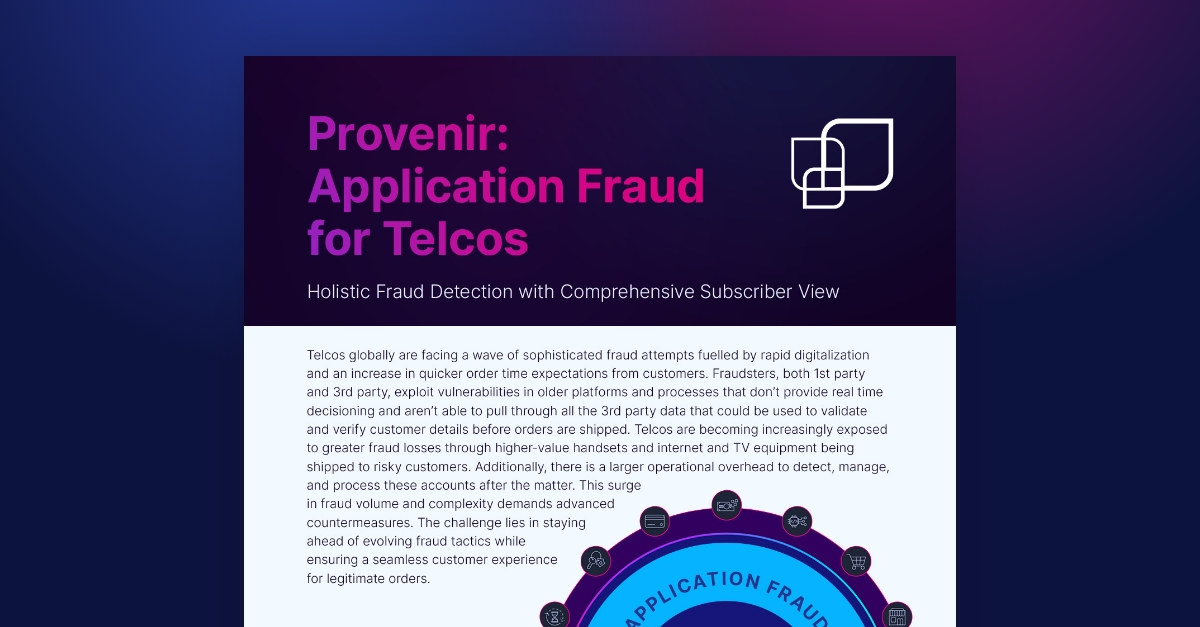
Provenir: Application Fraud for Telcos Holistic Fraud Detection with Comprehensive Subscriber View Telcos globally are
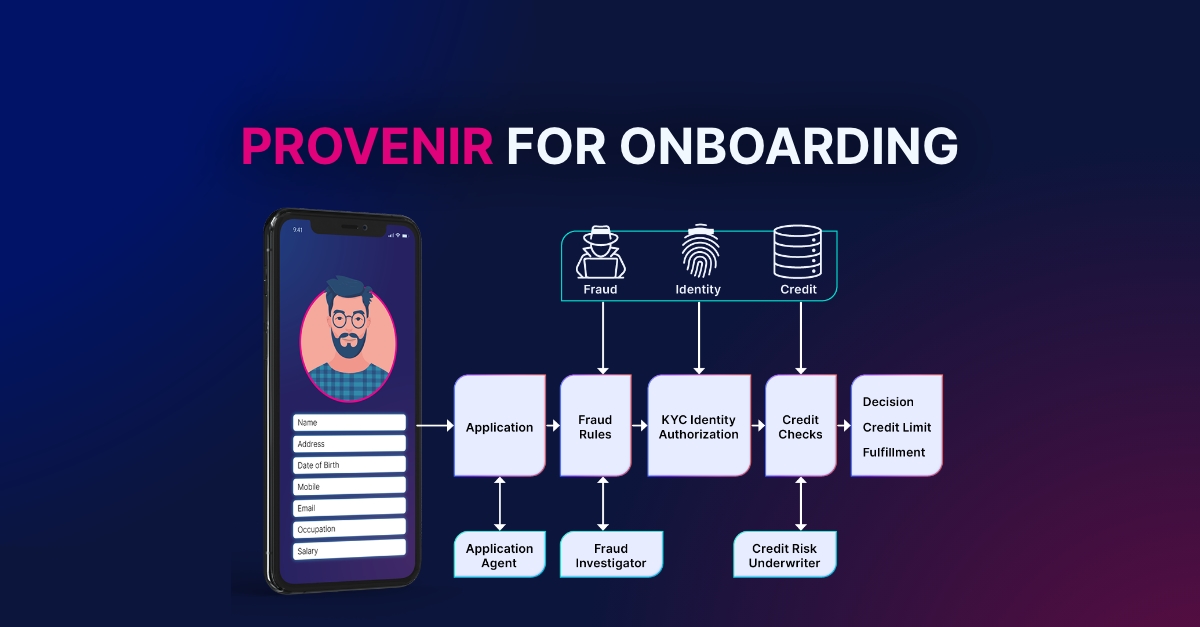
Provenir for Onboarding

Provenir for Onboard...

Provenir for Onboarding Minimize Credit and Fraud Risk, Maximize Opportunity Discover Provenir’s single, scalable software
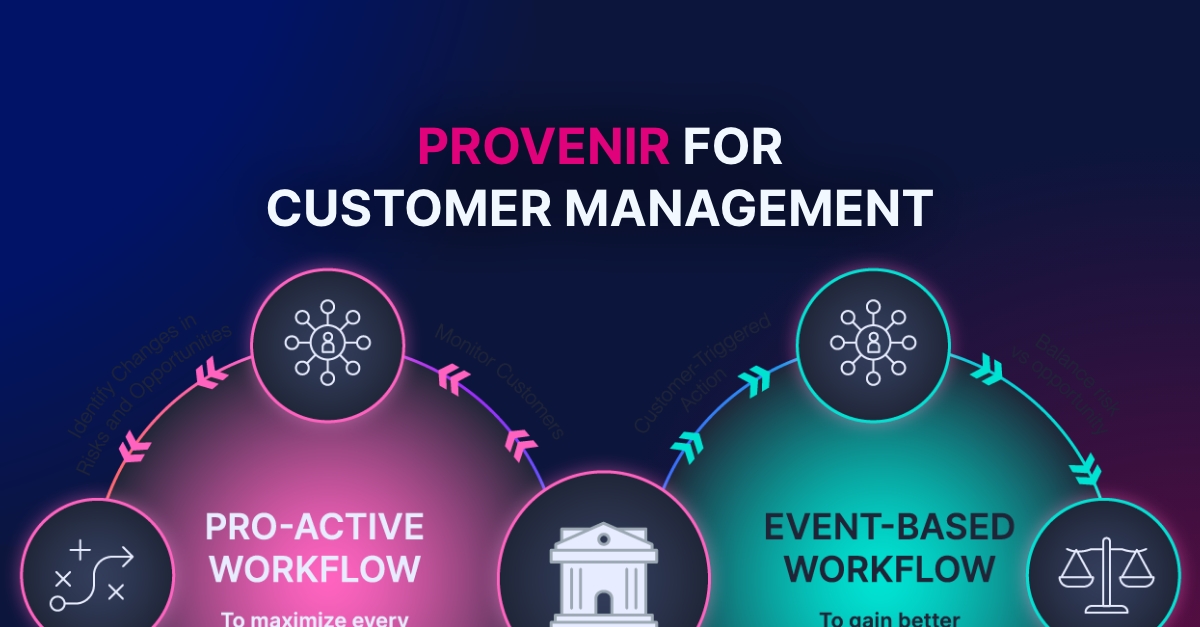
Provenir for Customer Management

Provenir for Custome...

Provenir for Customer Management Maximize Value Across the Entire Customer LIfecycle. Take your customer management
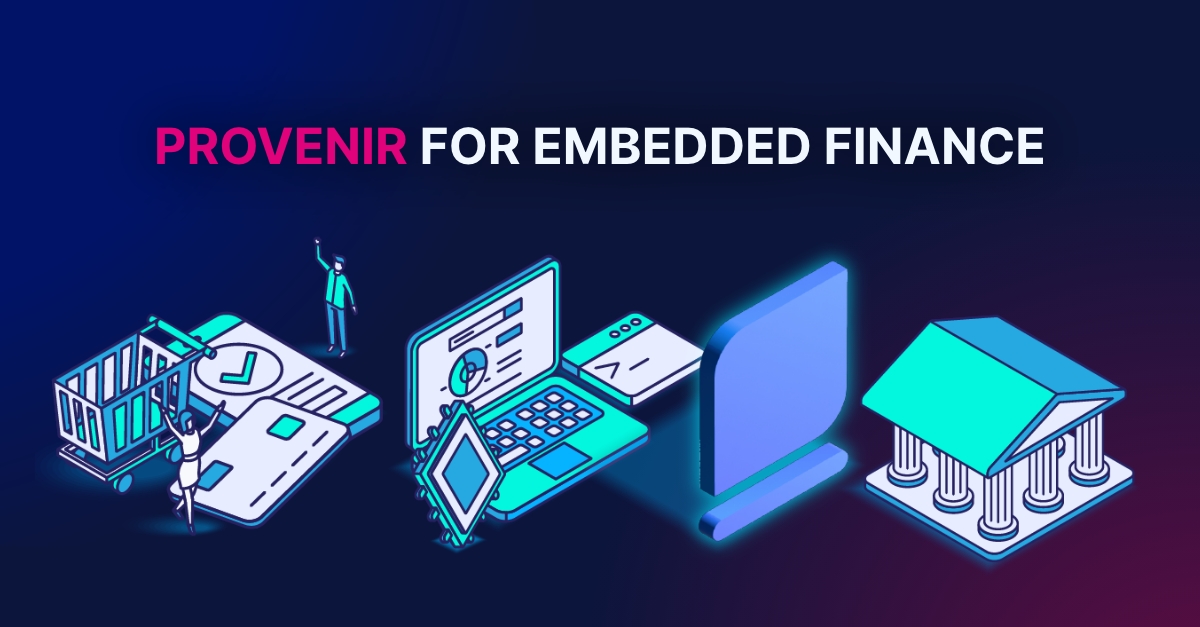
Provenir for Embedded Finance

Provenir for Embedde...

Provenir for Embedded Finance Maximize Value Through Seamless Financial Services Integration Integrating financial services into
provenir logo

Provenir Redefining ...

Provenir Redefining Risk Decisioning for the World's Leading Financial Services Providers Flexible. Smart. Strategic. Instant
Provenir: Intelligent Decisioning for Acquiring Customers and Optimizing Lifetime Value

Provenir: Intelligen...

DATA SHEET Provenir: Intelligent Decisioningfor Acquiring Customers and Optimizing Lifetime Value Flexible. Smart. Strategic. Decisioning
Provenir for Fraud

Provenir for Fraud

DATA SHEET Provenir for Fraud Optimized Data Orchestration. One Holistic Platform for Fraud and Credit

Continue reading

provenir logo

The Next-Generation Collections Model

BLOG

The Next-Generation
Collections Model

Enabled by Advanced Analytics

The economic environment is changing, and your organization needs to adapt to remain competitive. Financial institutions, energy, telcom, auto, utilities, and retail finance companies have each recognized the need to build a new collections model that utilizes advanced analytics and outcomes to drive processes, rather than simply relying on static info like days past due.

Unfortunately, the collections industry has been relatively slow to embrace new techniques in analytics compared to other areas of organizations (i.e. like loan origination) yet nearly 30% of Americans have at least one debt currently in collections. Investment in the collections process is often overlooked in favor of projects that aim to grow the customer base. However, with consumer debt levels returning to 2008 recession levels (total household debt in the United States rose by $148 billion in Q1 2023, totalling $17.05 trillion) and the threat of another recession on the horizon, collections centers are finally getting the attention they deserve. In this blog, we’ll look at the new technologies available, how they impact the process, and ways to utilize new tech to stay ahead of your competition.

The New Collections Model
Regulatory concerns, consumer preferences, and increasing consumer debt levels have all created a need to revisit and renew the collections process. In expanding credit markets, new technologies have already been embraced to enhance the customer experience in the credit acquisition process. But now it’s time to apply the same approach elsewhere.

The new collections model needs to focus on analytics and new technologies, which were unavailable during the last downturn. If you’re a risk manager, it’s important to ensure that your organization is prepared to manage economic uncertainty. Embracing advanced analytics and outcomes-driven processes can help your organization stay ahead of the curve and maintain a competitive edge. Implement a new model that is optimized for success – and ensure your organization won’t fall behind.

Advanced Analytics and Technology for Next-Gen Collections
The collections industry has been slow to embrace analytical methods. But advancements in analytical methods and machine learning, coupled with digital technologies, have created new opportunities, enabling more effective and efficient collections processes, and revolutionizing the way lenders interact with customers. Utilizing these advanced analytics means financial institutions, energy, telcom, utility companies, and retail finance companies can build a more efficient model, resulting in better performance at a lower cost.

Customer segmentation can also be improved, capturing a more holistic view of the delinquent customer. This includes their ability and willingness to pay, intent to pay, and contact channel preference. Driven by analytics, this new approach determines the best possible treatment strategy, the ideal way to communicate, and the optimal moment to make contact. By matching the most appropriate forbearance strategy for each customer and communicating via their preferred channel, financial institutions can optimize both the customer experience and the cost to collect.

For the past 30 years, traditional collections processes have heavily relied on behavior scoring, days past due, and balance to prioritize outbound call strategies. However, this approach is no longer sufficient in today’s market. Advanced analytics can enable the development of more effective collection strategies by providing finer segmentation and a wider variety of customer contact possibilities. This creates a more diverse suite of channels for customer communication, which improves customer experience and provides a greater degree of control in lender-customer interactions. This shift marks a dramatic change from the traditional collections process, which relies on static classifications like days past due or risk scores to drive decision-making. By adopting a more dynamic approach that focuses on outcomes and response propensity, lenders can provide more individualized treatments that better reflect customer preferences and circumstances.

Above all else, using advanced analytics and tech advancements like artificial intelligence and machine learning enables financial institutions to migrate to a deeper, more informed treatment of their at-risk customers. By learning from previous collections activities, the assignment of treatments becomes more fine-tuned and effective over time, generating considerable efficiencies while enhancing the overall customer experience.

What data elements are required?
Overall, a combination of on-us behavioral data, off-us behavioral data, previous contact history data, and socio-demographic data is required to build a comprehensive and holistic view of the delinquent customer.
  • On-us behavioral data includes the customer’s payment history, delinquency history, and returned checks, among other attributes.
  • Off-us behavioral data involves third-party data sources that provide insights into a customer’s financial obligations and commitments, as well as updates on their behavior based on almost real-time updates.
  • Previous contact history data is critical in learning from previous contact attempts and modifying the treatment approach accordingly.
  • Socio-demographic data can be used to build customer profiles to assist in selecting the appropriate channel of communication.
Leveraging these various data sources and applying advanced analytics, allows you to build a more individualized approach to collections, based on customer preferences and circumstances. This new approach marks a significant departure from the current model, which relies on core static classifications such as days past due or single risk scores. With the next-generation collections model, the final customer treatment is much more personalized, focused on outcomes and response propensity.
The Role of the Decision Engine
It may seem daunting to implement more advanced technologies in your collections strategy, but the role of an automated decision engine is key. Using real-time data and and automated risk decisioning is the background superstar that enhances your collections process in a variety of ways:
  • Prioritization of Debtors: Use machine learning algorithms to analyze payment history, financial status and other data to immediately predict likelihood of default or late payment and allows you to prioritize collection efforts to improve efficiency and effectiveness.
  • Personalized Collection Strategies: As mentioned above, tailored treatment strategies mean more effective outcomes and higher recovery rates.
  • Real-Time Decision Making: Making decisions in real-time allows you to move quickly and adjust collection strategies as new data becomes available.
  • Reduced Operational Costs: Limit the need for manual work and enable 24/7 operations without additional staffing costs, thanks to automation of decisions, real-time data integration, and machine learning optimizations.
  • Improved Compliance: Automated risk decisioning processes, for collections or otherwise, can be programmed to follow relevant regulations and policies (allowing for regional differences too), and reduces the risk of non-compliance.
  • Enhanced Customer Experience: No one enjoys the collections process, but as previously discussed, the more personal, respectful, and appropriate the treatment strategy, the more easily you can preserve the customer relationship.
Traditional collections processes heavily relied on simplistic measures like behavior scoring, days past due, and balance to prioritize outbound call strategies. But in today’s dynamic, rapidly changing market, this approach falls short. As the industry continues to evolve, it’s imperative for collections professionals to recognize the transformative potential of analytics and leverage them to create a competitive advantage in the dynamic collections landscape. To do so may require a new look at the decisioning platform used in collections – because if you aren’t adapting to the conditions, your competitors will.

Also, read:

What is credit underwriting?

Want more info on how improved risk decisioning can impact your collections strategy?

Read On

LATEST BLOGS

260817 - BLOG Closing Fraud Gap - FeatureIMG - EN 61409

Beyond Detection: Cl...

Beyond Detection:Closing the Fraud Prevention Gap Financial services providers
260726 - BLOG eyeDP - FeatureIMG - 61058

Beyond Data: Why Dec...

Beyond Data:Why Decisioning Needs Document Intelligence Financial services providers
Fraud in Telco: Provenir Experts Answer Frequently Asked Questions

Fraud in Telco: Prov...

Fraud in Telco:Provenir Experts Answer Frequently Asked Questions 1.
260722 - ARTICLE Mike - FeatureIMG - 60958

AI governance in fin...

AI governance in financial services:What "governed" means in practice
Latam Compliance Challenge for Decisioning

LATAM Next Complianc...

From Data Protection to Decisioning Accountability:What LATAM Regulation Means
Banks Architecture Gap - Provenir

The Architecture Gap...

Decisioning ArchitectureThe Architecture Gap: Banking's Next Competitive Battleground Banks
BLOG Andy

The Real Cost of Ven...

The Real Cost of Vendor Dependency in Credit Decisioning
260617 - BLOG Matthew Nutt - FeatureIMG - 60431

What Does a Good Dat...

What Does a Good Data Provider Review Actually Look

Continue reading