Industry: Decisioning

Embedded Finance: Enabling Seamless Financial Services

BLOG

Embedded Finance: Enabling Seamless Financial Services

Unlocking new opportunities and enhancing the customer experience
Embedded finance has been changing the way financial services are delivered, integrating them directly into everyday consumer activities. Imagine securing a loan directly from your favorite online store, or getting trip insurance coverage while booking a vacation. Many of us have utilized embedded finance services without ever having had a name for it. As more businesses adopt these integrated solutions, the potential for improved customer satisfaction, loyalty, and retention is significant – not to mention new revenue streams. We’re looking at the benefits, challenges, and future opportunities of embedded finance, offering you insights into how to leverage this trend for an enhanced competitive edge and a way to provide exceptional value to your customers.

The Power and Potential of Embedded Finance

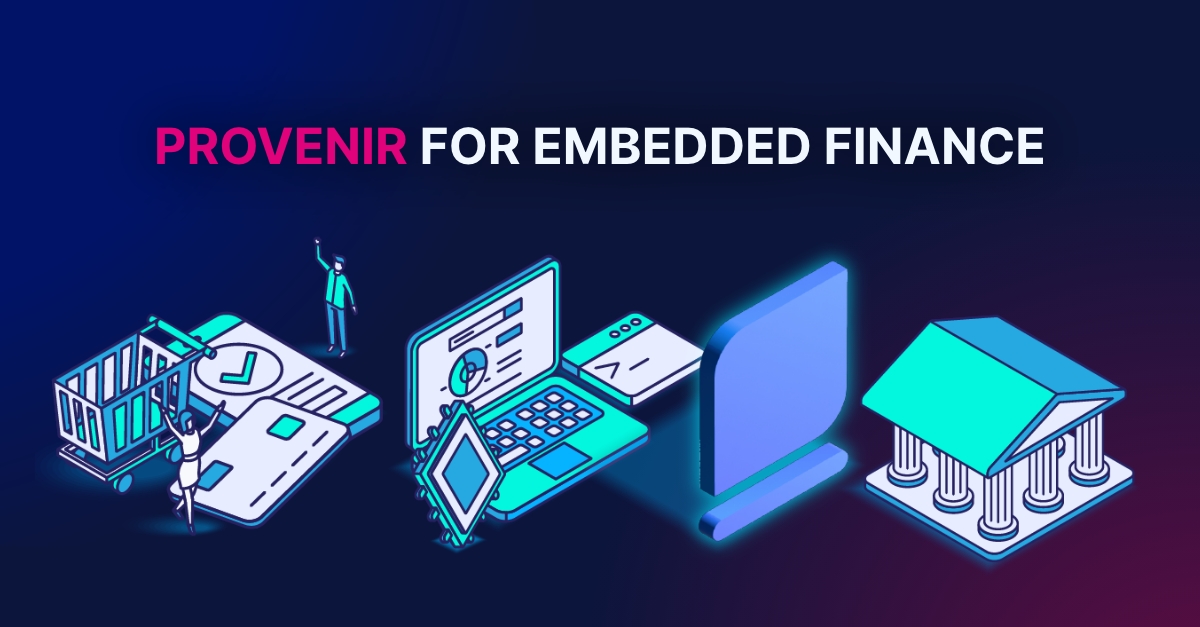
Embedded finance, referring to the integration of financial services into non-financial platforms, is enabling businesses to offer banking, lending, insurance, and payment services directly within their existing products, whether those are applications, websites or other platforms. The trend is gaining traction rapidly, in part due to its ability to create more cohesive, seamless user experiences and streamline financial transactions. The value of embedded finance in 2022 reached $66.8 billion, but estimates put that figure at $622.9 billion by 2032, highlighting how it’s poised to become a dominant force in the industry. This growth is driven by the increasing demand for convenience and the desire for businesses to differentiate themselves in a competitive market by integrating innovative financial solutions. Companies across various sectors, from travel to retail and everything in between, are recognizing the value of creating super-apps or platforms that incorporate a variety of types of services (including financial) to enhance customer loyalty and create new revenue streams.

Uber and Shopify are just two big-name examples of organizations already leveraging embedded finance to enhance their services. Uber, the ride-sharing titan, offers instant payments to drivers, while Shopfiy allows for merchant cash advances and payment processing right in its proprietary platform. Likewise, retail giant Amazon offers its customers buy now, pay later (payment in installments) services right at checkout, and Tesla offers its car buyers insurance options, streamlining the process of getting coverage for their new vehicles. So why is embedded finance so popular?

Unpacking the Benefits of Embedded Finance

There’s a ton of benefits that embedded finance can offer to enhance your business operations and the experiences of your customers. Let’s take a closer look.

1. Flexibility

  • Adaptive Solutions: Embedded finance providers highly flexible financial solutions tailored to meet the specific needs of your customers. For example, you can offer customized lending products based on individual customer profiles, which can be seamlessly integrated into the purchases process. Adaptability like this ensures that financial services are more accessible and highly relevant to each individual customer, enhancing their overall experience.
  • Real-Time Access: A standout feature is the provision of real-time access to financial services. Your customers can instantly access loans, make payments, or secure necessary insurance without the delays associated with more traditional banking processes. This immediacy improves customer satisfaction while also increasing the likelihood of customers completing transactions and reducing cart abandonment.
2. Competitive Edge
  • Market Differentiation: In a crowded space, embedded finance is proving to be a key differentiator. Offering integrated financial services allows you to stand out from the competition, and provides you an edge over those who don’t.
  • Increased Revenue Streams: Open up new avenues for revenue generation with the integration of financial services like payment processing, lending, and insurance.
3. Enhanced Customer Experience
  • Seamless Integration: Simplify the user journey by integrating financial services into everyday customer interactions. Without having to leave an app or website to complete a financial transaction, your customers will enjoy smoother, more convenient experiences.
  • Personalization: Embedded finance allows for a higher degree of personalization, with financial services tailored based on customer data and behavior – and ensuring more relevant and appealing offers (i.e. a fitness app could offer personalized health insurance plans based on user activity levels).
Embedded finance is fundamentally changing the way businesses interact with their customers, offering unparalleled flexibility, competitive advantages, and enhanced user experiences. By embracing this trend, companies can not only meet the evolving needs of their customers but also unlock new growth opportunities.

Implementing Embedded Finance Offerings: A Step-by-Step Guide

So you’re ready to dive into the world of embedded finance and reap its numerous benefits… now what? Here are some tips to help you navigate the implementation process, from assessing business needs to choosing the right technology partner and executing a seamless integration.
Step 1: Assess Your Business Needs
  • Market Research: Conduct thorough market research to understand what exactly your customers need and what the market demands. Do your customers need more flexible payment options? Faster access to loans or insurance? Identifying precise needs will help you tailor your embedded finance offerings more effectively.
  • Internal Assessment: Take a close look at the existing capabilities you have within your business. What financial services do you already offer and what are the gaps? Conducting an internal analysis will help you determine what additional resources or technologies you need in order to successfully implement your embedded finance offering. Make sure you’re aware of strengths and weaknesses to create a more robust integration plan.
  • Define Objectives: Clearly outline what you aim to achieve with your embedded finance implementation, such as increased sales or improved customer retention.
Step 2: Choose the Right Technology Partner(s)
  • Determine Criteria for Selection: Selecting the right technology partner to set you on your embedded finance path is critical. Consider factors like:
  • Scalability: Ensure the decisioning platform you choose can grow with your business and handle increasing volumes or added complexity.
  • Security: Choose a partner with strong security measures and robust data privacy to protect customer data and financial transactions.
  • Integration Capabilities: The technology should easily integrate with your existing systems and platforms.
  • Case Studies: Look at previous examples of successful embedded finance partnerships – can your chosen tech partner offer the same seamless integration and robust experience for your customers?
Step 3: Implement Your Embedded Finance Plan
  • Develop a Roadmap: Create a detailed roadmap outlining each phase of the implementation process, including timelines, key milestones, and resources required.
  • Build a Pilot Program: Start with a pilot program to test the integration on a smaller scale and gather feedback.
  • Full Integration: Roll out the solution across your entire platform, ensuring all systems are integrated and functioning smoothly.
  • Monitor and Optimize: Continuously monitor the performance of your embedded finance offerings and make necessary adjustments to optimize the experience.

Tackling Embedded Finance Hurdles

Yes, the benefits of embedded finance are substantial. But that doesn’t mean it doesn’t come with its own set of challenges. Here are some common hurdles and the strategies to overcome them.
  • Regulatory Compliance: Navigating the complex landscape of financial regulations is most definitely daunting. Different countries and regions have varying rules and regulations governing financial services, all of which can impact how you implement and maintain embedded finance. Ensuring compliance is essential to avoiding legal issues and potential fines.

    • Stay Informed: Keep up-to-date with the latest financial regulations in the regions you operate in and be sure to engage with legal experts to understand all of the implications for your business.
    • Develop Compliance Programs: Implement comprehensive compliance programs to ensure all of your financial activities adequately meet regulatory requirements, and conduct regulator reviews and audits to maintain compliance.
    • Partner With Experts: Collaborate with financial services providers who have a strong understanding of the regulatory landscape in your region so you can navigate complex regulations more effectively.
  • Technological Integration: Integrating financial services into your existing systems can be technically challenging, requiring robust IT infrastructure, seamless data flows, and compatibility with your current platforms. And ensuring data security during integration is critical for protecting sensitive customer information.

    • Ensure Robust Infrastructure: Invest in a robust IT infrastructure that can handle the integration of financial services. This includes everything from scalable servers and secure data storage to reliable network systems.
    • Utilize API Integration: Use APIs (Application Programming Interfaces) for seamless integrations. APIs can facilitate data exchanges between your systems and financial services providers, ensuring smooth operations for your customers.
    • Implement Proper Security Measures: Utilize advanced security measures, including encryption, two-factor authentication, and regular security audits to adequately protect customer data both during and after the integration process.
  • Customer Trust: Building and maintaining the trust and loyalty of your customers is critical when you’re offering financial services of any kind. Customers need to feel confident that their data (including identity, account numbers, and transactional data) is secure and that services provided are reliable. Any incidents that breach this trust can have severe repercussions for your brand (and your bottom line).

    • Be Transparent: Be upfront and straightforward with your customers about how their data is used and the measures you have in place to protect it.
    • Provide Customer Support: Ensure you have robust customer support in place to address any concerns or issues your customers may have regarding your embedded services.
    • Perform Quality Assurance: Regularly test and update your financial services to ensure they remain reliable and secure. High-quality service delivery enhances customer trust and satisfaction.
Implementing embedded finance can transform your business, but it’s crucial to address any potential challenges head-on – and preferably before they pop up! Stay informed, invest in the right tech, and build trust with your customers so you can navigate these obstacles with ease and ensure a successful embedded finance integration.

The Future of Embedded Finance: What Lies Ahead?

As embedded finance offerings (and the tech behind them) continues to grow, the impact on various industries are becoming more profound – with trends surrounding embedded finance shifting, use cases evolving, and long-term benefits emerging.
  • Increased Use of AI: AI can enhance financial services by providing more personalized and efficient solutions, with everything from AI-driven chatbots offering instant customer support and machine learning algorithms that can analyze user to data to offer customized financial products. This level of personalization and rapid response improves customer satisfaction and engagement.
  • Expansion Into New Sectors: Embedded finance has been well-established in sectors like retail and transportation, but that’s only the beginning. Industries including healthcare, education, and real estate are exploring the potential of embedded finance solutions. Healthcare providers could offer financing options for medical treatments directly within their platforms, or educational institutions could integrate payment plans for tuition.
  • Smart Contracts: Self-executing contracts with the terms directly written into the code could make embedded finance even more accessible – automating transactions and reducing the need for intermediaries, making processes faster and more cost-effective. In real estate for example, smart contracts could help automate property sales, ensuring that all conditions are met before the transaction is completed – increasing efficiency and improving fraud screening.
  • Decentralized Finance (DeFI): By leveraging blockchain technology, DeFi enables financial transactions without traditional intermediaries like banks, leading to more decentralized and democratized financial services. This could enable peer-to-peer lending platforms to become more prevalent, allowing individuals to lend and borrow directly from each other, with embedded finance seamlessly facilitating these transactions.
  • Sustainable Growth: Organizations that adopt embedded finance can look forward to sustainable business growth. By integrating financial services, you can create new revenue streams and enhance loyalty of your customers. And offering financing options at the point of sale increases conversion rates and average transaction values, leading to higher revenues overall.
  • Enhanced Customer Loyalty: The convenience and personalization offered by embedded finance can significantly enhance customer loyalty. Access to tailored financial solutions, easily and securely, means your customers are more likely to return and recommend your services to others, resulting in a strong customer base and competitive advantage in the market.
  • Operational Efficiency: Automating various financial processes allows you to streamline operations, reducing the need for manual intervention, minimizing errors, and speeding up transaction times – leading to lower operational costs and greater efficiency. And reducing the time and resources spent on managing things that are now automated means more focus on core activities or strategic innovation.
Emerging trends and new innovations are set to further enhance the impact of embedded finance, making the future runway of opportunity long and bright. The benefits of embedded finance are clear (sustainable growth, improved customer loyalty, greater operational efficiency) – now all you need to do is ensure you have the right technology partners along for the ride.

Want details on how an all-in-one decisioning platform can enable your embedded finance offering?

Learn More

LATEST BLOGS

Ebook CM

AI-Powered Customer ...

AI-Powered Customer Management:How Leading Institutions Turn Intelligence Into Revenue
Hyper-Personalization - FeatureIMG-EN

From Personalization...

From Personalization to Hyper-personalization:An Executive Playbook Executive Summary Financial
The Revenue Hiding in Your Customer Base

The Revenue Hiding i...

New market expansion. Unbanked populations. Fintech partnerships. Meanwhile, the
BLOG CXO

What It Really Takes...

Building a Decision Intelligence platform for financial services sounds
BLOG AutoFinance

Transaction to Relat...

Auto lending has always been good at the moment
Buy the Engine. Build the Advantage

Buy the Engine. Buil...

The competitive environment in financial services has fundamentally changed.
The Growing Threat of Fraud in UK Auto Lending

The Growing Threat o...

Fraud in UK auto lending continues to rise in
BLOG Christian Ball

Smarter Acquisition ...

Financial institutions face a straightforward challenge: acquire profitable customers

Continue reading

Tackling Tech Bloat: Slimming Down to Boost Efficiency, Security, and Innovation

BLOG

Tackling Tech Bloat: Slimming Down to Boost Efficiency, Security, and Innovation

How Major Banks and Large Financial Services Providers can Streamline their Tech Systems
Today’s technology can be both a vital enabler to progress and growth, and also a potential hindrance to efficiency. With the accumulation of outdated, redundant, or overly complex tech systems, larger financial institutions, including major banks, are feeling the pressures of tech bloat. And just like any other bloating, tech bloat is uncomfortable – hampering efficiency, escalating costs, and stifling innovation – which makes it a critical issue to address. For larger banks in particular, the urgency to streamline tech infrastructure has never been greater. With an increasingly competitive (and much more highly regulated) environment for financial services providers, eliminating tech bloat is essential to enhancing your overall operational efficiency, improving your security, and enabling your ability to remain agile.

documents

According to a 2023 survey by MuleSoft and Deloitte, large enterprises now use an average of more than a thousand applications across their organization.

So what exactly is tech bloat, and how can you slim down your stack? Read on to find out more.

The Silent Saboteur: Understanding Tech Bloat in Financial Services

Referring to the excessive accumulation of outdated, redundant, or highly complex tech systems that weigh down an organization, tech bloat in financial services is becoming increasingly common. This phenomenon stems from a variety of causes, but the biggest tends to be an abundance of legacy systems that have been patched and repurposed over the years. Of course many financial services providers require very specific needs to be addressed (including everything from core banking systems and risk assessment models, to cybersecurity software, workflow automation, customer relationship management, financial planning and forecasting, data sources, fraud and identity management, loan origination software, and payment processing). As the list of needs (and related tech) grows with your organization, so does the bloat.

But many of the software solutions you have will overlap in functionality, leading to inefficiencies in both operation and cost. A survey by Freshworks shared that “54% of IT professionals say their organization pays for software” that never gets used. And often these systems are not integrated with each other very well, creating numerous silos of information, complicating workflows, and making data access tricky. Not to mention the fact that extensive customizations and add-ons over the years, while useful at first, can quickly turn into burdens, limiting flexibility and making maintenance and updates difficult. And of course those updates are critical, because with constant regulatory shifts, financial institutions do regularly need to update their systems, which can result in a quickly tangled web of temporary fixes that, you guessed it, add more bloat (not to mention leave you more vulnerable to everything from data breaches to lapses in compliance).

Unveiling the Not-so-Hidden Consequences of Tech Bloat
Now that we’ve looked at what it is and how it starts… What impact does tech bloat really have on day-to-day operations? As it turns out, a lot – and those effects get compounded the longer your bloat hangs on.
Financial Implications: First and foremost, tech bloat significantly strains your financial resources. Maintaining and supporting any number of redundant systems is, well, redundant, leading to increasing operational and maintenance costs. And outdated systems tend to consume a disproportionate share of your budget, diverting necessary funds away from more strategic, growth-focused investments, and hampering your ability to invest in more innovative, efficient solutions.

documents

According to Freshworks, “the cost of trying to use unhelpful technology amounts to more than $84B annually in wasted time in the US alone, or $10M every hour of every day.”

  • Operational Inefficiency: A bloated tech environment slows down business processes and complicates workflows, with legacy systems and overlapping solutions creating bottlenecks. This inefficiency affects day-to-day operations, but also has a compounding effect the longer it continues, leading to longer turnaround times and a lack of flexibility and agility in your operations, ultimately adding friction to customer experiences.
  • Risk and Compliance Challenges: The more outdated systems you have to manage, the more the risk of errors, data inconsistencies, and compliance misfires increases. All financial services providers must adhere to stringent regulatory requirements, and the more bloated your organization, the more challenging it is to ensure compliance, leading to potential fines and reputational damage.
  • Security Vulnerabilities: Along the lines of compliance struggles, outdated systems are often easier prey for cyber attackers. The complexity of a bloated tech environment makes it much more difficult to implement robust security measures effectively, leaving you open to targeting by cybercriminals. Any breach (data, compliance, ransomware) can have severe consequences, including financial losses and significant damage to customer trust.
  • Innovation Roadblocks: Want a surefire way to stifle innovation? Maintaining and integrating multiple tech systems makes it extremely challenging to adopt new technologies, even if those technologies are ones you really, really want to utilize. In an industry where agility, flexibility, and continuous innovation are required to stay competitive, this hindrance to tech advancement places larger, more complex financial services organizations at a distinct disadvantage – making it difficult to explore new opportunities and deliver cutting-edge solutions to your customers.

Any of these consequences should be enough to address your tech bloat problem, but put them all together and you can see it’s not just about security or reducing operational costs – it’s fundamental to unlocking your potential for sustained innovation and sustainable growth. Streamlining your tech infrastructure allows you to overcome these challenges and position yourself for future success and customer loyalty.

Case Study:
Reducing Tech Bloat

Consider the case of Provenir customer NewDay. Some of their existing systems were proving costly in terms of release times and updates, and were due for decommissioning. By implementing more holistic risk decisioning software, they were able to significantly reduce processing time and improve quote response times.

  • Sub-1

    second decisioning processing time

  • 99.95%

    SLA for availability

  • 80%

    improvement in speed of change

  • 2.5x

    faster quote response

Winning the War on Tech Bloat: Strategies for Financial Institutions
So what can you do to streamline your operations and slim down for good? It sounds daunting, but what it really requires is a strategic, methodical approach (and the right technology partner).
1. Conduct a Technology Audit:

  • Identify Redundant and Outdated Systems: Thoroughly review all of your existing systems to pinpoint which ones are outdated, redundant, or no longer serve a critical function
  • Assess Integration and Interoperability: Evaluate how well your current systems integrate and communicate with each other, identifying gaps and inefficiencies
2. Streamline and Consolidate:

  • Prioritize Critical Systems: Determine which systems are essential for your core operations and focus on maintaining and enhancing those first
  • Phase Out or Replace Redundant Solutions: Gradually eliminate or replace systems that are no longer necessary or that duplicate functionality
3. Invest in Modern, Integrated Solutions:
  • Adopt Cloud-Based Platforms: Leverage cloud technology to improve scalability, flexibility, and cost-efficiency
  • Emphasize Integrations and Scalability: Invest in solutions that can easily integrate with your existing systems and scale as you grow (or can scale as you continue to eliminate other existing systems)
4. Enhance Data Management and Governance:
  • Centralize Data Repositories: Consolidate your data into centralized repositories to ensure consistency, accessibility, and security
  • Implement Robust Data Governance Frameworks: Establish strong data governance practices to manage your data quality, privacy, and compliance
5. Foster a Culture of Continuous Improvement:
  • Encourage Innovation and Flexibility: Promote a mindset that embraces new technologies and innovative solutions
  • Regularly Review and Update Technology Strategy: Continuously assess and update your technology strategy to align with evolving business needs and tech advancements in the industry
6. Partner with the Right Tech Providers:
  • Collaborate with Established Decisioning Software Companies and Consultants: Engage with tech firms and consultants to leverage their expertise and innovative solutions (and be sure they have experience with legacy migrations, complex integrations, and reducing tech bloat)
  • Leverage Industry Expertise to Guide Transformation: Utilize the knowledge and experience of industry experts to navigate the complexities of technology transformation (i.e. does your new tech provider have an experienced Professional Services team that can help guide you?)
Fighting off Future Bloat
Now that you’ve slimmed your stack, how can you ensure that your tech bloat doesn’t return with a vengeance? Adopt a forward-thinking, agile approach. Agile methodologies are crucial, as they promote flexibility in technology development and deployment, allowing you to adapt quickly to changing consumer/industry needs and emerging industry trends. Agile methods encourage iterative improvements, which can help ensure that all of your systems remain both current and effective. Which is also why it’s critical to stay aware (and ahead) of tech advances in the industry. Keeping up with cutting-edge solutions and tech advancements allows you to proactively enhance efficiency and the customer experience. Look towards building a sustainable technology roadmap; with long-term planning that focuses on scalability and adaptability, you’ll ensure that your tech infrastructure can grow and evolve with the organization. Prioritizing this flexibility and continuous improvement and innovation will help you safeguard against tech bloat and maintain a streamlined, efficient, customer-centric tech environment.
Provenir’s AI-Powered Decisioning Platform

Part of fighting the bloat battle is selecting the right technology partner – one that can enable flexibility, scalability, and an end-to-end decisioning platform that you can build and grow your business on. Provenir’s AI-Powered Decisioning Platform brings together the key capabilities you need to turn decisioning into a differentiator, allowing you to deploy accurate, fully automated risk decisioning across the lifecycle, while also gaining actionable insights to optimize strategies and enhance performance across the entire organization. Featuring solutions for data, decisioning, case management, and decision intelligence, across onboarding, fraud & identity management, customer management and collections, Provenir’s platform is a one-stop solution that eliminates silos, brings teams together, and enables sustainable, customer-centric growth.

Want more info on how Provenir’s dedicated team of Principal Consultants and Professional Services experts can help you reduce tech bloat in your organization?

Contact Us

LATEST BLOGS

Ebook CM

AI-Powered Customer ...

AI-Powered Customer Management:How Leading Institutions Turn Intelligence Into Revenue
Hyper-Personalization - FeatureIMG-EN

From Personalization...

From Personalization to Hyper-personalization:An Executive Playbook Executive Summary Financial
The Revenue Hiding in Your Customer Base

The Revenue Hiding i...

New market expansion. Unbanked populations. Fintech partnerships. Meanwhile, the
BLOG CXO

What It Really Takes...

Building a Decision Intelligence platform for financial services sounds
BLOG AutoFinance

Transaction to Relat...

Auto lending has always been good at the moment
Buy the Engine. Build the Advantage

Buy the Engine. Buil...

The competitive environment in financial services has fundamentally changed.
The Growing Threat of Fraud in UK Auto Lending

The Growing Threat o...

Fraud in UK auto lending continues to rise in
BLOG Christian Ball

Smarter Acquisition ...

Financial institutions face a straightforward challenge: acquire profitable customers

Continue reading

Finance Forward: 10 Breakthrough Innovations Reshaping The Future of Financial Services

BLOG

Finance Forward: 10 Breakthrough Innovations Reshaping The Future of Financial Services

Explore how cutting-edge tech will redefine the industry
The past twenty years have seen incredible advancements in technology of all sorts (do we even remember life before the smartphone?) – and the world of financial services is no exception. But innovation is far from over. The financial sector stands on the edge of even more cutting-edge technology, with increasingly sophisticated tech emerging that will enhance decisioning accuracy, improve operational efficiency, and ensure maximum customer satisfaction and engagement. What’s ahead for financial services providers? While it’s impossible to predict exactly what the next twenty years will look like, we’re looking forward to what may be in store in the near future, based on the tech innovations and market-shaping forces in play today.

1. Evolution in Ways to Pay, Borrow, Lend and More

There’s a variety of tech advancements on the horizon that could reshape how we pay for things, how we borrow money, and the landscape of financial services and products in general.
Some of these include:
  • Biometric Payments

    Payments authenticated through biometric data including fingerprints, facial recognition, or retinal scans, enabling a seamless (and secure!) way to pay
  • Voice-activated Payments

    Payments initiated through voice commands via smart speakers or other voice-enabled devices, greatly enhancing convenience for users
  • Invisible Payments

    This includes transactions that occur automatically in the background (one level up from our automated payments for subscriptions for example), with IoT-enabled purchases that reduce friction
  • Peer-to-Peer (P2P) Lending

    These lending platforms will continue to evolve, using blockchain for transparency and security
  • On-Demand Loans

    Instant, micro-loans available on-demand via mobile apps, tailored to individual needs with flexible repayment terms
  • Tokenized Assets

    Tokenization of real-life assets (i.e. real estate, art) enabling fractional ownership and lending, and providing investors with new opportunities

The connected vehicle payments market could reach $600 billion by 2030.

2. The AI and Machine Learning Revolution

Already integral to processing large datasets, ongoing advancements in artificial intelligence (AI) and machine learning (ML) are set to continue to redefine risk decisioning and the entire user experience. Future algorithms will leverage advanced neural networks and deep learning to enable near-real-time decision-making by not only analyzing complex variables (including behavioral patterns and unstructured data), but also predicting results with uncanny accuracy. These advancements in intelligence will also further enhance personalization possibilities, facilitating the shift from static to dynamic risk assessment and accommodating for life changes and real-time behavior – greatly increasing the inclusivity and fairness of financial services offerings (and the customer experience!) along the way. Advanced analytics will also help financial services providers understand on a more granular level how people are using products, enabling you to make improvements, track the customer journey, and interaction points. Likewise, AI enables us to break down silos across different datasets, understand consumer behavior much more dynamically across different systems – and allow you to tailor new products and services accordingly. The applications when it comes to financial services are endless, including AI-driven financial advisors that can provide highly personalized financial planning and wealth management services, tailored to individual goals and behaviors.

As we’re already witnessing, Generative AI will continue to have a massive impact. It is certainly making life easier in many ways (chat bots, personalized email and marketing campaigns, dynamic customer management, etc.), but it will also mean greater ease in testing products and models as new data sets are generated (which used to take an incredible amount of time when done manually). Generative AI could also help test different use cases for products and UAT testing (which is traditionally very difficult and time consuming). We can also use Generative AI to translate videos and documents in real-time, or even do live translations in meetings, increasing the serviceable markets of financial services providers who may have previously been limited by language or region.

AI in Banking market was worth $6794.27 million USD in 2023, and is expected to reach $36765.29 million USD by 2023 (CAGR of 32.5%)

3. Quantum Computing: The New Frontier

Quantum computing promises to fundamentally change the capacity to process information by performing calculations at speeds unattainable by traditional computers, enabling the ability to execute complex risk simulations and fraud decisioning and detection algorithms. This speed enables quicker, and more informed risk decisoning for financial services providers. Quantum algorithms could simulate market reactions to economic events or stress test financial portfolios under a variety of conditions, providing insights at a speed and scale that just isn’t possible with today’s computation methods.

Globally, the financial services industry’s spending on quantum computing capabilities is expected to grow 233x from just US$80 million in 2022 to US$19 billion in 2032, growing at a 10-year CAGR of 72%

4. Blockchain and Decentralized Finance (DeFI)

Offering a decentralized and secure platform that can transform traditional banking infrastructure, credit approvals, and monitoring systems, blockchain technology can make big waves in risk decisioning, with advancements in peer-to-peer lending, smart contracts, and fraud screening measures. With transparent and fixed record-keeping, the technology can streamline processes and reduce operational costs, automating credit decisioning and other transactional processes. And with blockhain’s inherent transparency, the reliability of financial data is improved, greatly enhancing fraud and identity management. When it comes to the increasingly important aspect of identity verification, blockchain can also be useful – enabling Self-Soverign Identity (SSI) and Decentralized Identifiers (DIDs). SSIs allow individuals to own and control their own digital identities, stored on a blockchain for maximum privacy and security, while DIDs use unique, blockchain-based identifiers that can be verified across different platforms without exposing personal data.

5. Rise of Central and Digital Bank Currencies

The potential adoption of digital currencies, including those issued by central banks (CBDCs) could dramatically alter the financial services landscape. Impacting how credit is managed and issued, these digital currencies offer new mechanisms for transparency and efficiency in financial transactions, with faster transaction times, reduced costs, and improved access to financial services, especially in underbanked/underserved communities. When it comes to risk decisioning, digital currencies can provide more streamlined and integrated data flows, enabling better tracking of financial behavior and transaction histories, ensuring more accurate risk assessments.

134 countries and currency unions, representing 98% of global GDP, are exploring a CBDC

6. Integrating IoT into Banking

The integration of the Internet of Things (IoT) in banking could provide continuous data streams to credit risk models, offering real-time insights into a potential borrower’s financial activities and habits, and ensuring more dynamic (and accurate) credit risk decisioning and lower default rates. For instance, data from smart home devices could inform lenders about a customer’s energy consumption patterns, which might correlate with financial stability or risk levels. This level of integration can lead to even more personalized risk assessments, potentially improving credit access and inclusion while mitigating risks for lenders.

IoT In Banking And Financial Services Market size is projected to reach USD $30925 Million by 2030, growing at a CAGR of 50.10% from 2023 to 2030.

7. Cybersecurity: Staying Ahead of Threats

With increased reliance on digital technologies comes increased cybersecurity risks. Robust security measures are critical, and future developments will include predictive and proactive security strategies to safeguard against continuously evolving cyber threats. The financial services industry’s vulnerability continues to grow, requiring innovative tech for protection like AI-driven threat detection systems that can predict and neutralize threats before they do damage. Proactive cybersecurity will become a critical component of risk management, ensuring that both customer data and financial assets are adequately protected. Advanced cryptography can also help with data security, including zero-knowledge proofs (allowing users to prove identity without revealing personal info, greatly enhancing data privacy and security), and homomorphic encryption, which encrypts data in a way that allows computations to be performed without decrypting.

Financial institutions are the second most impacted sector based on the number of reported data breaches; ransomware attacks on financial services increased from 55% in 2022 to 64% in 2023.

8. Sustainable and Social Impact Lending

Environmental and social governance (ESG) is a hot-button topic across industries, and can greatly affect financial services providers. Risk decisioning models will need to reflect the growing consumer and regulatory demand for responsible lending and banking practices, and could even influence the overall strategy of financial institutions towards more sustainable and socially responsible operations. With a rise in conscious consumerism and corporate responsibility driving the integration of ESG into financial decision making, lenders can use ESG scores alongside traditional metrics to assess credit and fraud risk. This approach aligns with global sustainability goals but also greatly appeals to a growing number of consumers (and investors) who place high value on organizations that prioritize ethical considerations in their operations.

Global sustainable finance product issuance totalled $717 billion in the first half of 2023.

9. The Impact of Regulatory and Ethical Developments

As technological capabilities expand, so does the scrutiny around their implications. AI and advanced data analytics in particular will require the need for robust regulatory frameworks to ensure these technologies are used ethically and responsibly – including data privacy, preventing bias in AI algorithms, and maintaining transparency and explainability in AI-driven decisions. Financial services providers will need to navigate a world where regulatory compliance is about much more than just following laws, but also about maintaining ethical standards and ensuring ongoing public trust, especially in decisions that affect individual creditworthiness and privacy.

By the end of 2024, Gartner predicts 75% of the global population will have its personal data protected by modern privacy regulations.

10. Identity Verification

The most critical aspect of offering loans or any other financial service is determining who you are dealing with and what the risk is. The way we identified individuals and their potential risk two decades ago was monumentally different than where we are today, and in the future this process promises to be even more seamless – and all-encompassing. We can expect even more dynamic verification codes to reduce the risk of fraud, highly-accurate DNA-based identification, genetic markers to be added to biometric identification systems, and more inclusive/accessible verification solutions that adhere to yet-to-be-established global standards for digital identity. Also possible are multimodal biometrics, combining multiple identifiers including behavior (typing patterns, mouse movements, gait) to continuously verify identity in real-time. Likewise, we can use wearable devices like smart watches and fitness trackers, as well as smart environment interactions (connected devices including smart homes, cars and workplaces) to verify identity, potentially reducing friction in the process.

Western Europe and Asia Pacific will potentially account for 50% of digital ID verification spend by 2028.

Future Innovation and The Customer Experience

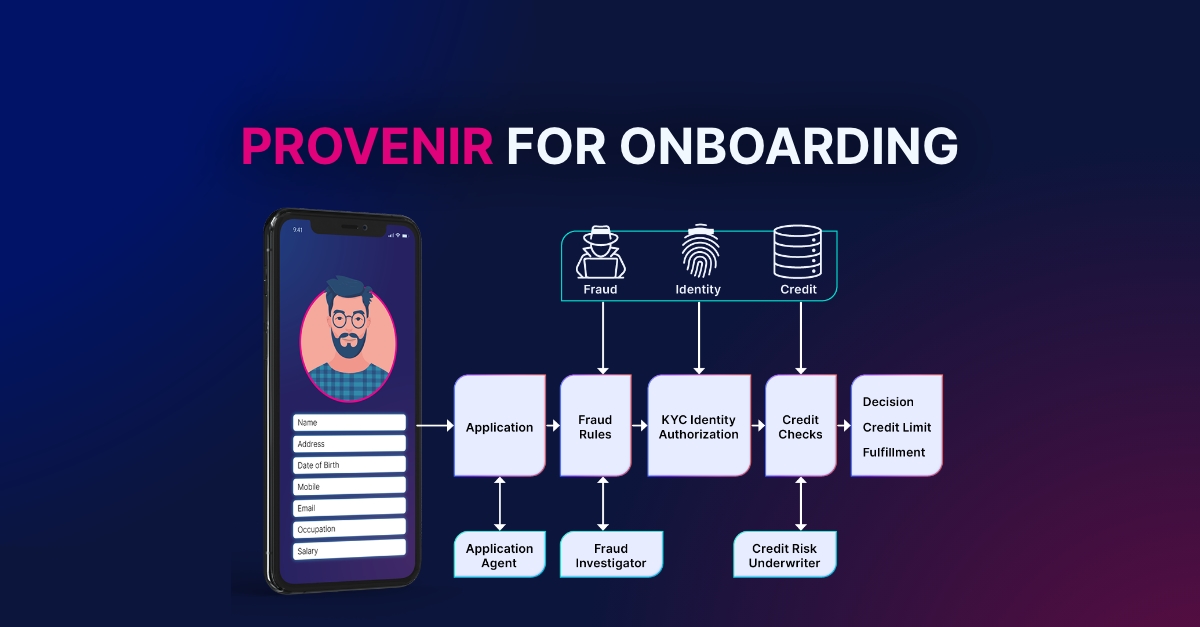
Technology has always had the power to drive significant change in all aspects of society, and future tech advancements will continue to alter how financial institutions operate and interact with their customers. A common theme running through all of these innovations is the ability to personalize products and offerings, highlighting the extreme importance of the customer experience. A prime example of this is dynamic, responsive onboarding – where financial services providers are tailoring the onboarding experience to individual customers by matching data checks (including identity verification, AML, KYC, and more) to the event risk and the responses of the customer. Depending on the consumer’s answers in an application, the actual application itself will change dynamically – populating additional responses required or minimizing friction with fewer questions if lower risk is determined.

Today’s consumers will no longer stand for long wait times, inadequate customer service, and mass-marketed products. Instead, a competitive edge requires rapid response times, omnichannel offerings, customized products, and frictionless experiences – all enabled by automated, real-time decisioning.

But the concept of ‘decisioning’ itself will also evolve. Currently financial services providers utilize specific triggers that result in a decision being made, whether that’s from the end-consumer applying for a product, or from a provider proactively analyzing data and making a decision to offer a new product. But with the increased availability of data, extremely fast processing speeds, and the enhanced use of AI to analyze data and behaviors, decisioning will become much more fluid. Rather than trigger points causing a decision, are we in for a future where decisions around customers and products/services are just continuous? Seamless? Always happening? This too will result in more hyper-personalization and a customer-centric approach in all aspects of financial services.

Done well, personalization at scale for banking customers can lead to annual revenue uplifts of 10%

As these technologies develop, Provenir continues to lead the charge, offering an advanced decision intelligence platform that is adaptable, efficient, and strategically forward-thinking. Discover why choosing Provenir is the best decision for managing risk in a technologically evolving landscape.

Ready to lead in the future of financial services?

Contact us today to explore our cutting-edge risk decisioning solutions.

Contact Us

LATEST BLOGS

Ebook CM

AI-Powered Customer ...

AI-Powered Customer Management:How Leading Institutions Turn Intelligence Into Revenue
Hyper-Personalization - FeatureIMG-EN

From Personalization...

From Personalization to Hyper-personalization:An Executive Playbook Executive Summary Financial
The Revenue Hiding in Your Customer Base

The Revenue Hiding i...

New market expansion. Unbanked populations. Fintech partnerships. Meanwhile, the
BLOG CXO

What It Really Takes...

Building a Decision Intelligence platform for financial services sounds
BLOG AutoFinance

Transaction to Relat...

Auto lending has always been good at the moment
Buy the Engine. Build the Advantage

Buy the Engine. Buil...

The competitive environment in financial services has fundamentally changed.
The Growing Threat of Fraud in UK Auto Lending

The Growing Threat o...

Fraud in UK auto lending continues to rise in
BLOG Christian Ball

Smarter Acquisition ...

Financial institutions face a straightforward challenge: acquire profitable customers

Continue reading

Infographic: One decisioning platform for every customer touchpoint

INFOGRAPHIC

One Decisioning Platform for Every Customer Touchpoint

Balancing risk with opportunity can be a challenge – especially when you need to offer your customers real-time, personalized products and services. Discover how Provenir allows you to minimize risk, maximize value, and streamline engagement across the customer lifecycle – all from a single decision intelligence platform.
Discover our AI Decisioning Platform.

Learn More

ADDITIONAL RESOURCES

ryt bank PR
News, Banking, Decisioning /

Ryt Bank, The World’s First AI-Powere...

Ryt Bank, The World’s First AI-Powered Bank, Selects Provenir for AI Risk ... Read More →
Forrester
News, AI, Decisioning /

Provenir Named a Strong Performer in ...

REPORT Provenir Named a Strong Performer in Debut Inclusion in 2025 AI ... Read More →
Forrester
News, AI, Decisioning /

Forrester Wave 2025 PR

Provenir Named a Strong Performer in 2025 AI Decisioning Platforms Report by ... Read More →
Maslow
Event, Banking /

Navigating South Africa’s Debt Crisis...

Navigating South Africa’s Debt Crisis: Strategies for Recovery and Engagement in 2025 ... Read More →
fraud alert
Webinar, Fraud /

Stop Fraudsters in Their Tracks – Bef...

Stop Fraudsters in Their Tracks – Before They Strike Watch Our On-Demand ... Read More →
Enabling Responsible Growth and Customer Trust in Malaysia’s Digital Lending Landscape through Data-Driven Insights
Event, Financial Services, Fintech /

Enabling Responsible Growth and Custo...

ProvenirNext Roundtable Enabling Responsible Growth and Customer Trust in Malaysia’s Digital Lending ... Read More →
fraud
Webinar, Fraud /

Rethinking Fraud Prevention in the Mi...

On-Demand Webinar Rethinking Fraud Prevention in the Middle East & Africa Fraud ... Read More →
blog selfie
Blog, Fraud /

Beyond the Selfie: Why Digital ID&V I...

A solution needs to bridge the gap left by primary digital ID&V ... Read More →
Kuala-Lumpur
Event, Digital Banking /

Empowering Digital Finance Through AI...

Join Provenir at The Digital Banker’s premier event in Kuala Lumpur AI, ... Read More →
Bai news
News, Fraud /

Beyond Detection: An AI-Powered Appro...

Beyond Detection: An AI-Powered Approach to Proactive Fraud Prevention Financial institutions need ... Read More →
Australia
Event, Financial Services, Fintech /

Enhancing Customer Lifetime Value and...

Roundtable & Cocktail Hour Enhancing Customer Lifetime Value and Trust in Australia’s ... Read More →
provenir and atom bank

Atom Bank Selects Provenir for Risk D...

Atom Bank Selects Provenir for Risk Decisioning and Data Orchestration The UK’s ... Read More →
Provenir Rooftop
Event, Provenir /

The Summer Skyline (UK)

Provenir Next The Summer Skyline (UK) Exclusive rooftop networking event hosted by ... Read More →
Leeds
Event, Provenir /

Leeds Digital Charity Ball 2025

Event Leeds Digital Charity Ball 2025 An Evening to Celebrate, Support, and ... Read More →
fintec buzz article

Top 5 Trends Financial Institutions N...

Top 5 Trends Financial Institutions Needto Navigate in 2025 The financial services ... Read More →

Continue reading

provenir logo

Infographic: The Evolution of Risk Decisioning

INFOGRAPHIC

The Evolution of Risk Decisioning

20 Years of Innovation with Provenir
With extraordinary growth over the past twenty years, the financial services sector has seen incredible tech advancements that have changed the way products and services are developed and offered to customers. And Provenir has been along for the ride. We’re looking back at two decades of evolution and what’s next for innovation in risk decisioning.
Discover more about Provenir’s cutting-edge risk decisioning solutions.

Contact Us

ADDITIONAL RESOURCES

ryt bank PR
News, Banking, Decisioning /

Ryt Bank, The World’s First AI-Powere...

Ryt Bank, The World’s First AI-Powered Bank, Selects Provenir for AI Risk ... Read More →
Forrester
News, AI, Decisioning /

Provenir Named a Strong Performer in ...

REPORT Provenir Named a Strong Performer in Debut Inclusion in 2025 AI ... Read More →
Forrester
News, AI, Decisioning /

Forrester Wave 2025 PR

Provenir Named a Strong Performer in 2025 AI Decisioning Platforms Report by ... Read More →
Maslow
Event, Banking /

Navigating South Africa’s Debt Crisis...

Navigating South Africa’s Debt Crisis: Strategies for Recovery and Engagement in 2025 ... Read More →
fraud alert
Webinar, Fraud /

Stop Fraudsters in Their Tracks – Bef...

Stop Fraudsters in Their Tracks – Before They Strike Watch Our On-Demand ... Read More →
Enabling Responsible Growth and Customer Trust in Malaysia’s Digital Lending Landscape through Data-Driven Insights
Event, Financial Services, Fintech /

Enabling Responsible Growth and Custo...

ProvenirNext Roundtable Enabling Responsible Growth and Customer Trust in Malaysia’s Digital Lending ... Read More →
fraud
Webinar, Fraud /

Rethinking Fraud Prevention in the Mi...

On-Demand Webinar Rethinking Fraud Prevention in the Middle East & Africa Fraud ... Read More →
blog selfie
Blog, Fraud /

Beyond the Selfie: Why Digital ID&V I...

A solution needs to bridge the gap left by primary digital ID&V ... Read More →
Kuala-Lumpur
Event, Digital Banking /

Empowering Digital Finance Through AI...

Join Provenir at The Digital Banker’s premier event in Kuala Lumpur AI, ... Read More →
Bai news
News, Fraud /

Beyond Detection: An AI-Powered Appro...

Beyond Detection: An AI-Powered Approach to Proactive Fraud Prevention Financial institutions need ... Read More →
Australia
Event, Financial Services, Fintech /

Enhancing Customer Lifetime Value and...

Roundtable & Cocktail Hour Enhancing Customer Lifetime Value and Trust in Australia’s ... Read More →
provenir and atom bank

Atom Bank Selects Provenir for Risk D...

Atom Bank Selects Provenir for Risk Decisioning and Data Orchestration The UK’s ... Read More →
Provenir Rooftop
Event, Provenir /

The Summer Skyline (UK)

Provenir Next The Summer Skyline (UK) Exclusive rooftop networking event hosted by ... Read More →
Leeds
Event, Provenir /

Leeds Digital Charity Ball 2025

Event Leeds Digital Charity Ball 2025 An Evening to Celebrate, Support, and ... Read More →
fintec buzz article

Top 5 Trends Financial Institutions N...

Top 5 Trends Financial Institutions Needto Navigate in 2025 The financial services ... Read More →

Continue reading

Three easy ways to boost access to credit

Three easy ways to boost access to credit (and skyrocket operational efficiency)

Unleash the power of Equifax alternative data and AI-powered credit risk decisioning from Provenir

There’s a lot of pressure for today’s financial services providers, as consumer debt (and delinquency rates) continue to rise. So how can you ensure easier access to credit for your creditworthy customers? In this blog from our Data Marketplace partner Equifax, they highlight how to boost operational efficiency with the one-two punch of Equifax data and Provenir’s AI-powered decisioning platform.

Read the Blog

Continue reading

provenir logo

Provenir Redefining Customer Decisioning for the Worlds Leading Financial Services Providers

Provenir Redefining Risk Decisioning for the World’s Leading Financial Services Providers

Flexible. Smart. Strategic. Instant decisioning technology that underpins your business goals.

Whether you’re looking for global expansion and new product lines, or hyper-personalization and maximized portfolio performance, our dynamic, strategy-friendly decisioning platform can help. Enable real-time approvals, inclusive services, customer growth, and more innovative product offerings – without the hassle of legacy technology, vendor reliance, limited data access, hard-coded rules, inaccurate models, and extensive build times. Discover why Provenir is the easiest decision you can make.

The Ultimate Guide to Decision Engines
What is a decision engine and how does it help your business processes?

Take a Look

ADDITIONAL RESOURCES

ryt bank PR
News, Banking, Decisioning /

Ryt Bank, The World’s First AI-Powere...

Ryt Bank, The World’s First AI-Powered Bank, Selects Provenir for AI Risk ... Read More →
Forrester
News, AI, Decisioning /

Provenir Named a Strong Performer in ...

REPORT Provenir Named a Strong Performer in Debut Inclusion in 2025 AI ... Read More →
Forrester
News, AI, Decisioning /

Forrester Wave 2025 PR

Provenir Named a Strong Performer in 2025 AI Decisioning Platforms Report by ... Read More →
Maslow
Event, Banking /

Navigating South Africa’s Debt Crisis...

Navigating South Africa’s Debt Crisis: Strategies for Recovery and Engagement in 2025 ... Read More →
fraud alert
Webinar, Fraud /

Stop Fraudsters in Their Tracks – Bef...

Stop Fraudsters in Their Tracks – Before They Strike Watch Our On-Demand ... Read More →
Enabling Responsible Growth and Customer Trust in Malaysia’s Digital Lending Landscape through Data-Driven Insights
Event, Financial Services, Fintech /

Enabling Responsible Growth and Custo...

ProvenirNext Roundtable Enabling Responsible Growth and Customer Trust in Malaysia’s Digital Lending ... Read More →
fraud
Webinar, Fraud /

Rethinking Fraud Prevention in the Mi...

On-Demand Webinar Rethinking Fraud Prevention in the Middle East & Africa Fraud ... Read More →
blog selfie
Blog, Fraud /

Beyond the Selfie: Why Digital ID&V I...

A solution needs to bridge the gap left by primary digital ID&V ... Read More →
Kuala-Lumpur
Event, Digital Banking /

Empowering Digital Finance Through AI...

Join Provenir at The Digital Banker’s premier event in Kuala Lumpur AI, ... Read More →
Bai news
News, Fraud /

Beyond Detection: An AI-Powered Appro...

Beyond Detection: An AI-Powered Approach to Proactive Fraud Prevention Financial institutions need ... Read More →
Australia
Event, Financial Services, Fintech /

Enhancing Customer Lifetime Value and...

Roundtable & Cocktail Hour Enhancing Customer Lifetime Value and Trust in Australia’s ... Read More →
provenir and atom bank

Atom Bank Selects Provenir for Risk D...

Atom Bank Selects Provenir for Risk Decisioning and Data Orchestration The UK’s ... Read More →
Provenir Rooftop
Event, Provenir /

The Summer Skyline (UK)

Provenir Next The Summer Skyline (UK) Exclusive rooftop networking event hosted by ... Read More →
Leeds
Event, Provenir /

Leeds Digital Charity Ball 2025

Event Leeds Digital Charity Ball 2025 An Evening to Celebrate, Support, and ... Read More →
fintec buzz article

Top 5 Trends Financial Institutions N...

Top 5 Trends Financial Institutions Needto Navigate in 2025 The financial services ... Read More →

Continue reading

On-Demand: Navigating the Future: Unveiling the Keys to Successful Digital Transformation in Financial Services

ON-DEMAND WEBINAR

Navigating the Future:
Unveiling the Keys to Successful Digital Transformation in Financial Services

Book a Meeting

In the dynamic landscape of the financial services industry, digital transformation has become imperative for organisations seeking to thrive in the digital age. We explore the essential keys to achieving a successful digital transformation journey within the financial services sector.

Leading industry experts will delve into the intricacies of this transformative process, addressing key challenges and providing actionable insights to guide financial institutions towards a digitally empowered future.

Key takeaways from the live discussion: 

  • How digitalisation is impacting financial services and how these institutions are being fundamentally challenged to keep up in today’s increasingly digitally focused market
  • Strategies for aligning organisational goals with digital objectives to foster a culture of innovation
  • The importance of placing customers at the centre of digital transformation efforts
  • Learn how to leverage customer insights, data analytics, and personalised experiences to enhance overall satisfaction and loyalty
  • Gain insights into building a robust technological infrastructure that supports scalability, agility, and seamless integration
  • Discuss best practices for continuous monitoring, evaluation, and adaptation in the digital era

Embark on a successful digital transformation journey, to ensure sustained growth and competitiveness in an ever-evolving landscape.

Speakers:

  • Peer Timo Andersen-Ulven

    Head of Analytics, Avida 

  • Keshnie July

    Credit Risk Practitioner

  • Jun Wai Des Lee

    Principal Consultant, Provenir

Moderator:

Adrian Pillay

VP-Sales, MEA & Turkey, Provenir


RESOURCES

Continue reading

On-Demand: Decisioning Advanced: Integrating Intelligent Credit and Fraud Decisioning to Maximize Customer Lifetime Value

ON-DEMAND WEBINAR

Decisioning Advanced:
Integrating Intelligent Credit and Fraud Decisioning to Maximize Customer Lifetime Value

Book a Meeting

Featuring Jim Marous of The Financial Brand

Discover this dynamic on-demand webinar crafted for financial industry professionals seeking to enhance their approach to credit risk and fraud prevention while optimizing customer value.

In this session, The Financial Brand’s Jim Marous and Provenir’s Chief Product Officer Carol Hamilton delve into how these smart technologies not only protect your organization from potential risks but also open doors to deeper customer engagement and retention strategies, ultimately boosting the lifetime value of your customers. 

Key takeaways:

  • The strategic benefits of implementing intelligent decisioning systems that use advanced analytics like AI/ML to refine credit risk and fraud management
  • Insights and best practices needed to achieve a more agile, customer-centric business model
  • How to transform your financial institution into a forward-thinking powerhouse in today’s competitive landscape
  • How to integrate intelligent systems into existing operations and navigate the challenges of legacy systems

Speakers:

  • Jim Marous

    The Financial Brand

  • Carol Hamilton

    Chief Product Officer, Provenir


RESOURCES

Continue reading

What impact do decisioning challenges have on your business?

BLOG

What impact do decisioning
challenges have on your business?

Hear from our experts – a deeper look at the 2024 Global Risk Decisioning Survey

The 2024 Global Risk Decisioning Survey has brought to light critical insights into the challenges and priorities faced by financial institutions. We looked at everything from risk decisioning challenges and customer management priorities to confidence in the accuracy of risk models and fraud screening measures. But what impact do those challenges have on your business? We’re looking deeper into the results, highlighting expert opinions and the business impacts of these evolving trends.

Top Risk Decisioning Challenges

The survey identifies two major challenges: 49% of respondents struggle with managing risk across the customer journey, while 48% face hurdles in developing and deploying risk decisioning processes. Efficiently managing risk across the entire customer journey, and being able to develop and deploy processes and decisioning workflows without vendor reliance, is key to maintaining sustainable business performance.

What are the consequences of ineffective risk management? The inability to effectively manage risk can lead to increased revenue loss and defaults, operational disruptions and inefficiencies, and slower onboarding and loan approvals. It also places you at a competitive disadvantage with the potential for loss of market share, and the misalignment of business goals and strategies that don’t accurately account for potential risks. And of course, there’s always the question of reduced customer satisfaction and loyalty, which can have a long-lasting effect on sustainable business growth. 

Carol Hamilton, Chief Product Officer at Provenir, emphasizes the need to shift from traditional, legacy approaches to dynamic, data-driven strategies for better value across the customer lifecycle. “There’s a real traditional legacy approach to thinking about customers, especially from a credit risk perspective. And every month you reassess them and you calculate the same sort of metrics, but there are some outdated rules and models being used. Whereas disruptors are trying to look at how we can create something that’s more dynamic, data-driven, and intelligent, so they can really try and ensure the most value to their customers and their organization throughout the whole customer lifecycle.”

Top Risk Decisioning Priorities

Acquiring customers (47%) and managing them effectively (53%) are the top priorities our survey respondents face. While acquiring new customers is vital, maintaining satisfaction and maximizing existing customer value is crucial for sustainable growth. Inefficient customer management results in lower customer lifetime value and negative experiences, which leads to reduced customer retention and loyalty. Apart from the direct negative impact on customers, it also leads to higher acquisition costs, ineffective use of internal resources, and less predictable/stable revenue sources.

Kathy Stares, EVP of North America at Provenir, highlights the benefits of real-time insights across the customer lifecycle. “Every decision point across the customer lifecycle – from credit risk evaluation to cross-sell to collections – stands to benefit from the real-time, contextual insights that open banking data can deliver in 2024.”

Accuracy of Credit Risk Decisioning Models

40% of respondents believe their credit risk decisioning models are not entirely effective. While confidence in these models has improved since our last survey, there is still significant opportunity to ensure more accurate and equitable credit decisioning. Inaccuracies in credit risk models can lead to increased credit losses, regulatory and compliance issues, and operational inefficiencies. Without accurate risk models, the potential for negative customer experiences is also a real threat, as well as less equitable funding and a lack of financial and credit inclusion. 

Frode Berg, Managing Director of EMEA at Provenir, discusses the power of AI to improve credit risk models. “There’s a growing belief in the power of AI decisioning, including machine learning and predictive analytics. These technologies will continue to shape the financial industry going forward, improving credit risk models, decisioning efficiency, financial inclusion, and ultimately having a positive impact on the customer experience.”

Confidence in Modifying Risk Decisioning Logic

70% of respondents lack confidence in their ability to modify risk decisioning logic quickly. As the macro-economic environment changes (rapidly), being able to quickly and easily modify risk decisioning models, rules, processes, and workflows is critical to meeting the evolving needs of your business. The inability to modify risk decisioning logic means an increased reliance on vendors (and increased costs!) – placing those organizations who lack the agility to pivot at a distinct disadvantage over competitors who can adapt quickly. This also places you at risk of increased credit losses if your models aren’t up to date and accurate, not to mention the threat of regulatory and compliance challenges. 

Jose Vargas, EVP of Latin America at Provenir, notes the increasing receptiveness to new technologies for greater innovation and agility in managing risk. “Those organizations that are more conservative when it comes to venturing to new technologies or methodologies are now more receptive to new tools and solutions that can enable greater innovation, agility and speed – allowing them to be more effective in managing risk and their portfolios.”

Effectiveness of Anti-Fraud Measures

Only 7% of financial service providers are entirely confident in their anti-fraud measures. A lack of effective fraud detection and prevention technology leaves financial services organizations incredibly vulnerable to fraudulent activities, which have ripple effects far beyond the initial fraud. The evolving sophistication of fraud threats necessitates robust measures to prevent revenue loss, manage regulatory risks, prevent reputational damage, and minimize operational inefficiencies when dealing with the aftermath of fraud (including investigations and customer complaints). 

Cheryl Woodburn, Country Manager for Canada at Provenir, emphasizes the importance of strong fraud orchestration and fraud screening measures in mitigating business loss, especially in high-interest rate environments. “Both first-party and third-party fraud threats continue to grow and evolve, especially as we continue to have high interest rates and people are struggling to pay for necessities in life. It’s happening not only in unsecured lending, where the legislation or credit checks are a bit looser, but also in lending that’s secured against an asset (like auto lending). Having robust anti-fraud measures is critical to mitigating loss in your business.”

Challenges in Delivering Hyper-Personalization

38% of respondents point to data quality and integration issues when it comes to delivering personalized offers to customers, while 19% struggle with real-time decisioning. These challenges hinder the ability to offer customized products and services, leading to reduced customer engagement, decreased competitive edge, and missed revenue opportunities. Today’s consumers are more discerning than ever, meaning lack of personalization also ultimately leads to increased churn and higher customer acquisition costs. 

Bharath Vellore, GM of APAC at Provenir, stresses the need for embracing advanced technologies, including AI, for enhanced online personalization and real-time offers.“As consumer behavior changes and customers demand more and more online personalization and real-time offers, financial services providers have to embrace advanced technologies more, including AI and digital transformation to enable this.”

What do these challenges have in common?

Besides providing a fascinating glimpse into the state of the industry, what all of the results of the 2024 Global Risk Decisioning Survey highlight is the need for innovative, agile solutions that allow you to stay competitive and meet customer needs effectively. With an intelligent, dynamic decisioning solution, you can effectively balance risk with opportunity, optimize your risk decisions, more accurately prevent fraud, and have the confidence to deliver hyper-personalized products to your customers.


Learn more about hyper-personalization in financial services with our expert content:


Be sure to check out the 2024 Global Risk Decisioning Survey for more info on what 300 financial services decision makers had to say.

Get the Report

LATEST BLOGS

Ebook CM

AI-Powered Customer ...

AI-Powered Customer Management:How Leading Institutions Turn Intelligence Into Revenue
Hyper-Personalization - FeatureIMG-EN

From Personalization...

From Personalization to Hyper-personalization:An Executive Playbook Executive Summary Financial
The Revenue Hiding in Your Customer Base

The Revenue Hiding i...

New market expansion. Unbanked populations. Fintech partnerships. Meanwhile, the
BLOG CXO

What It Really Takes...

Building a Decision Intelligence platform for financial services sounds
BLOG AutoFinance

Transaction to Relat...

Auto lending has always been good at the moment
Buy the Engine. Build the Advantage

Buy the Engine. Buil...

The competitive environment in financial services has fundamentally changed.
The Growing Threat of Fraud in UK Auto Lending

The Growing Threat o...

Fraud in UK auto lending continues to rise in
BLOG Christian Ball

Smarter Acquisition ...

Financial institutions face a straightforward challenge: acquire profitable customers

Continue reading