Industry: Banking

Navigating Your Legacy System Upgrade

INFOGRAPHIC

Navigating Your Legacy System Upgrade

Your Guide to a Successful Technology Migration

Do you struggle to maintain your legacy risk decisioning solutions? A lack of support from current vendors, evolving compliance regulations, increased competition and a need for digital transformation can all mean that the time has come to upgrade your outdated legacy technology. But upgrading can be overwhelming, and poses its own challenges, especially as you decouple your decisioning platform from other systems and integrations.

So what do you need to consider when it’s time to move? Check out our comprehensive list of considerations for a successful tech migration.

Want to learn more about our years of experience with large-scale migrations?

Contact Us

ADDITIONAL RESOURCES

INFOGRAPHIC Hyper-personalization

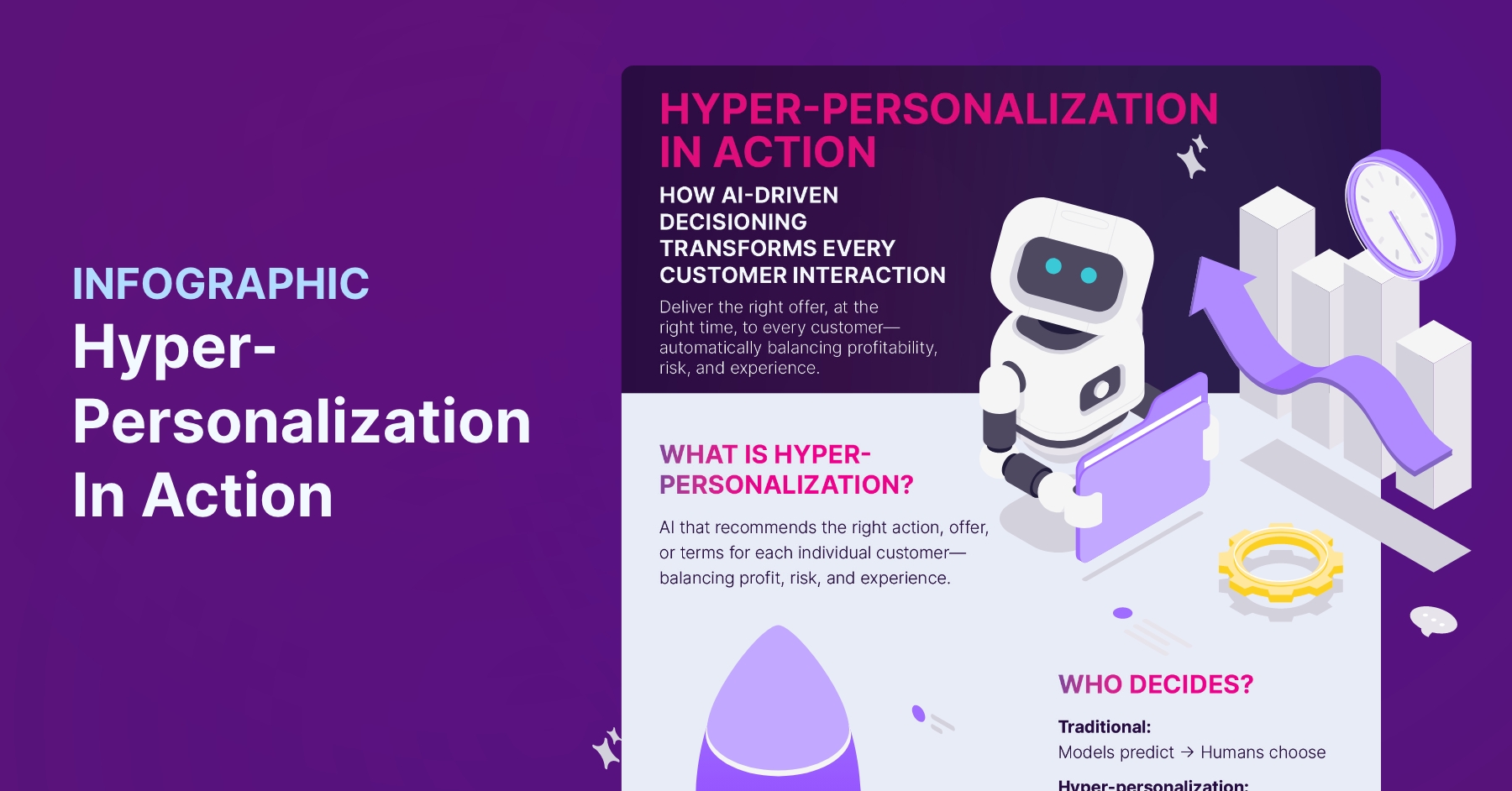
Hyper-Personalization in Action

Most financial institutions still rely on humans to interpret model predictions and ... Read More →
HyperPersonalization

From Risk Manager to Revenue Generato...

From Risk Manager to Revenue Generator:How CROs Are Becoming the New Growth ... Read More →
2025 winner
News, Provenir /

Provenir Wins Credit Risk Solution Aw...

Provenir Wins Credit Risk Solution Award at 2025 Credit & Collections Technology ... Read More →
Hyper-personalization Myth2
Blog, Hyper-Personalization /

The Hyper-personalization Myth Series...

The Hyper-personalization Myth Series #2:The Scorecard Trap: How Traditional Models Are Leaving ... Read More →
Hyper-personalization Myth1
Blog, Hyper-Personalization /

The Hyper-personalization Myth Series...

The Hyper-personalization Myth Series #1:Why Banks Think They're Doing Hyper-personalization (But Aren't) ... Read More →
Beyond Static Rules
Blog, Decisioning /

Beyond Static Rules

Beyond Static Rules:How Learning Systems Enhance Decisioning in Financial Services In financial ... Read More →
Event WFIS
Event, Financial Services /

WFIS Indonesia 2025

Event WFIS Indonesia 2025 The Premier Financial Services Innovation Event November 25–26, ... Read More →
AI Campaign
Blog, Data /

Beyond Traditional Credit Scores

Beyond Traditional Credit Scores:How Alternative Data is Revolutionizing Financial Inclusion In financial ... Read More →
model ecosystem
Blog, AI /

From Single Model to Enterprise AI Ec...

From Single Model to Enterprise AI Ecosystem:Why Most Financial Services AI Initiatives ... Read More →
Margin Eater
Blog, Fraud /

The Margin Eater: Why a Single Telco...

The Margin Eater Why a Single Telco Fraud can Devour the Profit ... Read More →
AI infographic
Infographic, AI, Digital Banking /

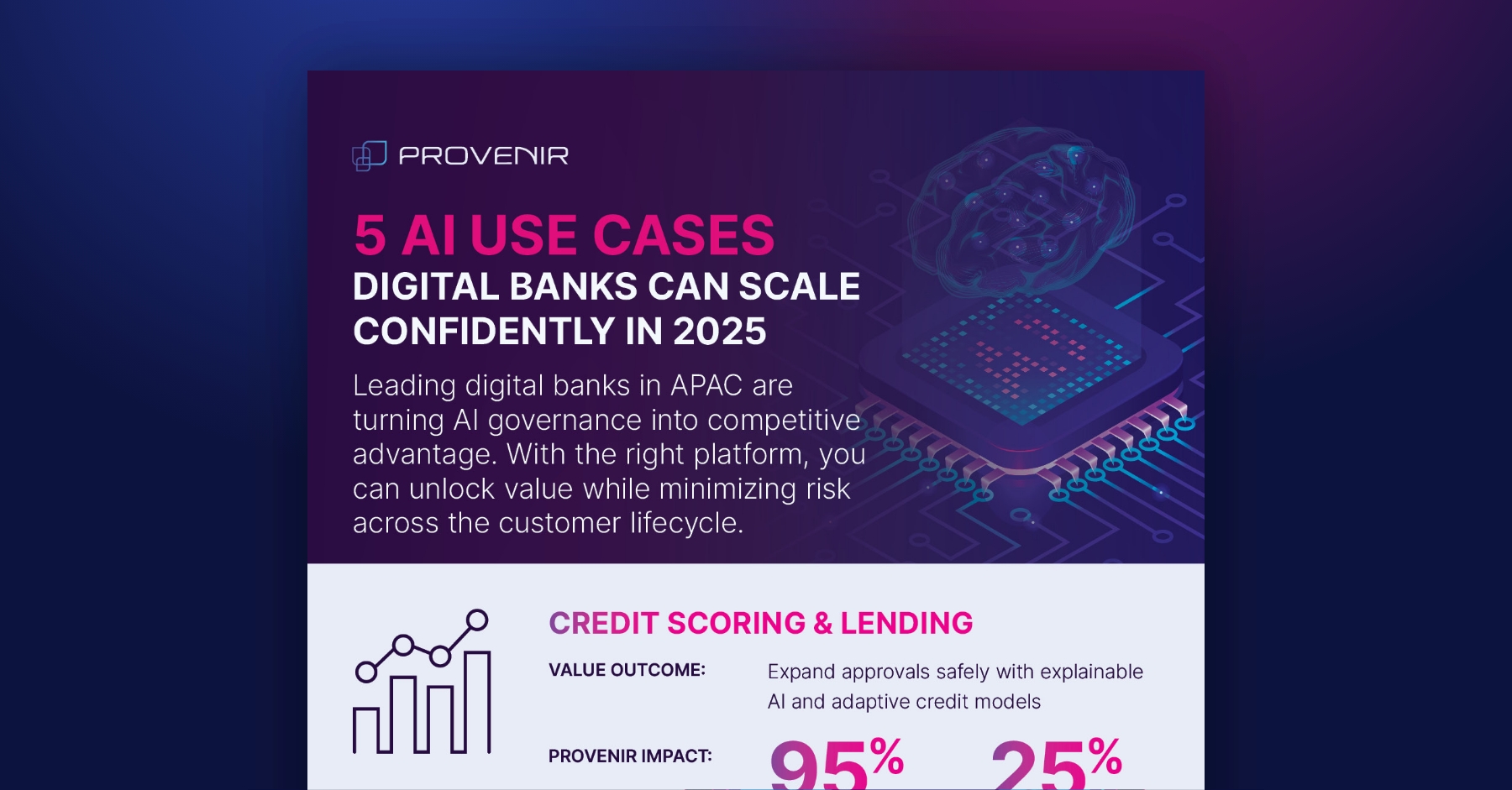
5 AI Use Cases Digital Banks Must Gov...

5 AI Use Cases Digital Banks Must Govern by 2025 Digital banks ... Read More →
britcard blog
Blog, Fraud /

BritCard: Identity, Inclusion, and th...

BritCard: Identity, Inclusion, and the Fine Line Between Safety and Surveillance Let’s ... Read More →
ai perils
Blog, AI, Financial Services /

Navigating the Promise and Peril of G...

Navigating the Promise and Peril of Generative AI in Financial Services Financial ... Read More →
blog digital bank in APAC
Blog, Banking /

How Digital Banks in APAC Can Turn AI...

How Digital Banks in APAC Can Turn AI Governance Into Competitive Advantage ... Read More →
Jason Abbott, Fraud Solution Director at Provenir, explains how to fight First-Party Fraud.
Blog, Fraud /

First-Party Fraud: The Hidden Cost

BLOG First-Party Fraud: The Hidden Cost of "Good" Customers Unmasking Risk with ... Read More →

Continue reading

provenir logo

Infographic: The Evolution of Risk Decisioning

INFOGRAPHIC

The Evolution of Risk Decisioning

20 Years of Innovation with Provenir
With extraordinary growth over the past twenty years, the financial services sector has seen incredible tech advancements that have changed the way products and services are developed and offered to customers. And Provenir has been along for the ride. We’re looking back at two decades of evolution and what’s next for innovation in risk decisioning.
Discover more about Provenir’s cutting-edge risk decisioning solutions.

Contact Us

ADDITIONAL RESOURCES

INFOGRAPHIC Hyper-personalization

Hyper-Personalization in Action

Most financial institutions still rely on humans to interpret model predictions and ... Read More →
HyperPersonalization

From Risk Manager to Revenue Generato...

From Risk Manager to Revenue Generator:How CROs Are Becoming the New Growth ... Read More →
2025 winner
News, Provenir /

Provenir Wins Credit Risk Solution Aw...

Provenir Wins Credit Risk Solution Award at 2025 Credit & Collections Technology ... Read More →
Hyper-personalization Myth2
Blog, Hyper-Personalization /

The Hyper-personalization Myth Series...

The Hyper-personalization Myth Series #2:The Scorecard Trap: How Traditional Models Are Leaving ... Read More →
Hyper-personalization Myth1
Blog, Hyper-Personalization /

The Hyper-personalization Myth Series...

The Hyper-personalization Myth Series #1:Why Banks Think They're Doing Hyper-personalization (But Aren't) ... Read More →
Beyond Static Rules
Blog, Decisioning /

Beyond Static Rules

Beyond Static Rules:How Learning Systems Enhance Decisioning in Financial Services In financial ... Read More →
Event WFIS
Event, Financial Services /

WFIS Indonesia 2025

Event WFIS Indonesia 2025 The Premier Financial Services Innovation Event November 25–26, ... Read More →
AI Campaign
Blog, Data /

Beyond Traditional Credit Scores

Beyond Traditional Credit Scores:How Alternative Data is Revolutionizing Financial Inclusion In financial ... Read More →
model ecosystem
Blog, AI /

From Single Model to Enterprise AI Ec...

From Single Model to Enterprise AI Ecosystem:Why Most Financial Services AI Initiatives ... Read More →
Margin Eater
Blog, Fraud /

The Margin Eater: Why a Single Telco...

The Margin Eater Why a Single Telco Fraud can Devour the Profit ... Read More →
AI infographic
Infographic, AI, Digital Banking /

5 AI Use Cases Digital Banks Must Gov...

5 AI Use Cases Digital Banks Must Govern by 2025 Digital banks ... Read More →
britcard blog
Blog, Fraud /

BritCard: Identity, Inclusion, and th...

BritCard: Identity, Inclusion, and the Fine Line Between Safety and Surveillance Let’s ... Read More →
ai perils
Blog, AI, Financial Services /

Navigating the Promise and Peril of G...

Navigating the Promise and Peril of Generative AI in Financial Services Financial ... Read More →
blog digital bank in APAC
Blog, Banking /

How Digital Banks in APAC Can Turn AI...

How Digital Banks in APAC Can Turn AI Governance Into Competitive Advantage ... Read More →
Jason Abbott, Fraud Solution Director at Provenir, explains how to fight First-Party Fraud.
Blog, Fraud /

First-Party Fraud: The Hidden Cost

BLOG First-Party Fraud: The Hidden Cost of "Good" Customers Unmasking Risk with ... Read More →

Continue reading

Leveraging Technology to Revolutionize Customer Onboarding in Banking

on-demand webinar

Leveraging Technology to Revolutionize Customer Onboarding in Banking

Book a Meeting

In today’s fast-paced and competitive financial landscape, both digital and traditional banks are continuously seeking innovative ways to enhance their customer onboarding process. Consumers today demand speed and ease in every online interaction. Providing a safe and low-friction experience throughout the entire client lifecycle—from onboarding to log-in to transactions—is crucial to building, growing, and retaining your customer base. This webinar delves into the transformative power of technology in reshaping the customer journey, equipping financial institutions to emerge as forward-thinking powerhouses.

Join us live on July 10th for your chance to gain the knowledge and tools needed to transform your customer onboarding process, drive growth, and stay competitive in the modern financial landscape.

Key Highlights:
  • Leveraging technology to personalize customer interactions and tailor services to meet individual needs, enhance satisfaction, and improve loyalty.
  • Discover strategies to enhance customer experiences while fortifying fraud and identity management across the client lifecycle.
  • How to integrate intelligent systems into existing operations and navigate the challenges of legacy systems.
  • How to better leverage enriched data and machine learning to gain more insights across the client lifecycle.
  • The reasons why building dynamic workflows that incorporate identity, device, and behavioural data is essential to improving risk decisioning and, ultimately, creating a better customer experience

Embrace the future of banking with a customer onboarding process that sets you apart from the competition. Don’t miss this opportunity to learn from industry experts and network with peers who are also on the path to digital transformation.

Book a Meeting

LATEST WEBINARS

Elevate customer experience and secure trust in the financial services ecosystem

Elevate customer exp...

In today’s digital economy, customers demand secure and

Optimized Applicatio...

ON-DEMAND WEBINAR Optimized Application Fraud Prevention:Reduce Friction and

Mining for Growth: T...

LIVE EVENT Mining for Growth:The Art & Science

Why Customer Retenti...

ON-DEMAND WEBINAR Why Customer Retentionis Now the Most
The Future of Buy Now, Pay Later

The Future of Buy No...

ON-DEMAND WEBINAR The Future of Buy Now, Pay

Fostering SME Lendin...

ON-DEMAND WEBINAR Fostering SME Lending Resilience in Europe:Empowering
Beyond Onboarding: Enabling AI-Powered Decisions Across the Entire Customer Lifecycle

Beyond Onboarding: E...

ON-DEMAND WEBINAR Beyond Onboarding:Enabling AI-Powered Decisions Across the

Redefining the Autom...

ON-DEMAND WEBINAR Redefining the Automotive Financing Customer Experience

Continue reading

Elevating Customer Experiences: Headless Banking and Banking-as-a-Service (BaaS)

INFOGRAPHIC

Elevating Customer Experiences: Headless Banking and Banking-as-a-Service (BaaS)
How to enhance engagement and streamline services with innovative banking models

The global Banking-as-a-Service (BaaS) market size is expected to reach USD $14.72 billion by 2029, thanks to elevated customer experiences, maximum flexibility and agility, and overall cost and operational efficiency. How are headless banking and BaaS transforming the way financial services are developed, delivered, and consumed by increasingly digitally-savvy consumers? Check out the infographic for more.
Want more in-depth info on how headless banking and BaaS are transforming financial services?

Read the Blog

ADDITIONAL RESOURCES

INFOGRAPHIC Hyper-personalization

Hyper-Personalization in Action

Most financial institutions still rely on humans to interpret model predictions and ... Read More →
HyperPersonalization

From Risk Manager to Revenue Generato...

From Risk Manager to Revenue Generator:How CROs Are Becoming the New Growth ... Read More →
2025 winner
News, Provenir /

Provenir Wins Credit Risk Solution Aw...

Provenir Wins Credit Risk Solution Award at 2025 Credit & Collections Technology ... Read More →
Hyper-personalization Myth2
Blog, Hyper-Personalization /

The Hyper-personalization Myth Series...

The Hyper-personalization Myth Series #2:The Scorecard Trap: How Traditional Models Are Leaving ... Read More →
Hyper-personalization Myth1
Blog, Hyper-Personalization /

The Hyper-personalization Myth Series...

The Hyper-personalization Myth Series #1:Why Banks Think They're Doing Hyper-personalization (But Aren't) ... Read More →
Beyond Static Rules
Blog, Decisioning /

Beyond Static Rules

Beyond Static Rules:How Learning Systems Enhance Decisioning in Financial Services In financial ... Read More →
Event WFIS
Event, Financial Services /

WFIS Indonesia 2025

Event WFIS Indonesia 2025 The Premier Financial Services Innovation Event November 25–26, ... Read More →
AI Campaign
Blog, Data /

Beyond Traditional Credit Scores

Beyond Traditional Credit Scores:How Alternative Data is Revolutionizing Financial Inclusion In financial ... Read More →
model ecosystem
Blog, AI /

From Single Model to Enterprise AI Ec...

From Single Model to Enterprise AI Ecosystem:Why Most Financial Services AI Initiatives ... Read More →
Margin Eater
Blog, Fraud /

The Margin Eater: Why a Single Telco...

The Margin Eater Why a Single Telco Fraud can Devour the Profit ... Read More →
AI infographic
Infographic, AI, Digital Banking /

5 AI Use Cases Digital Banks Must Gov...

5 AI Use Cases Digital Banks Must Govern by 2025 Digital banks ... Read More →
britcard blog
Blog, Fraud /

BritCard: Identity, Inclusion, and th...

BritCard: Identity, Inclusion, and the Fine Line Between Safety and Surveillance Let’s ... Read More →
ai perils
Blog, AI, Financial Services /

Navigating the Promise and Peril of G...

Navigating the Promise and Peril of Generative AI in Financial Services Financial ... Read More →
blog digital bank in APAC
Blog, Banking /

How Digital Banks in APAC Can Turn AI...

How Digital Banks in APAC Can Turn AI Governance Into Competitive Advantage ... Read More →
Jason Abbott, Fraud Solution Director at Provenir, explains how to fight First-Party Fraud.
Blog, Fraud /

First-Party Fraud: The Hidden Cost

BLOG First-Party Fraud: The Hidden Cost of "Good" Customers Unmasking Risk with ... Read More →

Continue reading

10 Companies Leading the BaaS and Headless Banking Revolution

BLOG

10 Companies Leading the BaaS and Headless Banking Revolution

Enhancing the Customer Experience with Innovative Banking Solutions

With customer experience a top priority for just about every industry across the globe (and if not, it should be!), there are some organizations that clearly come out on top. When it comes to providing banking/financial products and services, there are often distinct winners in terms of  engaging customers and ensuring a streamlined, positive experience. And a lot of that comes down to innovative, cutting-edge technology. Two such models of innovation are headless banking (decoupling the front-end user interface from the back-end banking process for greater flexibility without altering underlying banking mechanism) and Banking-as-a-Service, otherwise known as BaaS (which enables non-financial companies/non-banks to offer banking/financial services by integrating with a bank’s existing regulated infrastructure through APIs). 

We’re looking at 10 companies that are using these banking models to bring customer experience, flexibility, and efficiency to the forefront of financial services. 

  • Column

    Based in the U.S., Column is a nationally chartered headless bank built to enable developers to create new financial products, including card programs, bank accounts, lending services, and debt financing. With the notion of helping finance be both customer and internet first, the company is first and foremost a software company (with a banking license!) that enables its customers to build exactly what they need without relying on outdated, agility-limiting systems.

  • Solaris

    With a BaaS platform that enables companies to build their own unique banking products, Solaris Bank, headquartered in Germany, empowers its customers to offer embedded financial services with ease. As Europe’s largest embedded finance platform and possessing a full banking license, the company features straightforward APIs that allow fully embedded digital banking services.

  • Griffin

    UK-based Griffin is known as ‘the bank you can build on,’ with simple, quick, and cost-effective solutions that allow UK companies to develop and launch their own financial products. Combining the power of a licensed bank with the flexibility of modern SaaS technology, the company is built on secure, regulated banking infrastructure but also features modern APIs for the ability to seamlessly embed financial services into tech apps.

  • Pave Bank

    One of Singapore’s tech success stories, Pave Bank is aiming to reimagine how banking is built. With regards to product design and build, they are firmly a tech company, and when it comes to risk and compliance, they are a fully regulated bank, blending the best of both worlds to ensure security and transparency combined with innovation and flexibility for safer, more integrated banking experiences.

  • Treezor

    Billed as Europe’s BaaS leader, Paris-based Treezor offers a white-label solution that allows its customers to embed financial services directly into the client experience. With a wide range of available use cases (including gift cards, restaurant cards, neobanks, and employee benefits), the company enables creative banking with a modular, one-stop-shop solution, allowing customers to outsource payment needs to their tech experts.

  • ClearBank

    Known as ‘the bank for banks,’ ClearBank doesn’t provide any services directly to consumers, but enables financial services providers, including fintechs and FCA-regulated companies, to build their own solutions and services that put customer experience and innovation at the forefront. Financial institutions use their cloud-based API to offer consumers fully regulated banking infrastructure, allowing FIs to focus on customer service instead.

  • Green Dot

    Powering the next generation in Fintech, U.S.-based Green Dot offers an integrated bank, program management, and enterprise-grade APIs in one single platform. With major customers including Walmart and Uber, Green Dot provides end-to-end infrastructure for banking programs (including branded cards, payments, and payroll and tax services) that power growth and innovation.

  • BBVA

    Far from a startup tech company, multinational banking group BBVA is now offering BaaS products via API, connecting to BBVA’s core digital banking program. Their API market enables innovation in digital transformation, in a variety of combinations of use cases and regions (including Mexico, Spain, and global versions focusing on accounts, payments, collections, loans, and more).

  • Mambu

    Headquartered in Amsterdam but servicing customers across the globe, Mambu is a SaaS cloud-banking platform that enables its clients to build innovative banking experiences for their customers, quickly and flexibly. Featuring a composable approach to banking that overcomes some of the challenges of legacy banking systems, Mambu allows customers to build exactly what they need, using only the components required, and focusing strongly on the end-consumer experience.

  • 10x

    With the belief that tech can enable real transformation for the banking industry, 10x aims to build better banks that put the customer first. With a proprietary cloud-native core banking platform, 10x offers a transformational end-to-end approach that empowers financial institutions to become agile and competitive.

There are plenty more innovative companies focusing on headless banking and BaaS, enabling truly customer-centric embedded banking and financial services. We’re keeping our eyes on where the industry is going next, but it’s clear that any organizations that offer the capabilities for integrated, frictionless customer experiences, while improving operational efficiency and flexibility, and enabling business growth, are the ones that will come out on top.

Additionally, headless banking can significantly impact your cost efficiency. By utilizing APIs to connect disparate systems and services, you can reduce the need for an extensive overhaul of the backend every time the front-end technology evolves or customer expectations change. This modular approach reduces development and maintenance costs, but also strengthens security protocols, enabling potential security breaches to be isolated and managed more effectively, and minimizing overall risk.

When it comes to regulatory compliance, headless banking offers an adaptable framework that simplifies the integration of compliance measures into both existing and new products. This flexibility is crucial for global expansion, and embracing open banking standards, allowing you to easily customize and localize your offerings to meet specific regional regulatory requirements as well as cultural preferences. The opportunity to expand your global footprint while enhancing your service delivery will help to drive business growth and customer satisfaction.

For more info on how headless banking and BaaS are transforming the industry, read the blog.

Read the Blog

LATEST BLOGS

Hyper-personalization Myth1

The Hyper-personaliz...

The Hyper-personalization Myth Series #1:Why Banks Think They're Doing
Beyond Static Rules

Beyond Static Rules

Beyond Static Rules:How Learning Systems Enhance Decisioning in Financial
AI Campaign

Beyond Traditional C...

Beyond Traditional Credit Scores:How Alternative Data is Revolutionizing Financial
model ecosystem

From Single Model to...

From Single Model to Enterprise AI Ecosystem:Why Most Financial
Margin Eater

The Margin Eater: W...

The Margin Eater Why a Single Telco Fraud can
britcard blog

BritCard: Identity, ...

BritCard: Identity, Inclusion, and the Fine Line Between Safety
ai perils

Navigating the Promi...

Navigating the Promise and Peril of Generative AI in
blog digital bank in APAC

How Digital Banks in...

How Digital Banks in APAC Can Turn AI Governance

Continue reading

Headless Banking and Banking-as-a-Service: Shaping the Future of Finance

BLOG

Headless Banking and Banking-as-a-Service: Shaping the Future of Finance

There are two transformative models currently reshaping how financial services are developed, delivered, and consumed across the globe – headless banking and Banking-as-a-Service (BaaS). From North America’s robust financial ecosystems to APAC’s innovation hubs, and EMEA’s regulatory frameworks to Latin America’s burgeoning fintech scene, understanding both of these models is crucial to navigating the scene effectively. Headless banking, where banks separate their front-end and back-end processes to enable greater flexibility and customization in customer interactions, contrasts with BaaS, where banks or licenced institutions offer their banking services to other (usually non-financial) businesses, allowing them to integrate financial services directly into their offerings. And when it comes to the risk decisioning software that supports both of these models, the challenges and opportunities that headless banking and BaaS provide can help to inform our approach to managing and mitigating risks – an approach that needs to innovate and evolve as rapidly as the regulations and new advancements that the industry offers.

Key Features and Benefits of Headless Banking

With headless banking, the traditional integration of front-end user interfaces and back-end banking processes is uncoupled. Taking digital, front-end experiences away from the core banking functions that happen in the background enables an unprecedented level of flexibility and customization, allowing financial institutions to easily (and quickly!) integrate new technologies and services, offering personalized experiences that are tailored to individual customer needs and preferences. This ensures maximum agility and helps to foster rapid innovation, allowing you to get ahead in a highly competitive market by more rapidly adapting to emerging trends and changing customer demands.

Additionally, headless banking can significantly impact your cost efficiency. By utilizing APIs to connect disparate systems and services, you can reduce the need for an extensive overhaul of the backend every time the front-end technology evolves or customer expectations change. This modular approach reduces development and maintenance costs, but also strengthens security protocols, enabling potential security breaches to be isolated and managed more effectively, and minimizing overall risk.

When it comes to regulatory compliance, headless banking offers an adaptable framework that simplifies the integration of compliance measures into both existing and new products. This flexibility is crucial for global expansion, and embracing open banking standards, allowing you to easily customize and localize your offerings to meet specific regional regulatory requirements as well as cultural preferences. The opportunity to expand your global footprint while enhancing your service delivery will help to drive business growth and customer satisfaction.

Key Benefits of Headless Banking

  • Customer-Centric Approach
  • Digital Integration
  • Customization and Personalization
  • Agility and Innovation
  • Cost and Operational Efficiency
  • Enhanced Security
  • Regulatory Compliance and Open Banking
  • Global Expansion and Localization

Banking via Non-Banks: Banking-as-a-Service (BaaS)

Banking-as-a-Service (BaaS) is a model that allows non-banking entities to offer financial services and products by leveraging the existing infrastructure of established financial institutions. While this approach has many benefits for the non-banks (and consumers) who wish to use it, it all hinges on the use of APIs that connect third-party companies (fintechs, retailers, tech giants) directly to the extensive banking services and systems of more traditional financial institutions. BaaS platforms are technically the intermediaries, facilitating seamless integrations between the banks and the non-banks, enabling those non-banks to offer a range of financial services and products (including payments, lending, insurance, and investment services) under their own brand that enable a frictionless, all-in-one experience for their customers.

The operation of BaaS through APIs ensures the basic functionality of ‘banking’ but it also offers the compliance and security that consumers expect when they interact with any sort of financial service or product. BaaS promotes extensive fintech partnerships, giving the opportunity for non-banks to design and deliver truly customized financial solutions that meet the (often very) specific needs of their customer base, without dealing with the burden of developing, maintaining, and regulating a complete banking infrastructure.

BaaS is often seen as a transformative model in the financial services industry, democratizing access to financial services and encouraging innovation and inclusion. Companies can diversify their offerings, improve customer engagement, and generate new revenue streams, all while relying on the track record of robust, secure, compliant banking frameworks and infrastructure provided by established banking partners. Ultimately, while this improves customer access to a variety of financial offerings, it also helps drive competition and innovation in the industry as a whole, enabling more choice and more personalized, frictionless experiences for consumers.

Both headless banking and BaaS emphasize the industry-wide drive towards more modular and flexible financial service delivery, yet technically they both serve as distinct functions within the larger ecosystem. While different in how they function and the infrastructure required, the two models can complement each other quite well. For example, a BaaS provider could adopt a headless approach to provide more customizable interfaces for clients, combining robust back-end services with more tailored front-end designs.

Challenges and Barriers: Overcoming Obstacles in Headless Banking and BaaS

As with any innovation, incorporating headless banking or BaaS into your service offerings can come with unique challenges.

  • Legacy Systems: One of the most significant challenges facing the adoption of any newer technology in the financial services world is the integration of modern, flexible banking models/systems with outdated legacy systems that are often rigid and complex. These systems can make it extremely difficult to implement the agile and modular structures required by headless banking and BaaS (and often can’t efficiently handle the rapid changes to these products that the market and consumers demand). Additionally, it’s imperative to ensure that new, more modular systems can effectively communicate and operate with existing banking systems and third-party services, which can be challenging, especially when dealing with a wide range of standards and technologies. 
  • Strategy: To overcome the challenges of legacy technologies, adopt a phased approach to modernization, gradually replacing or encapsulating legacy components with microservices and APIs that offer greater flexibility. Ensure you have access to a Professional Services team or consultants that have deep expertise in systems migrations.
  • Regulatory Hurdles: Both models must navigate a complicated framework of financial regulations that vary by region and jurisdiction (and often industry – for example, if you’re offering any sort of banking services to the healthcare industry or government entities, there can be an added layer of compliance considerations). BaaS especially faces compliance challenges, as it involves third parties offering financial services – due diligence for regulatory oversight is key.
  • Strategy: Early and ongoing engagement with the right regulatory bodies is critical, and the use of regulatory sandboxes for testing can be helpful. Leverage expert legal and compliance teams to build and maintain a framework that adapts to regulatory evolution and new compliance demands.
  • Security: Security is crucial, as it is with all financial services, especially given the increased exposure to fraud and cyber threats that come with opening up banking systems through APIs and enhanced customer touchpoints.
  • Strategy: Adopt robust cybersecurity measures, including end-to-end encryption, regular security audits, and compliance with the most stringent international security standards to mitigate these risks.
  • Cultural/Organizational Resistance: Shifting to a new model requires buy-in across the organization and often necessitates a significant cultural shift, moving away from more traditional banking practices to more innovative, technology-driven approaches.
  • Strategy: Leadership needs to champion the change, and implement comprehensive training programs to ensure alignment company-wide. Be sure to illustrate the competitive advantages and potential for improved customer experiences and sustainable growth to help gain buy-in.
  • Integration Complexity and Lack of Expertise: While APIs facilitate integration between systems, managing a large amount of interfaces between the front and a variety of back-end services can quickly become complex.
  • Strategy: It can take significant effort to ensure stability, performance, and consistency across all of these interfaces – the key is deep expertise in integrating systems, tech migrations, and developing new infrastructure.

Leading the Headless Banking and BaaS Evolution

Who’s leading the charge? Those organizations who embrace agility, technological prowess, and new models for delivering financial services. Here’s a closer look:

Fintech Startups
Fintech startups are often the most aggressive in adopting headless banking principles due to their digital-native foundations and lack of legacy infrastructure. They are known for their rapid innovation, customer-centric designs, and use of modern technology stacks, making them natural leaders in this space. Examples include:

  • Challenger Banks: Digital-only banks like Revolut, Monzo, and N26, who can leverage headless architectures to offer innovative, user-friendly banking experiences.
  • Banking Platforms: Companies like Plaid and Stripe provide API-driven services that enable other businesses, including traditional banks, to offer fintech solutions seamlessly integrated with their existing offerings.

Traditional Banks
Banks that are investing in digital transformation initiatives, forming partnerships with fintech companies, or developing in-house solutions to modernize their banking platforms. Examples include:

  • Global Banks: Some of the world’s largest banks, such as JP Morgan Chase, Goldman Sachs (with its Marcus brand), and HSBC, are investing heavily in digital banking initiatives, including the adoption of headless and API-driven architectures to enhance customer experiences and expand their digital offerings.
  • Regional and Community Banks: Smaller banks are increasingly partnering with fintech and BaaS providers to leverage headless banking capabilities, allowing them to offer competitive digital services without the need for extensive in-house technology development.

Technology and BaaS Providers
Technology companies and BaaS providers offer the infrastructure, platforms, and tools that enable both fintech startups and traditional banks to implement headless banking solutions. These providers are crucial enablers of the trend, offering the APIs, development platforms, and cloud infrastructure necessary to build and scale headless banking services. Key players include:

  • BaaS Platforms: Companies like Solarisbank, Banking Circle, and Galileo offer banking-as-a-service platforms that enable other businesses to launch financial products quickly and efficiently using headless principles.
  • Cloud Service Providers: Major cloud providers such as Amazon Web Services (AWS), Google Cloud, and Microsoft Azure offer the infrastructure and services that support the scalability, security, and flexibility required for headless banking.

Future Outlook

At Provenir, we’ve been on the forefront of tech innovation for financial services for the past twenty years – and it looks like the next twenty hold just as much potential! So what does the future hold for both headless banking and BaaS? Both models are set to significantly influence wider industry dynamics, driving further transformation in financial services, enhancing customer experiences, and driving operational efficiencies. Some key things to keep in mind:

  • Technology and Innovation: Cutting-edge tech (like AI/ML) is crucial. These technologies enable more personalized banking experiences, less friction in the customer experience, improved security measures, and greater operational agility. Integrating artificial intelligence allows for smarter, data-driven decisions that can be scaled as needed, transforming customer touchpoints to more meaningful, tailored experiences.
  • Seamless Integration: Headless banking and BaaS can help encourage more seamless integration of financial services into the daily lives of consumers, enhancing the customer journey with BaaS services like integrated payments, lending, and insurance. Headless banking will empower more banks to rapidly innovate and customize offerings, reducing the time-to-market for new products and services, and reducing friction along the journey.
  • Cloud-Based Platforms: Holistic, end-to-end, cloud-native risk decisioning platforms can play a pivotal role in the tech transformation of the industry. Platforms like Provenir’s AI-powered decisioning solution can provide the necessary infrastructure to manage vast amounts of data security and safely, and comply with regulatory requirements, while supporting real-time risk assessment and decisioning across fraud and credit.
  • Traditional Bank Response: Prominent tech companies and fintechs are leading the way in BaaS, while larger players like Stripe and Square are providing platform services that enable other businesses to offer financial services. Financial institutions like DBS and BBVA are delving into headless banking by separating their customer-facing interfaces from core banking services. More traditional banks are increasingly responding to these trends by either partnering with fintechs, investing in their own BaaS or headless banking solutions, or acquiring promising tech startups to bring these innovations in-house.

The BaaS market size is estimated at USD 5.32 billion in 2024, and is expected to reach USD 14.72 billion by 2029, growing at a CAGR of 26.60% during the forecast period (2024-2029).

As with all tech trends in the past twenty years (remember your first mobile payment?), anything truly innovative is poised to fundamentally change how financial products and services are developed, delivered, and consumed. As the focus on consumer experience continues to grow, tech that shifts the industry towards more integrated, customer-centric, frictionless experiences will be golden – especially because it can also improve operational efficiency and encourage sustainable business growth.

For more information on how holistic, end-to-end decisioning can help you launch your headless banking or BaaS products:

Contact Us

LATEST BLOGS

Hyper-personalization Myth1

The Hyper-personaliz...

The Hyper-personalization Myth Series #1:Why Banks Think They're Doing
Beyond Static Rules

Beyond Static Rules

Beyond Static Rules:How Learning Systems Enhance Decisioning in Financial
AI Campaign

Beyond Traditional C...

Beyond Traditional Credit Scores:How Alternative Data is Revolutionizing Financial
model ecosystem

From Single Model to...

From Single Model to Enterprise AI Ecosystem:Why Most Financial
Margin Eater

The Margin Eater: W...

The Margin Eater Why a Single Telco Fraud can
britcard blog

BritCard: Identity, ...

BritCard: Identity, Inclusion, and the Fine Line Between Safety
ai perils

Navigating the Promi...

Navigating the Promise and Peril of Generative AI in
blog digital bank in APAC

How Digital Banks in...

How Digital Banks in APAC Can Turn AI Governance

Continue reading

Successful Digital Transformation in Financial Services

Q&A with Industry Experts

Successful Digital Transformation
in Financial Services

  • 01

    Digital transformation is critical for financial services organizations who want to thrive in our increasingly digital age. As consumers demand more and more from their financial services interactions, those organizations that don’t evolve will be left behind. But what are the keys to a successful journey?

    We recently hosted a webinar focusing on the intricacies of this transformative process, looking at key challenges and guidance for financial institutions looking towards a digitally empowered future. And from that discussion, a number of insightful audience questions were addressed – so we wanted to share some of them here with you!
  • 02

    With digital transformation came digital banking which made life easy for both consumers and would-be thieves. How can we mitigate the increasing hacking risks associated with digital  banking, from both the customer side and the bank side?

    Digitalization is increasing – and yes, so is fraud. This is where client authentication becomes so important, and truly understanding and knowing your customer is key. Device authentication for example can be critical, as well as collecting the required data to be sure we are understanding our customers without impacting the customer journey. That level of discipline needs to sit with the financial institution, without necessarily being seen or experienced by the customer. Identity theft is quite prevalent, especially in certain regions like the Nordics, so it’s critical to balance the need and desire to have strong fraud and identity management in place, without adding friction to the process for your consumers.

  • 03

    How is generative AI impacting decisioning?

    There is a potential for a large impact on decisioning with the use of generative AI tools. We’re in the early adoption stages, because from a regulatory and compliance standpoint, there is a nervousness about using these tools to push businesses forward. Institutions are risk averse, cautious, and measured in the terms of the policies they implement. Corporate governances are challenges for many banks, particularly when dealing with a variety of regional regulations. In part, it comes down to explainability. While AI tools can certainly help from a risk decisioning standpoint, and should be fully explainable in that regard, there is not enough known about the control and regulation of generative AI tools to ensure that data is being used and stored properly. Ultimately, we’re early on in this journey and they will play a fundamental role in our industry over the next few years.
  • 04

    What is the importance of being able to adjust business lending and fraud rules quickly given the rate of change in the macro-economic landscape, customer behavior and MO of fraudsters? Why are organizations, particularly in the financial services industry, struggling to keep up with these rates of change?

    Often, organizations struggle to keep up with the rate of change due to the technology infrastructure in place. Being able to make changes quickly to respond to market demands and evolving threats is key to not only accurate fraud prevention, but also simply ensuring that you’re meeting the needs of your customers. If you have to wait six weeks for sign-off on a policy change, and then wait additional time for a vendor or your IT team to make iterations in your decisioning processes, you’ve left your organization susceptible. Having self-sufficiency in times like these is critical – being able to use advanced analytics to optimize decisioning strategy, quickly, and then make those changes just as quickly is key. But you need the right technology in place to support that flexibility and agility.
  • 05

    When the bank is undergoing a full digital transformation, many projects and developments are done at the same time with limited resources. What does management need to pay attention to when making decisions on priorities?

    The first step is making sure that all projects have been categorized and prioritized with the entire group, and that those priorities are aligned with the overall group/organizational strategy. Alignment is key. It is very difficult to have competing projects fighting for resources (time, money, human) and this is a common challenge among financial services institutions. Allowing for a level of flexibility and adaptability is crucial – often what helps is reevaluating priorities at set intervals, every quarter for example. The largest priorities may not change often, but the smaller, more nimble priorities can (and often do), and your project management structure should be flexible enough to accommodate that.
  • 06

    Given the increasing flow of information, number of processors and variety of processors within the competitive landscape, what is the importance of increasing the number of data connections to enhance decisions towards better business outcomes?

    Increasing data connections can be helpful, but it’s worthwhile to note that we don’t want to connect to so many that it’s overwhelming. It’s not just about more data, it’s about the right data at the right time, in order to see the real value of those data sources. Getting the right level of customer data that you need to adequately support your decisioning processes is crucial. Having a broader spectrum of data available, in terms of types of data sources and variety, as well as quality, is more important than just continually adding new data sources that won’t provide any additional value to the view of your customers (and may in fact add more friction to the journey). Data sources that allow for a strong level of automation in your decisioning processes will also be more valuable than those that require manual intervention or human oversight (which add complexity and slow down the process).
  • 07

    Will the current path of digital transformation that banks are on (locally and globally) lead to more financial stability or more future crisis scenarios (like Silicon Valley Bank)?

    Financial stability is important – we weathered this during the financial crisis in 2008, and there are continual efforts to combat any instability. One of the things that led to that instability is the fracturing of the value chain. When you have new players who are so specialized and who don’t see the whole banking picture, there are inherent risks. On the other hand, when you have large incumbents who do everything in-house, they see the whole picture, but they can often be very rigid and slow to move or make changes, which has different risks and implications on financial stability.

Balance risk with opportunity across the customer lifecycle.

LATEST BLOGS

Hyper-personalization Myth1

The Hyper-personaliz...

The Hyper-personalization Myth Series #1:Why Banks Think They're Doing
Beyond Static Rules

Beyond Static Rules

Beyond Static Rules:How Learning Systems Enhance Decisioning in Financial
AI Campaign

Beyond Traditional C...

Beyond Traditional Credit Scores:How Alternative Data is Revolutionizing Financial
model ecosystem

From Single Model to...

From Single Model to Enterprise AI Ecosystem:Why Most Financial
Margin Eater

The Margin Eater: W...

The Margin Eater Why a Single Telco Fraud can
britcard blog

BritCard: Identity, ...

BritCard: Identity, Inclusion, and the Fine Line Between Safety
ai perils

Navigating the Promi...

Navigating the Promise and Peril of Generative AI in
blog digital bank in APAC

How Digital Banks in...

How Digital Banks in APAC Can Turn AI Governance

Continue reading

Breaking BaaS: Keeping The Sponsor Bank-Fintech Relationship On The Straight And Narrow By Taking a Page From Franchising

BLOG

Breaking BaaS:
The Sponsor Bank-Fintech Relationship On The Straight And Narrow By Taking a Page From Franchising

  • Michael Fife, Vice President – Sales & Consulting, U.S., Provenir

The financial services industry is undergoing a profound transformation, with technology-driven innovations reshaping traditional banking models. Among these innovations, Banking-as-a-Service (BaaS) has emerged as a pivotal enabler, allowing fintech companies to leverage the infrastructure and regulatory framework of established banks to offer a wide range of financial products and services. However, the success of BaaS partnerships hinges not only on technical integration but also on fostering a collaborative relationship between sponsor banks and fintechs akin to the dynamic between franchisors and franchisees.

Franchising as a Model of Business Standardization

Franchisors provide franchisees with a well-defined blueprint for conducting business operations, encompassing everything from brand identity to operational processes. While brand identity may not be as critical in BaaS, the importance of standardized processes cannot be overstated. Similarly, sponsor banks must offer fintech partners a structured framework for conducting banking activities to ensure regulatory compliance and mitigate risk.

Applying Franchise Principles to BaaS

Sponsor banks must go beyond merely providing access to core banking systems and lending licenses; they must actively engage with fintech partners to establish standardized procedures for loan origination, risk assessment, and compliance. This entails defining acceptable risk criteria, specifying data sources for lending decisions, and establishing governance mechanisms for risk management.

The Imperative of Transparent Collaboration: Cloud-Native Decisioning Platforms Are One Facilitator of Collaboration

Achieving transparency and collaboration in risk management requires robust technological solutions. Cloud-native risk decisioning software offers fintechs and sponsor banks the necessary tools for data ingestion, decision and fraud orchestration, and manual review processes. Moreover, these platforms facilitate administrative functions such as user access management, version control, and auditing, thereby streamlining collaboration between a sponsor bank and its compliance team and the fintech, ensuring compliance with regulatory requirements.

Aligning Market Demands with Regulatory Compliance

By leveraging an industry-recognized risk decisioning platform, sponsor banks and fintechs can collaboratively define risk policies according to universally-recognized standards that balance market demand for a given fintech product with regulatory obligations. This collaborative approach not only enables fintechs to address a specific market need but also ensures that sponsor banks adhere to regulatory frameworks, such as capital requirements, data privacy, and KYC/BSA/AML requirements, among other banking regulations.

Navigating Challenges and Seizing Opportunities:

  • Overcoming Regulatory Hurdles

    One of the primary challenges in BaaS partnerships is navigating the complex regulatory landscape governing the financial services industry. By establishing clear governance structures and leveraging cloud-native technology solutions that enable oversight and rule-based administration, sponsor banks can mitigate regulatory risks and foster trust with fintech partners.

  • Seizing Opportunities for Innovation

    BaaS partnerships present opportunities for both sponsor banks and fintechs to innovate and differentiate themselves in the market. By collaborating on product development, leveraging advanced analytics, and embracing emerging technologies such as blockchain and artificial intelligence, partners can deliver cutting-edge financial solutions that meet evolving customer needs.

As the financial services industry continues to evolve, the collaboration between sponsor banks and fintechs in the realm of BaaS will become increasingly vital. By embracing a franchisor-franchisee dynamic characterized by standardized processes, transparent collaboration, and technological innovation, partners can unlock the full potential of BaaS and drive positive outcomes for customers, regulators, and stakeholders alike.


LATEST BLOGS

Continue reading

Islamic Banking and Financial Services: Where Tradition Meets Innovation

BLOG

Islamic Banking and Financial Services:
Where Tradition Meets Innovation

  • Allison Karavos

Embracing Advanced Risk Decisioning in the Digital Age

Islamic banking, a rapidly evolving facet of the financial services sector (primarily in the MIddle East), presents a unique blend of traditional Islamic principles and modern financial practices, challenging professionals in finance, lending, credit, and risk decisioning to rethink their strategies. At its core, Islamic banking adheres to Sharia law, which has a number of implications on everyday financial transactions. 

Some of these principles include:

  • Paying or charging interest (riba) is prohibited (instead of interest, islamic financial institutions essentially profit-share with a model called equity participation)

  • Maisir (gambling) is prohibited

  • Gharar (excessive risk) is also prohibited

  • Financial transactions must be backed by tangible assets

  • Investments in industries deemed ‘unethical’ is not allowed

These rules and frameworks create a complex landscape of commercial transactions, with stricter parameters and compliance procedures governed by principles such as profit and loss sharing and risk-sharing models, distinguishing it significantly from conventional banking systems. For financial institutions navigating these intricacies, the integration of sophisticated automation becomes not just a competitive advantage but essential. Automation technologies, including risk decisioning software, can play a pivotal role in ensuring compliance with the dynamic regulatory requirements and adapting to evolving consumer demands. They offer the agility needed to align with nuanced, principle-based transactions while maintaining efficiency and competitiveness in the global market. And the Islamic finance sector continues to expand, with more than 560 banks and over 1,900 mutual funds around the world that comply with Islamic principles. Between 2015 and 2021, Islamic financial assets grew to about $4 trillion from $2.17 trillion and are projected to rise to roughly $5.9 trillion by 2026, according to a 2022 report by the Islamic Corporation for the Development of Private Sector (ICD) and Refinitiv. Global Islamic finance assets are said to have reached $4.5 trillion USD in 2022 and are projected to reach $6.7 trillion USD in 2027. The industry has more than doubled since a decade ago, and almost 60 countries now have Islamic finance regulations, with several new markets in Asia and Africa exploring the introduction of Islamic financial services.

Leveraging technology to harmonize these rich traditions with the demands of modern finance has become increasingly crucial for institutions aiming to thrive in this distinctive financial landscape.

Islamic Banking: Complex Needs Means Complex Challenges

Looking deeper at the complexities of Islamic banking reveals numerous challenges faced by financial institutions. One significant hurdle is the inherent variability in Islamic finance principles, which can differ across regions and jurisdictions. This diversity, influenced in part by differing interpretations of Sharia law, leads to variations in products and services offered, complicating compliance and operational strategies. Additionally, the Islamic finance sector, like all of finance, is subject to continuously evolving regulations, adding layers of complexity for institutions striving to remain compliant. On top of that, there are often regional differences in regulations and legislation, adding additional legal complexity on top of the cultural challenges, affecting the overall structure, delivery, and compliance requirements of Islamic financial services. And let’s not forget operational costs, which can be prohibitive when considering the requirements to align financial products and services with Islamic banking principles/guidelines – often needing specialized expertise and processes to ensure all nuances are covered. 

This is where the use of outdated or legacy risk decisioning software can pose a significant threat – not only to the overall adherence to Islamic banking principles, but also to the overall customer experience, which, as we all know, is key to customer retention and loyalty. Traditional risk management and assessment tools, typically designed for more conventional financial services systems, can fall short in decisioning accuracy when faced with the unique considerations of Islamic banking. This can lead to overall operational inefficiencies, increased risk exposure (including credit losses and fraud), and an inability to adequately meet the demands of your customers, especially when it comes to tailored product offerings and frictionless experiences across the entire journey. And introducing unnecessary (and unwelcome!) friction in the customer experience is a surefire way to negatively impact customer satisfaction and overall retention.

Embracing Advanced Risk Decisioning Technology

But the good news is, investing in advanced, automated, adaptable risk decisioning technologies can enhance the customer experience and help you maintain a competitive edge, while still effectively managing your risk in an increasingly complex financial landscape. Upgraded risk decisioning tech, especially when it includes embedded intelligence like AI/ML, can transform your risk management strategy, while still ensuring compliance with Islamic banking principles. AI can analyze vast amounts of data, identifying patterns and risks that may be overlooked by traditional evaluation methods, enabling a more holistic, accurate assessment of risk and your customers – and more compliant decision making. The integration of advanced technologies also streamlines your risk processes, reducing the time and effort required to accurately evaluate your customers. Gaining this efficiency means lower operational costs, but it also helps to accelerate the delivery of financial products and services to your customers, greatly enhancing the overall experience and helping ensure customer satisfaction and loyalty. Islamic banking customers, like customers of just about any industry these days, expect fast, personalized offers – which isn’t easy to do with more legacy tech. 

Besides these obvious benefits, updating your legacy risk decisioning technology also helps to support further innovation within the Islamic banking sector. Like everything else in finance, change and evolution is the name of the game – but it’s very difficult to remain agile and adaptable with outdated, siloed systems and processes. Leveraging more flexible tech, especially with embedded intelligence, enables the rapid development of new, compliant financial products and services that meet the evolving needs of both customers and the market as a whole. Consider advanced risk decisioning a dual-force, empowering Islamic financial institutions to navigate complex compliance requirements with ease, while also fostering an environment of innovation (and bonus, don’t forget that whole customer satisfaction piece). Mitigating risk and driving the industry forward in a way that aligns with both traditional Islamic principles and modern customer expectations means you can strike that necessary balance in this unique environment.

Future-Proofing Your Decisioning Technology

So if you’re convinced of the importance of upgraded technology to support risk mitigation, customer experience, and adherence to Islamic banking guidelines… what can you do to ensure you are implementing the best risk decisioning technology that not only meets your needs now, but also supports your needs in the future?

Some key things to keep in mind are:

  • Data: Ensure you have access to a rich variety of global data sources, including both traditional and alternative data, and that your data can be easily accessed and integrated into your risk decisioning workflows.

  • Ease-of-Use: Do you need to rely on vendors or your IT team to implement any new changes in your decisioning processes, or can you make changes yourself? Look for credit risk management software that is business-user friendly, with an intuitive, low-code UI, drag-and-drop processes, and easy visualization so you can make changes in minutes. 

  • Embedded Intelligence: Make sure you have access to your decisioning data and the ability to use advanced analytics and embedded intelligence to understand your decisioning performance and optimize accordingly.

  • End-to-End: Can you make decisions across the entire customer journey, all in one platform? Eliminate siloed processes and disparate systems with end-to-end decisioning that allows you to onboard customers seamlessly, detects and prevents fraud, optimizes collections treatment strategies, and enables personalized, relevant product offerings (including upsell/cross-sell opportunities) across the lifecycle.

  • Case Management: Not every decision can be automated – but with case management integrated into your decisioning, you can streamline referral handling for frictionless investigations.

Just like Islamic banking beautifully blends tradition and innovation, so too can your risk decisioning technology. Incorporating advanced technology in your risk assessments, including AI/ML, allows you to respect the traditional values of Islamic banking while embracing technological innovation to meet the dynamic needs of today’s customers. And if you can’t replace all existing technology with upgraded solutions, start small and integrate new processes and solutions alongside existing systems to start reaping the benefits of automation as quickly as possible. 

By integrating these advanced technologies, you can foster an environment of innovation, driving the industry towards a more inclusive, efficient, and forward-thinking future.


LATEST BLOGS

Continue reading

Carbon’s Ceci López and Kike Fashola Are Banking on Nigerian Fintech Innovation

Carbon’s Ceci López and Kike Fashola Are Banking on Nigerian Fintech Innovation

These risk leaders are disrupting the status quo across Africa’s fintech landscape.

As the fintech industry matures, more and more women leaders are driving innovation forward. Kike Fashola and Cecelia Lopez are two of them, heading up credit risk decisioning at Nigerian digital bank, Carbon. Join us as we revisit their conversation with Provenir’s Adrian Pillay, originally aired in September 2023:d more sophisticated fraud tactics, from deepfake identity forgeries to large-scale phishing campaigns. If you’ve enjoyed or benefited from some of the insights of this episode, consider leaving us a five-star review on Apple Podcasts, and let us know what you learned, found helpful, or liked most about this show!

In our first EMEA-focused episode, host Adrian Pillay sits down with digital bank Carbon’s Ceci López (Head of Decisioning) and Kike Fashola (Chief Risk Officer) to take a look at the relationship between risk and reward and the future of fintech in Nigeria.

They dig into topics like using data science to support innovation, how to drive adoption of emerging tech in an emerging market, and some of the implications we may not always think of when we talk about AI in risk management.

LATEST PODCASTS

DirectID’s James Syron is Using Data for Good

DirectID’s James Syr...

DirectID’s James Syron is Using Data for Good James Syron joined the financial services industry
Trending Topics: What Does 2023 Hint About 2024?

Trending Topics: Wha...

PODCAST Trending Topics:What Does 2023 Hint About 2024? We’re using 2023 hindsight to predict the
Divorce, Data, Disruption: Oh My!

Divorce, Data, Disru...

PODCAST Divorce, Data, Disruption:Oh My! Divorcing your bank, debunking long-standing myths, advancing emerging tech, and
tbi Bank’s Costin Mincovici Wants to See More ‘Aha’ Moments in Digital Banking

tbi Bank’s Costin Mi...

tbi Bank’s Costin Mincovici Wants to See More ‘Aha’ Moments in Digital Banking Costin Mincovici,

Continue reading