Industry: Data

datos insights

Datos PR

Datos Insights Spotlights Best-in-Class Data and Fraud Orchestration Capabilities of the Provenir AI Decisioning Platform

The platform enables organizations to stay ahead of fraud threats, with readily available data sources that can be easily integrated into decisioning workflows, AI model creation and monitoring

Parsippany, NJ – March 20, 2025 – As fraudsters continue to exploit any weaknesses in financial services systems, financial institutions must stay ahead of fraud threats, necessitating an integrated approach to risk decisioning across both fraud prevention and credit risk use cases.

Provenir, a global leader in AI risk decisioning software, is addressing this need, assisting more than 145 financial institutions and fintech firms worldwide, with its Provenir AI Decisioning Platform.

The “Orchestration Solution Fact Check: Provenir” by Datos Insights outlines the key components and features of the Provenir AI Decisioning Platform, including an overview of its flexible fraud orchestration, extensive marketplace of more than 150 third-party data and service providers, and a preview of the company’s product roadmap for 2025.

According to Datos Insights, “Provenir’s orchestration platform takes an integrated approach to risk decisioning across both fraud prevention and credit risk use cases. The platform’s low-code configuration capabilities and impressive marketplace of pre-built integrations enable organizations to implement sophisticated decisioning workflows, on a real-time basis, without extensive technical resources.”

The report also highlights Provenir’s continued focus on reducing the complexity of risk-decisioning to reach more non-technical users. The future roadmap of the platform “is focused on enhancing simulation capabilities and improving the business user interfaces, demonstrating Provenir’s commitment to making sophisticated risk decisioning more accessible to non-technical users while maintaining the flexibility needed for complex enterprise deployments.”

“Financial services providers face increasingly sophisticated fraud threats, economic uncertainty, and regulatory scrutiny, making real-time, AI-driven decisioning more critical than ever, … Yet poor data integration, lack of explainability, and weak fraud insights remain major barriers. Without seamless data orchestration and transparent AI, institutions risk ineffective fraud detection, more false positives, and missed threats—compromising security and performance. AI-driven fraud decisioning isn’t just about adoption; it requires a strong data strategy to unlock value, enhance explainability, and improve both fraud prevention and business outcomes.”

Carol Hamilton, Chief Product Officer for Provenir

The Provenir AI Decisioning Platform combines advanced analytics and machine learning to reduce false positives, minimize customer friction, and enhance application fraud detection for more accurate decision-making. A key attribute of the platform is its flexible and open approach to data orchestration, allowing organizations to tailor decisioning strategies to their risk tolerance. Unlike restrictive solutions, Provenir enables businesses to seamlessly swap in and out best-of-breed point solutions as fraud trends evolve, ensuring they stay ahead of emerging threats. Additionally, Provenir provides advisory services to help customers select the right data providers and identify key data attributes for detecting specific fraud behaviors.

The complete “Orchestration Solution Fact Check: Provenir” report by Datos Insights

Read the Report

LATEST NEWS

Continue reading

Finance Forward: 10 Breakthrough Innovations Reshaping The Future of Financial Services

BLOG

Finance Forward: 10 Breakthrough Innovations Reshaping The Future of Financial Services

Explore how cutting-edge tech will redefine the industry
The past twenty years have seen incredible advancements in technology of all sorts (do we even remember life before the smartphone?) – and the world of financial services is no exception. But innovation is far from over. The financial sector stands on the edge of even more cutting-edge technology, with increasingly sophisticated tech emerging that will enhance decisioning accuracy, improve operational efficiency, and ensure maximum customer satisfaction and engagement. What’s ahead for financial services providers? While it’s impossible to predict exactly what the next twenty years will look like, we’re looking forward to what may be in store in the near future, based on the tech innovations and market-shaping forces in play today.

1. Evolution in Ways to Pay, Borrow, Lend and More

There’s a variety of tech advancements on the horizon that could reshape how we pay for things, how we borrow money, and the landscape of financial services and products in general.
Some of these include:
  • Biometric Payments

    Payments authenticated through biometric data including fingerprints, facial recognition, or retinal scans, enabling a seamless (and secure!) way to pay
  • Voice-activated Payments

    Payments initiated through voice commands via smart speakers or other voice-enabled devices, greatly enhancing convenience for users
  • Invisible Payments

    This includes transactions that occur automatically in the background (one level up from our automated payments for subscriptions for example), with IoT-enabled purchases that reduce friction
  • Peer-to-Peer (P2P) Lending

    These lending platforms will continue to evolve, using blockchain for transparency and security
  • On-Demand Loans

    Instant, micro-loans available on-demand via mobile apps, tailored to individual needs with flexible repayment terms
  • Tokenized Assets

    Tokenization of real-life assets (i.e. real estate, art) enabling fractional ownership and lending, and providing investors with new opportunities

The connected vehicle payments market could reach $600 billion by 2030.

2. The AI and Machine Learning Revolution

Already integral to processing large datasets, ongoing advancements in artificial intelligence (AI) and machine learning (ML) are set to continue to redefine risk decisioning and the entire user experience. Future algorithms will leverage advanced neural networks and deep learning to enable near-real-time decision-making by not only analyzing complex variables (including behavioral patterns and unstructured data), but also predicting results with uncanny accuracy. These advancements in intelligence will also further enhance personalization possibilities, facilitating the shift from static to dynamic risk assessment and accommodating for life changes and real-time behavior – greatly increasing the inclusivity and fairness of financial services offerings (and the customer experience!) along the way. Advanced analytics will also help financial services providers understand on a more granular level how people are using products, enabling you to make improvements, track the customer journey, and interaction points. Likewise, AI enables us to break down silos across different datasets, understand consumer behavior much more dynamically across different systems – and allow you to tailor new products and services accordingly. The applications when it comes to financial services are endless, including AI-driven financial advisors that can provide highly personalized financial planning and wealth management services, tailored to individual goals and behaviors.

As we’re already witnessing, Generative AI will continue to have a massive impact. It is certainly making life easier in many ways (chat bots, personalized email and marketing campaigns, dynamic customer management, etc.), but it will also mean greater ease in testing products and models as new data sets are generated (which used to take an incredible amount of time when done manually). Generative AI could also help test different use cases for products and UAT testing (which is traditionally very difficult and time consuming). We can also use Generative AI to translate videos and documents in real-time, or even do live translations in meetings, increasing the serviceable markets of financial services providers who may have previously been limited by language or region.

AI in Banking market was worth $6794.27 million USD in 2023, and is expected to reach $36765.29 million USD by 2023 (CAGR of 32.5%)

3. Quantum Computing: The New Frontier

Quantum computing promises to fundamentally change the capacity to process information by performing calculations at speeds unattainable by traditional computers, enabling the ability to execute complex risk simulations and fraud decisioning and detection algorithms. This speed enables quicker, and more informed risk decisoning for financial services providers. Quantum algorithms could simulate market reactions to economic events or stress test financial portfolios under a variety of conditions, providing insights at a speed and scale that just isn’t possible with today’s computation methods.

Globally, the financial services industry’s spending on quantum computing capabilities is expected to grow 233x from just US$80 million in 2022 to US$19 billion in 2032, growing at a 10-year CAGR of 72%

4. Blockchain and Decentralized Finance (DeFI)

Offering a decentralized and secure platform that can transform traditional banking infrastructure, credit approvals, and monitoring systems, blockchain technology can make big waves in risk decisioning, with advancements in peer-to-peer lending, smart contracts, and fraud screening measures. With transparent and fixed record-keeping, the technology can streamline processes and reduce operational costs, automating credit decisioning and other transactional processes. And with blockhain’s inherent transparency, the reliability of financial data is improved, greatly enhancing fraud and identity management. When it comes to the increasingly important aspect of identity verification, blockchain can also be useful – enabling Self-Soverign Identity (SSI) and Decentralized Identifiers (DIDs). SSIs allow individuals to own and control their own digital identities, stored on a blockchain for maximum privacy and security, while DIDs use unique, blockchain-based identifiers that can be verified across different platforms without exposing personal data.

5. Rise of Central and Digital Bank Currencies

The potential adoption of digital currencies, including those issued by central banks (CBDCs) could dramatically alter the financial services landscape. Impacting how credit is managed and issued, these digital currencies offer new mechanisms for transparency and efficiency in financial transactions, with faster transaction times, reduced costs, and improved access to financial services, especially in underbanked/underserved communities. When it comes to risk decisioning, digital currencies can provide more streamlined and integrated data flows, enabling better tracking of financial behavior and transaction histories, ensuring more accurate risk assessments.

134 countries and currency unions, representing 98% of global GDP, are exploring a CBDC

6. Integrating IoT into Banking

The integration of the Internet of Things (IoT) in banking could provide continuous data streams to credit risk models, offering real-time insights into a potential borrower’s financial activities and habits, and ensuring more dynamic (and accurate) credit risk decisioning and lower default rates. For instance, data from smart home devices could inform lenders about a customer’s energy consumption patterns, which might correlate with financial stability or risk levels. This level of integration can lead to even more personalized risk assessments, potentially improving credit access and inclusion while mitigating risks for lenders.

IoT In Banking And Financial Services Market size is projected to reach USD $30925 Million by 2030, growing at a CAGR of 50.10% from 2023 to 2030.

7. Cybersecurity: Staying Ahead of Threats

With increased reliance on digital technologies comes increased cybersecurity risks. Robust security measures are critical, and future developments will include predictive and proactive security strategies to safeguard against continuously evolving cyber threats. The financial services industry’s vulnerability continues to grow, requiring innovative tech for protection like AI-driven threat detection systems that can predict and neutralize threats before they do damage. Proactive cybersecurity will become a critical component of risk management, ensuring that both customer data and financial assets are adequately protected. Advanced cryptography can also help with data security, including zero-knowledge proofs (allowing users to prove identity without revealing personal info, greatly enhancing data privacy and security), and homomorphic encryption, which encrypts data in a way that allows computations to be performed without decrypting.

Financial institutions are the second most impacted sector based on the number of reported data breaches; ransomware attacks on financial services increased from 55% in 2022 to 64% in 2023.

8. Sustainable and Social Impact Lending

Environmental and social governance (ESG) is a hot-button topic across industries, and can greatly affect financial services providers. Risk decisioning models will need to reflect the growing consumer and regulatory demand for responsible lending and banking practices, and could even influence the overall strategy of financial institutions towards more sustainable and socially responsible operations. With a rise in conscious consumerism and corporate responsibility driving the integration of ESG into financial decision making, lenders can use ESG scores alongside traditional metrics to assess credit and fraud risk. This approach aligns with global sustainability goals but also greatly appeals to a growing number of consumers (and investors) who place high value on organizations that prioritize ethical considerations in their operations.

Global sustainable finance product issuance totalled $717 billion in the first half of 2023.

9. The Impact of Regulatory and Ethical Developments

As technological capabilities expand, so does the scrutiny around their implications. AI and advanced data analytics in particular will require the need for robust regulatory frameworks to ensure these technologies are used ethically and responsibly – including data privacy, preventing bias in AI algorithms, and maintaining transparency and explainability in AI-driven decisions. Financial services providers will need to navigate a world where regulatory compliance is about much more than just following laws, but also about maintaining ethical standards and ensuring ongoing public trust, especially in decisions that affect individual creditworthiness and privacy.

By the end of 2024, Gartner predicts 75% of the global population will have its personal data protected by modern privacy regulations.

10. Identity Verification

The most critical aspect of offering loans or any other financial service is determining who you are dealing with and what the risk is. The way we identified individuals and their potential risk two decades ago was monumentally different than where we are today, and in the future this process promises to be even more seamless – and all-encompassing. We can expect even more dynamic verification codes to reduce the risk of fraud, highly-accurate DNA-based identification, genetic markers to be added to biometric identification systems, and more inclusive/accessible verification solutions that adhere to yet-to-be-established global standards for digital identity. Also possible are multimodal biometrics, combining multiple identifiers including behavior (typing patterns, mouse movements, gait) to continuously verify identity in real-time. Likewise, we can use wearable devices like smart watches and fitness trackers, as well as smart environment interactions (connected devices including smart homes, cars and workplaces) to verify identity, potentially reducing friction in the process.

Western Europe and Asia Pacific will potentially account for 50% of digital ID verification spend by 2028.

Future Innovation and The Customer Experience

Technology has always had the power to drive significant change in all aspects of society, and future tech advancements will continue to alter how financial institutions operate and interact with their customers. A common theme running through all of these innovations is the ability to personalize products and offerings, highlighting the extreme importance of the customer experience. A prime example of this is dynamic, responsive onboarding – where financial services providers are tailoring the onboarding experience to individual customers by matching data checks (including identity verification, AML, KYC, and more) to the event risk and the responses of the customer. Depending on the consumer’s answers in an application, the actual application itself will change dynamically – populating additional responses required or minimizing friction with fewer questions if lower risk is determined.

Today’s consumers will no longer stand for long wait times, inadequate customer service, and mass-marketed products. Instead, a competitive edge requires rapid response times, omnichannel offerings, customized products, and frictionless experiences – all enabled by automated, real-time decisioning.

But the concept of ‘decisioning’ itself will also evolve. Currently financial services providers utilize specific triggers that result in a decision being made, whether that’s from the end-consumer applying for a product, or from a provider proactively analyzing data and making a decision to offer a new product. But with the increased availability of data, extremely fast processing speeds, and the enhanced use of AI to analyze data and behaviors, decisioning will become much more fluid. Rather than trigger points causing a decision, are we in for a future where decisions around customers and products/services are just continuous? Seamless? Always happening? This too will result in more hyper-personalization and a customer-centric approach in all aspects of financial services.

Done well, personalization at scale for banking customers can lead to annual revenue uplifts of 10%

As these technologies develop, Provenir continues to lead the charge, offering an advanced decision intelligence platform that is adaptable, efficient, and strategically forward-thinking. Discover why choosing Provenir is the best decision for managing risk in a technologically evolving landscape.

Ready to lead in the future of financial services?

Contact us today to explore our cutting-edge risk decisioning solutions.

Contact Us

LATEST BLOGS
260817 - BLOG Closing Fraud Gap - FeatureIMG - EN 61409

Beyond Detection: Cl...

Beyond Detection:Closing the Fraud Prevention Gap Financial services providers
260726 - BLOG eyeDP - FeatureIMG - 61058

Beyond Data: Why Dec...

Beyond Data:Why Decisioning Needs Document Intelligence Financial services providers
Fraud in Telco: Provenir Experts Answer Frequently Asked Questions

Fraud in Telco: Prov...

Fraud in Telco:Provenir Experts Answer Frequently Asked Questions 1.

260722 - ARTICLE Mike - FeatureIMG - 60958

AI governance in fin...

AI governance in financial services:What "governed" means in practice
Latam Compliance Challenge for Decisioning

LATAM Next Complianc...

From Data Protection to Decisioning Accountability:What LATAM Regulation Means
Banks Architecture Gap - Provenir

The Architecture Gap...

Decisioning ArchitectureThe Architecture Gap: Banking's Next Competitive Battleground Banks
BLOG Andy

The Real Cost of Ven...

The Real Cost of Vendor Dependency in Credit Decisioning
260617 - BLOG Matthew Nutt - FeatureIMG - 60431

What Does a Good Dat...

What Does a Good Data Provider Review Actually Look

Continue reading

Three easy ways to boost access to credit

Three easy ways to boost access to credit (and skyrocket operational efficiency)

Unleash the power of Equifax alternative data and AI-powered credit risk decisioning from Provenir

There’s a lot of pressure for today’s financial services providers, as consumer debt (and delinquency rates) continue to rise. So how can you ensure easier access to credit for your creditworthy customers? In this blog from our Data Marketplace partner Equifax, they highlight how to boost operational efficiency with the one-two punch of Equifax data and Provenir’s AI-powered decisioning platform.

Read the Blog

Continue reading

Bankflip

Partners

Bankflip

Employment, Incomes and Debt Data Access in Real-Time

Key Benefits

  • Real-time and secured data capturing for your journeys. Makes it easy for your customers to grant you access to their private area of available Public Authorities to directly gather the documents and data required to apply for a loan, a mortgage, buy a car, get digitally onboarded in your banking app, or subscribe for an insurance. Get secured access to employment, incomes, debt/risk and other relevant data for one-time or recurrent use cases in a single flow.
  • Increase conversion while cutting your costs down. By adding our solution to your application/underwriting/subscription flows, you will get all the necessary documentation and data needed in just one step (making your conversion going up) and you will be able to directly use it within the Provenir solution to automate the whole process with no humans involved.

Frictionless Data Capturing and Processing

Bankflip is the tech solution to seamlessly collect employment, incomes, debt/risk, and other relevant data of your end-users to supercharge your products and solutions.

Bankflip services allow your company to collect user financial data on a permission basis. It has been designed with a special obsession on end-user experience (UX) and developer experience (DevX) to ensure the best possible usability and the easiest integration.

Supercharge onboarding for your banking app, underwriting for a loan or a mortgage, employment verification for your KYC, among other use cases with real-time, standardized and reliable data directly collected from the private area of Public Authorities.

Resources

About Bankflip

  • Services

    Dynamic login into the private area of Public Authorities (Tax Authority “AEAT”, Social Security “Seguridad Social”, Traffic Authority “DGT”, …) via Cl@ve and phone number registered

    Automatically collect all the documents you need in only one connection (cross-authority authentication)

    Verified by default: documents are collected directly from the source

    Documents converted into data (JSON)

    Manual documents uploaded are tagged, verified and converted into data

  • Countries Supported

    Spain

Continue reading

Provenir Wins Third Consecutive Data Breakthrough Award

NEWS

Provenir Wins Third Consecutive Data Breakthrough Award

Prestigious International Awards Program Recognizes Outstanding Data Technology Products and Companies

Provenir Honored as Data Solution of the Year for Finance

LONDON April 11, 2024Provenir, a global leader in AI-powered risk decisioning software, today announced it has been selected as winner of the “Data Solution of the Year for Finance” award in the annual Data Breakthrough Awards program conducted by Data Breakthrough, an independent market intelligence organization that recognizes the top companies, technologies and products in the global data technology market today. Provenir has been named the winner of the Data Solution of the Year category for the third year in a row. 

Provenir Data is a fintech data ecosystem purpose built to simplify and advance the data supply chain for financial services providers. With its single API, fully managed pre-built integrations to more than 120 local and global data partners, and business user-friendly interface, Provenir Data makes taking control of an organization’s data strategy fast and simple. 

Financial services providers also benefit from a curated range of richer data sources and insights solutions across identity, fraud, and credit. Curated data means faster access to the right data and data insights at both a regional and global level. With local data sources across multiple countries, organizations can easily duplicate and iterate their data strategy as they expand into new regions.

“Provenir Data provides organizations offering financial products to their customers the ability to verify identity quicker, detect fraud earlier, and make more accurate credit decisions by providing the right data at the right time,” said Larry Smith, CEO of Provenir. “We are honored to be named ‘Data Solution of the Year for Finance’ for the third consecutive year as it is a great testament to our continued innovation in the financial services market.” 

“Provenir Data represents a breakthrough fintech data ecosystem that is built to simplify and advance the data supply chain for financial services providers,” said Steve Johansson, Managing Director, Data Breakthrough. “Provenir is enabling organizations to verify identity quicker, detect fraud earlier, and make more accurate credit decisions in everything from SME lending to auto financing and beyond. We are pleased to award Provenir our 2024 ‘Data Solution of the Year for Finance’ designation as Provenir Data makes taking control of an organization’s data strategy fast and simple so that organizations have the data they and their customers need.”

The annual Data Breakthrough Awards is the premier awards program founded to recognize the data technology innovators, leaders and visionaries from around the world in a range of categories, including DataOps, Data Analytics, AI, Business Intelligence, Data Privacy, Data Storage and many more. The 2024 Data Breakthrough Awards program attracted thousands of nominations from across the globe.

About Provenir

Provenir helps banks, fintechs and financial services providers unlock the secret to smarter credit risk decisioning.

Provenir’s AI-powered platform brings together the power of decisioning, data, and case management to drive intelligent decisions. This unique offering gives organizations the ability to power decisioning innovation across the full customer lifecycle, driving improvements in the customer experience, access to financial services, business agility, and more.

Provenir works with disruptive financial services organizations in more than 50 countries and processes more than 4 billion transactions annually.

About Data Breakthrough

Part of the Tech Breakthrough organization, a leading global provider of market intelligence and recognition platforms for technology innovation and leadership, the Data Breakthrough Awards program is devoted to honoring innovation and market disruption in data technologies, services, companies and products. The global Data Breakthrough Awards program provides a forum for public recognition around the achievements of data companies and solutions in categories including data analytics, management, infrastructure and hardware, storage, Business Intelligence and more. For more information visit DataBreakthroughAwards.com.

Tech Breakthrough LLC does not endorse any vendor, product or service depicted in our recognition programs, and does not advise technology users to select only those vendors with award designations. Tech Breakthrough LLC recognition consists of the opinions of the Tech Breakthrough LLC organization and should not be construed as statements of fact. Tech Breakthrough LLC disclaims all warranties, expressed or implied, with respect to this recognition program, including any warranties of merchantability or fitness for a particular purpose.

The Ultimate Guide to Decision Engines

What is a decision engine and how does it help your business processes?

Learn More


LATEST NEWS

Continue reading

On-Demand: Navigating the Future: Unveiling the Keys to Successful Digital Transformation in Financial Services

ON-DEMAND WEBINAR

Navigating the Future:
Unveiling the Keys to Successful Digital Transformation in Financial Services

Book a Meeting

In the dynamic landscape of the financial services industry, digital transformation has become imperative for organisations seeking to thrive in the digital age. We explore the essential keys to achieving a successful digital transformation journey within the financial services sector.

Leading industry experts will delve into the intricacies of this transformative process, addressing key challenges and providing actionable insights to guide financial institutions towards a digitally empowered future.

Key takeaways from the live discussion: 

  • How digitalisation is impacting financial services and how these institutions are being fundamentally challenged to keep up in today’s increasingly digitally focused market
  • Strategies for aligning organisational goals with digital objectives to foster a culture of innovation
  • The importance of placing customers at the centre of digital transformation efforts
  • Learn how to leverage customer insights, data analytics, and personalised experiences to enhance overall satisfaction and loyalty
  • Gain insights into building a robust technological infrastructure that supports scalability, agility, and seamless integration
  • Discuss best practices for continuous monitoring, evaluation, and adaptation in the digital era

Embark on a successful digital transformation journey, to ensure sustained growth and competitiveness in an ever-evolving landscape.

Speakers:

  • Peer Timo Andersen-Ulven

    Head of Analytics, Avida 

  • Keshnie July

    Credit Risk Practitioner

  • Jun Wai Des Lee

    Principal Consultant, Provenir

Moderator:

Adrian Pillay

VP-Sales, MEA & Turkey, Provenir


RESOURCES

Continue reading

DirectID’s James Syron is Using Data for Good

DirectID’s James Syron is Using Data for Good

James Syron joined the financial services industry after seeing the gaps in traditional credit assessment firsthand.

As DirectID’s Partner Manager, James is committed to preventing others from making the harmful credit decisions he did in his youth. And that’s why he’s so passionate about open banking and its impact on financial education and inclusion.

He sat down with North America host Kathy Stares to dive into the brave new world of open banking – what it means for consumers, SMEs, and lenders themselves. How has the use of alternative data grown in recent years? Who’s willing to share it? What impact does it have on risk assessment? We’ll answer these questions and more on today’s episode of The Disruptor Sessions.

LATEST PODCASTS

sophia podcast

Multi-Faceted Fraud ...

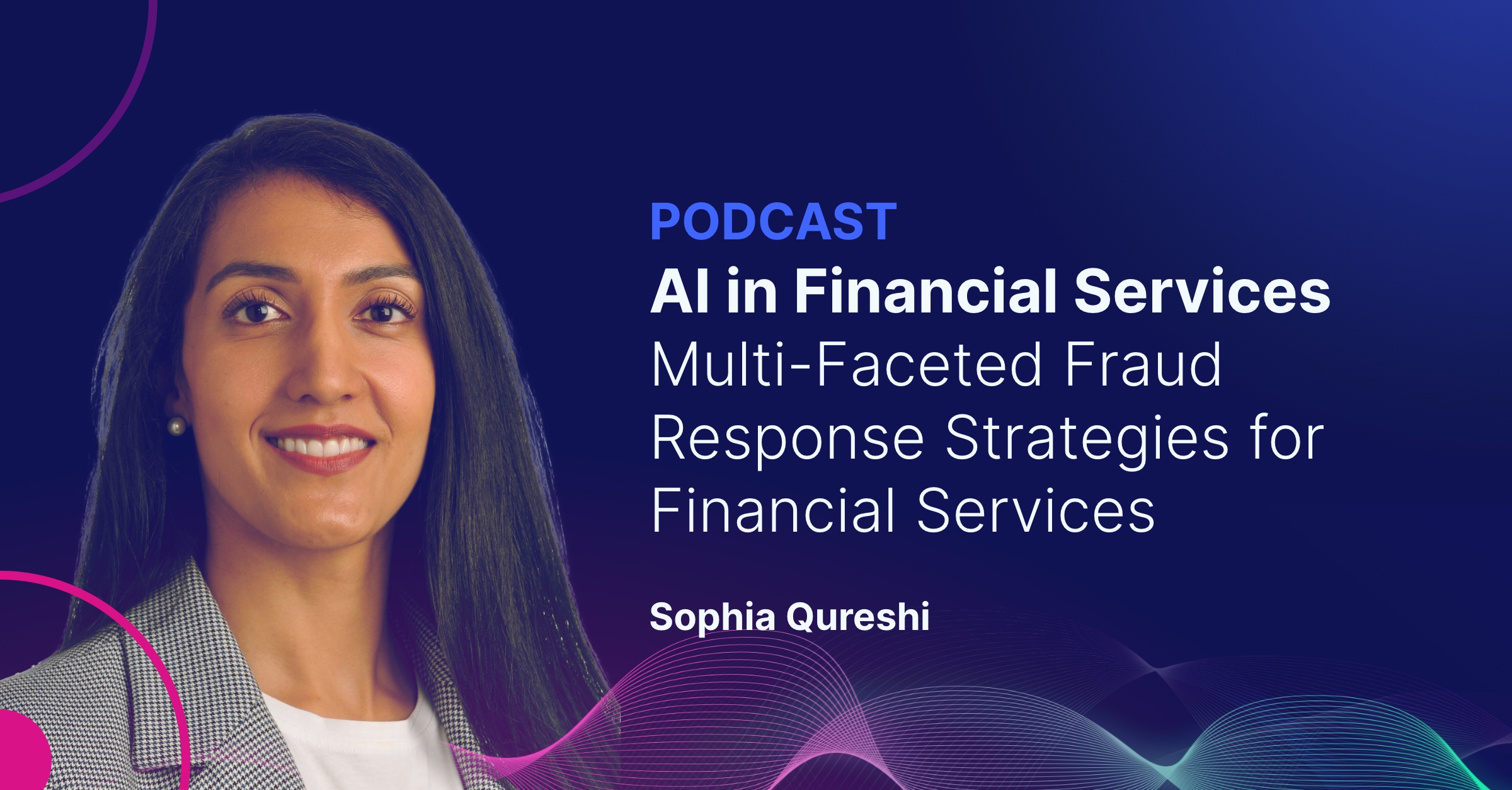
Multi-Faceted Fraud ResponseStrategies for Financial Services Our VP of Product Management for Fraud Solutions, Sophia
fighting fraud podcast

Podcast: The Fintech...

podcast The Fintech Diaries Podcast: Fighting Fraud with Provenir How AI is Securing Finance Check
Carbon’s Ceci López and Kike Fashola Are Banking on Nigerian Fintech Innovation

Carbon’s Ceci López ...

Carbon’s Ceci López and Kike Fashola Are Banking on Nigerian Fintech Innovation These risk leaders
TDS Mini: EMEA’s Crystal Ball 2024

TDS Mini: EMEA’s Cry...

PODCAST TDS Mini:EMEA's Crystal Ball 2024 What’s in store for Europe, the Middle East, and

Continue reading

Winning in Difficult Economic Conditions

ON-DEMAND WEBINAR

Winning in Difficult Economic Conditions:
How to stay profitable in a rapidly changing environment

Book a Meeting

The past year has highlighted an unsettled global climate, making it difficult for financial services companies, including fintechs and other lenders, to mitigate risk effectively. Economic KPIs are slowing as both institutions and consumers alike react to the new normal – so how can we help credit providers stay ahead of the competition?

Watch this on-demand webinar, where our panel of experts are sharing key insights on how to stay profitable amidst rapidly evolving market conditions. 

With concrete examples from Turkey and elsewhere, this lively discussion include tips on:

  • How to take advantage of non-traditional data to confidently do business with more marginal/subprime applicants
  • Ways to segment customers to target the appropriate upsell/cross-sell and renewal activities
  • Staying ahead of the curve in identifying more fragile customers – before they default
  • How to implement rapid reaction feedback loops within each stage of the customer lifecycle
  • Trend reporting on key KPIs
  • How to implement and test new credit and fraud policies without additional risk 

Don’t miss this opportunity to glean insights from the experts and ensure you can continue to grow your business, even in uncertain economic conditions.


RESOURCES

Continue reading

Divorce, Data, Disruption: Oh My!

PODCAST

Divorce, Data, Disruption:
Oh My!

Divorcing your bank, debunking long-standing myths, advancing emerging tech, and approaching data ethically…

What do these topics all have in common? They’re innovative ideas our thought leaders have shared with us in our very first season of The Disruptor Sessions.

We’ve loved having fascinating conversations with our brilliant guests, so for our final episode of 2023, we’re looking back at some of the hot topics we couldn’t stop talking about. Tune in for global insights on financial inclusion, artificial intelligence, alternative data and open banking, and – our bread and butter – innovation across financial services. 

We hope you’ve enjoyed season 1 and we can’t wait to see you again next year for season 2!

Listen Now

Tune into our Podcast on Apple or Spotify by clicking the icons below.

Apple Podcast

Spotify Podcast

The Panelists:

  • Aaron Webster

    SoFi’s Aaron Webster Wants to Make It Easier to Divorce Your Bank

    What’s SoFi’s secret to differentiation in a crowded fintech ecosystem? Where should we look to find the next big disruption for American financial services? North America host Kathy Stares sits down with SoFi’s Chief Risk Officer, Aaron Webster, to answer these questions and more in our very first episode of The Disruptor Sessions.

  • Nidhi Verma

    TransUnion’s Nidhi Verma Introduces the New Kids on the (Credit) Block

    Though they used to be invisible, today they might be the future of the credit market. On this episode of The Disruptor Sessions, we’re exploring the new-to-credit (NTC) population. Though they used to be invisible, today they might be the future of the credit market.

    North America host Kathy Stares (Provenir’s EVP, Americas) and TransUnion’s VP of International Research and Consulting, Nidhi Verma, discuss the immense opportunities in engaging this powerful group. Drawing from TU’s recent report on NTCs, they debunk the myths around risk, define the business case for financial inclusion, and develop a vision of what the future of financial inclusion could look like globally.

  • Kike Fashola & Ceci López

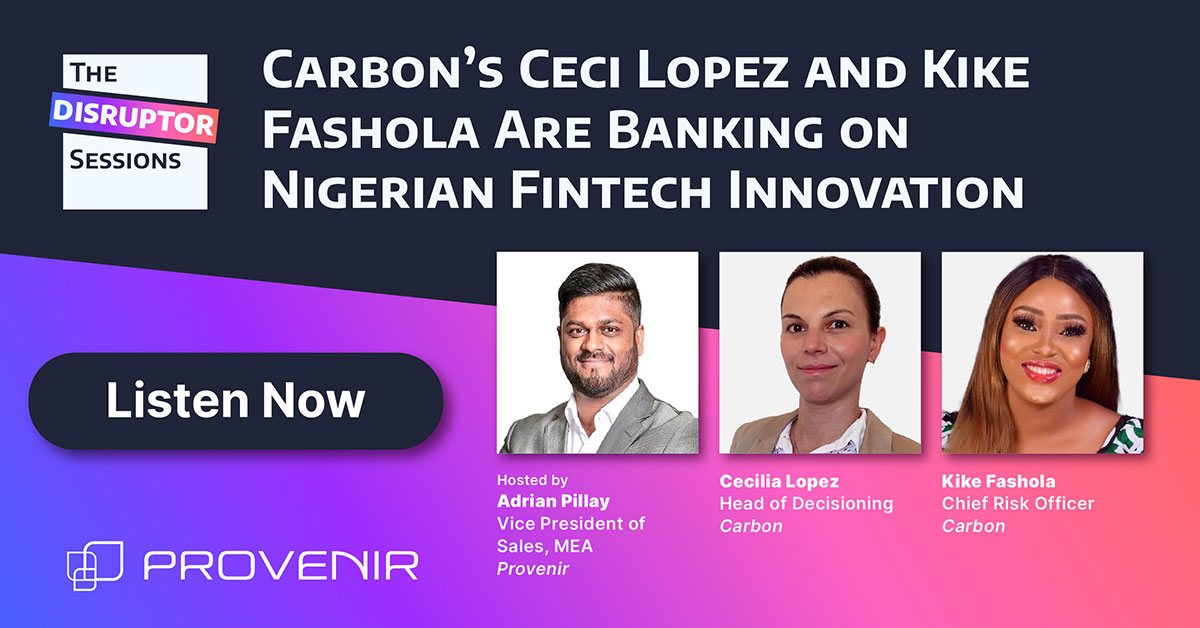
    Carbon’s Ceci López and Kike Fashola Are Banking on Nigerian Fintech Innovation

    These risk leaders are disrupting the status quo across Africa’s fintech landscape. In our first MEA-focused episode, host Adrian Pillay sits down with digital bank Carbon’s Ceci López (Head of Decisioning) and Kike Fashola (Chief Risk Officer) to take a look at the relationship between risk and reward and the future of fintech in Nigeria.

    They dig into topics like using data science to support innovation, how to drive adoption of emerging tech in an emerging market, and some of the implications we may not always think of when we talk about AI in risk management.

  • Costin Mincovici

    tbi Bank’s Costin Mincovici Wants to See More ‘Aha’ Moments in Digital Banking

    Costin Mincovici, tbi Bank’s Chief Credit Officer, is a risk leader that likes to say yes. Yes to mobile-first financial services, yes to digital banking disruption, and yes to multi-country risk strategies that offer the accessible experiences that can make or break a provider.

    He shares his insights with our EMEA host and Provenir’s regional leader, Frode Berg. They explore everything from the ethical implications of data usage, to market approaches that protect the interests of both the customer and bank, to the “aha” moments Costin hopes to see more of across fintech.

  • Aaron Webster

    SoFi’s Aaron Webster Wants to Make It Easier to Divorce Your Bank

    What’s SoFi’s secret to differentiation in a crowded fintech ecosystem? Where should we look to find the next big disruption for American financial services? North America host Kathy Stares sits down with SoFi’s Chief Risk Officer, Aaron Webster, to answer these questions and more in our very first episode of The Disruptor Sessions.

  • Nidhi Verma

    TransUnion’s Nidhi Verma Introduces the New Kids on the (Credit) Block

    Though they used to be invisible, today they might be the future of the credit market. On this episode of The Disruptor Sessions, we’re exploring the new-to-credit (NTC) population. Though they used to be invisible, today they might be the future of the credit market.

    North America host Kathy Stares (Provenir’s EVP, Americas) and TransUnion’s VP of International Research and Consulting, Nidhi Verma, discuss the immense opportunities in engaging this powerful group. Drawing from TU’s recent report on NTCs, they debunk the myths around risk, define the business case for financial inclusion, and develop a vision of what the future of financial inclusion could look like globally.

    Kike is a graduate of Covenant University, where she majored in Industrial Mathematics.

    Kike is a positive and proactive individual who is always looking for ways to improve. She is not afraid to challenge the status quo and is always looking for the silver lining.

  • Kike Fashola & Ceci López

    Carbon’s Ceci López and Kike Fashola Are Banking on Nigerian Fintech Innovation

    These risk leaders are disrupting the status quo across Africa’s fintech landscape. In our first MEA-focused episode, host Adrian Pillay sits down with digital bank Carbon’s Ceci López (Head of Decisioning) and Kike Fashola (Chief Risk Officer) to take a look at the relationship between risk and reward and the future of fintech in Nigeria.

    They dig into topics like using data science to support innovation, how to drive adoption of emerging tech in an emerging market, and some of the implications we may not always think of when we talk about AI in risk management.

    He has held various leadership roles at leading Credit Risk companies such as TransUnion, Dun & Bradstreet, Experian and FICO. He is Vice President of Sales at Provenir, and is responsible for its business in Middle East and Africa.

  • Costin Mincovici

    tbi Bank’s Costin Mincovici Wants to See More ‘Aha’ Moments in Digital Banking

    Costin Mincovici, tbi Bank’s Chief Credit Officer, is a risk leader that likes to say yes. Yes to mobile-first financial services, yes to digital banking disruption, and yes to multi-country risk strategies that offer the accessible experiences that can make or break a provider.

    He shares his insights with our EMEA host and Provenir’s regional leader, Frode Berg. They explore everything from the ethical implications of data usage, to market approaches that protect the interests of both the customer and bank, to the “aha” moments Costin hopes to see more of across fintech.


LATEST PODCASTS

sophia podcast

Multi-Faceted Fraud ...

Multi-Faceted Fraud ResponseStrategies for Financial Services Our VP of Product Management for Fraud Solutions, Sophia
fighting fraud podcast

Podcast: The Fintech...

podcast The Fintech Diaries Podcast: Fighting Fraud with Provenir How AI is Securing Finance Check
Carbon’s Ceci López and Kike Fashola Are Banking on Nigerian Fintech Innovation

Carbon’s Ceci López ...

Carbon’s Ceci López and Kike Fashola Are Banking on Nigerian Fintech Innovation These risk leaders
TDS Mini: EMEA’s Crystal Ball 2024

TDS Mini: EMEA’s Cry...

PODCAST TDS Mini:EMEA's Crystal Ball 2024 What’s in store for Europe, the Middle East, and

Continue reading